 Save
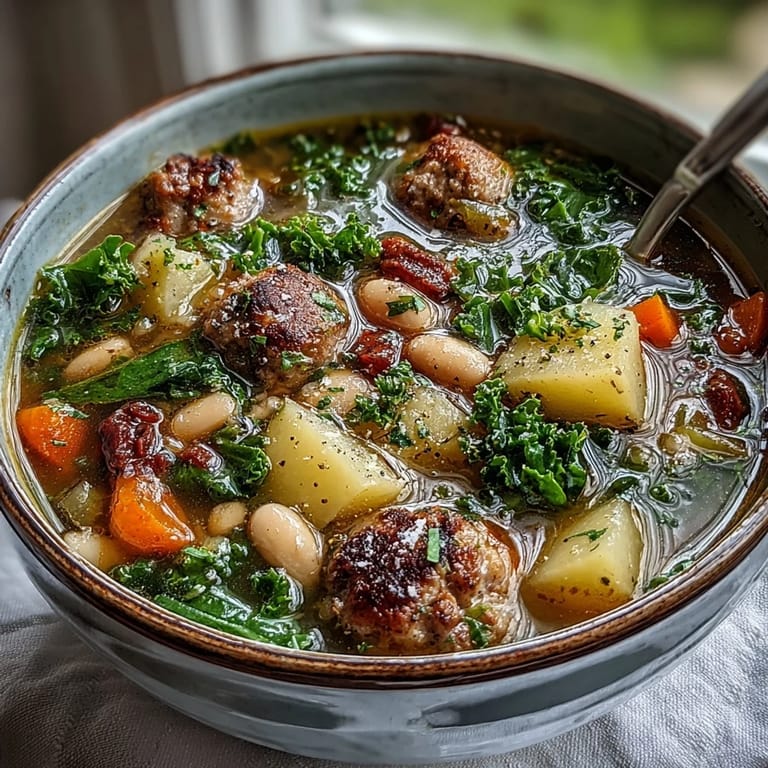
Save My neighbor Maria showed up one November evening with a pot of this soup, steam rising through her kitchen window into the cold night air. She'd made it while waiting for her husband to come home from work, and the aroma had leaked into my place next door—garlic, sausage, something deeply savory that made me abandon my microwave dinner immediately. One spoonful and I was asking for the recipe, though what I really wanted was to understand how something so simple could taste like someone had been tending it all day.
I made this for my book club on a random Thursday, thinking I'd have something warm and filling ready while we argued about the ending. Instead, everyone kept ladling more into their bowls, conversations paused mid-sentence, and suddenly three hours had passed with the pot nearly empty. That's when I realized this soup doesn't just fill your stomach—it creates a moment where people slow down.
Ingredients
- Italian sausage (1 lb, casings removed): The backbone of this soup; its fat seasons everything else, so pick sausage you'd actually eat on its own, whether mild or spicy depending on your mood.
- Yellow onion (1 large, diced): Let it soften completely in that sausage fat—this is where the foundation of flavor lives.
- Carrots and celery (2 medium carrots and 2 stalks): The aromatic trio with onion creates depth that broth alone could never achieve.
- Garlic (3 cloves, minced): Add it after the softer vegetables have had their moment, or it will taste burnt and bitter.
- Kale (2 cups, stems removed): It wilts down dramatically in the final minutes, so don't be shy with the amount—leafy greens shrink.
- Yukon Gold potatoes (2 medium, diced): These hold their shape better than russets and add a subtle buttery quality without any actual butter.
- Cannellini beans (2 cans, drained and rinsed): Rinsing them removes excess starch and prevents the soup from becoming gluey.
- Chicken broth (6 cups): Use low-sodium so you control the salt—you can always add more, but you can't take it out.
- Dried oregano, basil, and thyme (1 tsp oregano, 1 tsp basil, 1/2 tsp thyme): These Italian herbs work together; don't skip any of them or the soup loses its identity.
- Diced tomatoes (optional, 1 can): I sometimes add them for brightness, sometimes skip them entirely depending on what's in my pantry.
- Red pepper flakes (1/2 tsp, optional): A whisper of heat that rounds out the savory elements without overpowering.
- Extra-virgin olive oil (2 tablespoons): Good oil at the end makes a difference, but don't waste your best bottle on high heat cooking.
- Parmesan cheese (for serving): The final flourish that ties everything together, though the soup stands on its own without it.
Tired of Takeout? 🥡
Get 10 meals you can make faster than delivery arrives. Seriously.
One email. No spam. Unsubscribe anytime.
Instructions
- Brown the sausage:
- Heat oil in your largest pot over medium heat, then add the sausage broken into small pieces. Let it cook undisturbed for a minute or two before stirring, so it gets a proper golden crust—about 5 to 6 minutes total. This step flavors the whole pot, so don't rush it.
- Build your aromatic base:
- Scoop out the sausage to a plate, leaving all that rendered fat behind. Toss in your diced onion, carrots, and celery, stirring occasionally as they soften and begin to caramelize slightly, roughly 5 minutes.
- Wake up the garlic:
- Add minced garlic and cook for just one minute until the raw edge disappears and the smell transforms into something almost sweet. This is the moment you'll smell why this soup matters.
- Combine everything:
- Return the sausage to the pot, then add potatoes, beans, tomatoes if you're using them, broth, and all your herbs. Stir gently to distribute everything evenly.
- Simmer until potatoes surrender:
- Bring to a boil, then drop the heat to a gentle simmer. Cover and let it bubble quietly for about 20 minutes—the potatoes should be completely tender when you pierce one with a fork.
- Add the kale at the very end:
- Stir in your chopped kale and let it wilt for 5 to 7 minutes uncovered. This keeps the kale from turning into gray mush and preserves its slight bitterness that balances the richness.
- Taste and adjust:
- Salt builds as the soup simmers, so taste it now before adding more. Sometimes a crack of fresh pepper or a tiny pinch of red pepper flakes is all it needs.
 Save
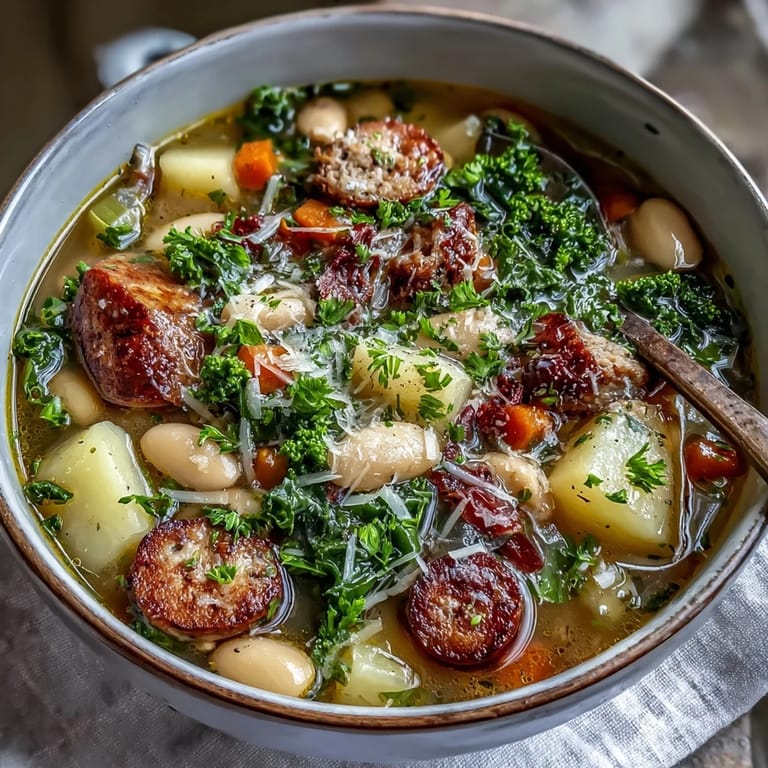
Save There's a moment when everything is simmering together and the kitchen fills with a smell so complete and warm that you wonder why anyone would ever order soup from a restaurant. My daughter wandered in from her room that day, drawn by the scent alone, and we sat at the counter in silence eating bowls of it while it was still almost too hot.
The Magic of the Soffritto
Every great soup starts with the soffritto—that holy trinity of onion, carrot, and celery cooked slowly in fat. In this case, the sausage fat becomes your best friend, carrying flavors forward in a way that starting with plain oil simply cannot match. The vegetables don't just soften; they begin to caramelize slightly at the edges, creating depth that broth alone would never achieve. Rushing this step saves maybe two minutes but costs you everything that makes this soup special.
Why Timing Matters More Than Temperature
I learned the hard way that a rolling boil does nothing but break down vegetables into submission. A gentle simmer at medium-low heat lets potatoes cook through while staying intact, lets flavors merge without becoming muddled, and somehow makes the whole experience feel less chaotic. The covered pot steams everything together while your kitchen fills with that incomparable smell, and nobody's in a rush because they're already hungry before the first bowl hits the table.
Serving and Variations
This soup is forgiving in ways that fussy recipes aren't—you can make it vegetarian by swapping the sausage for a plant-based version and using vegetable broth instead. Some people float a hunk of Parmesan rind in the pot during the simmer, which dissolves slightly and adds a savory umami depth that nobody can quite identify but everyone notices. A slice of crusty bread for soaking up every last drop is non-negotiable, and the soup keeps beautifully refrigerated for three days or frozen for longer, tasting somehow better the second time around.
- If you have a leftover Parmesan rind in your cheese drawer, this is the exact moment to use it.
- Crusty bread is not optional—it's how you finish the conversation the soup started.
- Freeze portions in individual containers so you have a warm meal waiting on mornings when you're running late.
 Save
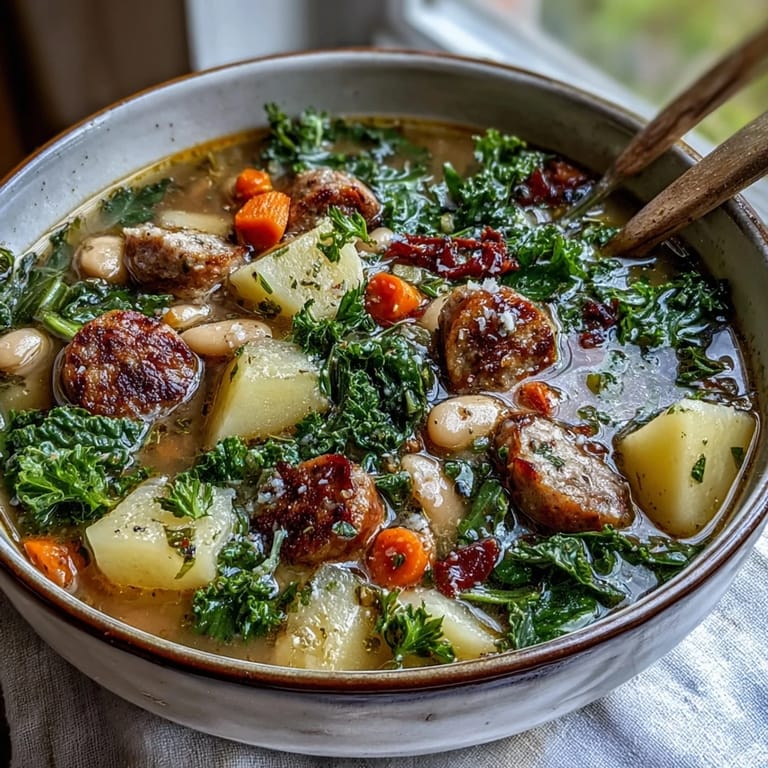
Save This is the kind of soup that turns an ordinary evening into something worth remembering, the type of meal that makes people linger at the table long after their bowls are empty. Make it once and you'll find yourself making it again whenever the weather turns cold or your soul needs warming up.
Common Recipe Questions
- → Can I make this vegetarian?
Yes, simply replace the Italian sausage with plant-based sausage and use vegetable broth instead of chicken broth for a delicious vegetarian version.
- → How long do leftovers keep?
Leftovers store well in the refrigerator for up to 3 days. The flavors often develop even more after sitting, making it taste even better the next day.
- → What can I serve with this soup?
Crusty bread is the perfect accompaniment for soaking up the flavorful broth. You can also serve with a simple green salad for a complete meal.
- → Can I use fresh herbs instead of dried?
Absolutely. Use about three times the amount of fresh herbs compared to dried. Add them in the last few minutes of cooking to preserve their bright flavor.
- → Can I freeze this soup?
Yes, it freezes well for up to 3 months. Let it cool completely before transferring to freezer-safe containers. Thaw overnight in the refrigerator before reheating.
- → How do I make it spicier?
Use spicy Italian sausage instead of mild, or increase the amount of crushed red pepper flakes to your preferred heat level.