 Save
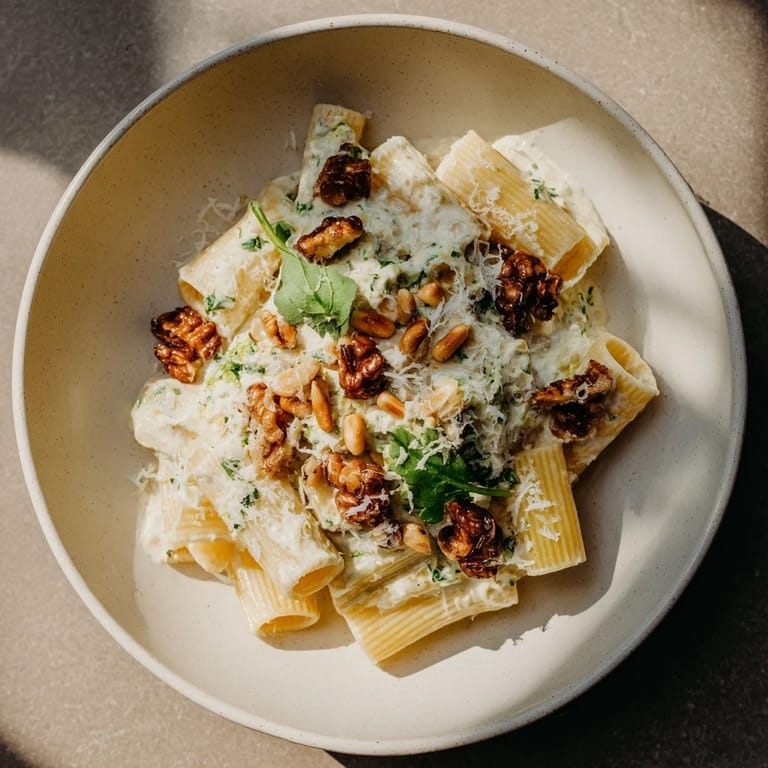
Save One Tuesday evening, I was standing in my kitchen with half a bunch of grapes that seemed destined for the fruit bowl when I caught the smell of something caramelizing in the oven from a neighbor's place. It sparked something—what if grapes weren't just a snack but a main ingredient? I pulled out ricotta, some lemon, and dried pasta, and by dinner, I'd created something that felt both unexpected and somehow inevitable. That first bite changed how I think about sweet and savory together.
I made this for my sister last month when she mentioned feeling tired of the usual dinner rotation. Watching her fork into it and seeing her pause mid-bite—that moment when she realized the grapes were roasted and intentional, not a mistake—made me realize this dish does something special. It's the kind of thing that sparks conversations and makes people ask for the recipe before dessert.
Ingredients
- Dried short pasta (penne, rigatoni, or fusilli): 350 g (12 oz)—the shape matters here because you want little pockets to catch the creamy ricotta and roasted grapes; rigatoni is my go-to.
- Seedless red or black grapes: 300 g (2 cups)—stems removed—they intensify and sweeten dramatically in the oven, almost like tiny flavor bombs.
- Olive oil: 1 tbsp for roasting, plus 2 tbsp extra-virgin for finishing—use good quality on the finish, you'll taste the difference.
- Coarse salt and freshly ground black pepper: 1/2 tsp and 1/4 tsp for roasting—this seasoning is crucial; it draws out the grape juices.
- Fresh ricotta cheese: 250 g (1 cup)—not the shelf-stable kind; grab it from the specialty section if you can, it's creamier and worth it.
- Lemon zest and juice: 1/2 tsp zest and 1 tbsp juice—this brightens everything and keeps the dish from feeling heavy.
- Fresh basil and parsley: 2 tbsp basil plus 1 tbsp parsley, chopped—the herbs are what make this taste alive rather than just creamy.
- Toasted pine nuts: 40 g (1/4 cup), optional—they add a buttery crunch that complements the soft grapes beautifully.
- Parmesan cheese: Grated, for serving—optional but I always add it; it brings a salty note that balances the sweetness.
Tired of Takeout? 🥡
Get 10 meals you can make faster than delivery arrives. Seriously.
One email. No spam. Unsubscribe anytime.
Instructions
- Preheat and prepare:
- Set your oven to 220°C (425°F) and line a baking tray with parchment paper. Getting the oven hot first means the grapes will start caramelizing immediately when they hit the heat.
- Season the grapes:
- Spread your grapes on the tray, drizzle with 1 tbsp olive oil, sprinkle with 1/2 tsp salt and 1/4 tsp pepper, then toss until coated. You want every grape touched by oil and seasoning.
- Roast until jammy:
- Roast for 20–25 minutes, shaking the tray halfway through. You're looking for soft, blistered, slightly caramelized grapes that smell almost like they're cooking down into jam. Don't rush this—the transformation is the heart of the dish.
- Start the pasta:
- While grapes roast, bring a large pot of salted water to a boil and cook your pasta to al dente according to package directions. Reserve 120 ml (1/2 cup) of the starchy pasta water before draining—this liquid is liquid gold for creating a creamy sauce.
- Make the ricotta base:
- In a bowl, combine 250 g ricotta, 1/2 tsp lemon zest, 1 tbsp lemon juice, 2 tbsp basil, 1 tbsp parsley, and 1/4 tsp salt. Stir until smooth and creamy, but don't overwork it.
- Combine pasta and ricotta:
- Return the drained pasta to the pot off heat. Add the ricotta mixture and toss gently, adding reserved pasta water a little at a time until you have a silky, creamy sauce that coats each strand. The starch from the pasta water is what makes this magic happen.
- Fold in the roasted grapes:
- Gently fold in the roasted grapes and any juices that collected on the tray. You want them distributed throughout but still whole, not broken apart—they're the stars here.
- Finish and serve:
- Drizzle with 2 tbsp extra-virgin olive oil and toss lightly. Divide among plates and top with toasted pine nuts, fresh basil, black pepper, and Parmesan if using. Serve immediately while everything is warm and the ricotta is still creamy.
 Save
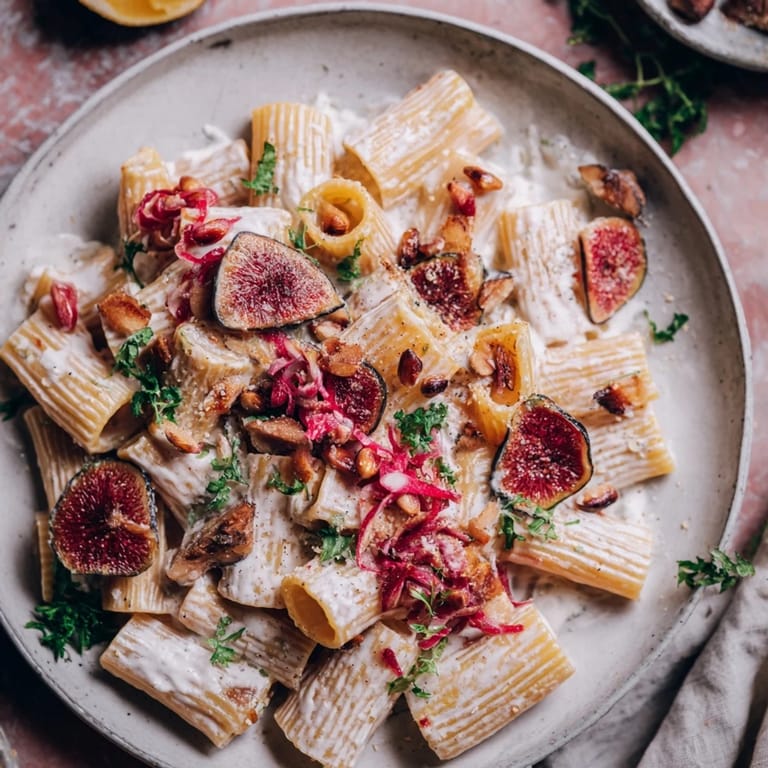
Save The first time someone called this "the prettiest pasta they'd ever eaten," I realized it wasn't just about flavor—it was about that moment when a dish looks different from what you expected. The purple and red of the roasted grapes against the creamy white ricotta feels almost like a painting on the plate. Food has a way of stopping people mid-conversation when it surprises them.
Why This Twist Works
Most pasta dishes are built on one foundation—cream, oil, tomato, or broth. This one layers sweet with savory in a way that feels natural, not gimmicky. The roasted grapes break down into almost a light jam, the ricotta stays silky without being heavy, and the lemon keeps everything bright. It's the kind of dish that doesn't sound like it should work until you taste it, and then it makes perfect sense.
Timing and Temperature Matter
I learned this the hard way when I tried to prep everything in advance and assemble it later. The pasta dries out and the ricotta gets stiff in the cold. This is a dish you want to compose near the end, when everything is still warm and willing to meld together. The whole thing takes 45 minutes, and most of that is roasting grapes and boiling water—the actual assembly is maybe five minutes of gentle tossing.
Customizing Without Losing the Soul
The beauty of this dish is that it's flexible enough to adapt to what you have. I've made it with goat cheese for a tangier bite, swapped pine nuts for toasted almonds when pine nuts were expensive, and used a mix of green and red grapes for color. The one thing I wouldn't skip is the roasting step and the lemon zest—those two things are what make this taste like more than just cream and pasta.
- For nut-free, simply leave out the pine nuts; the dish still feels complete.
- Whole-wheat or gluten-free pasta works beautifully if that's what you need.
- If you want more tang, goat cheese substitutes directly for ricotta at the same amount.
 Save
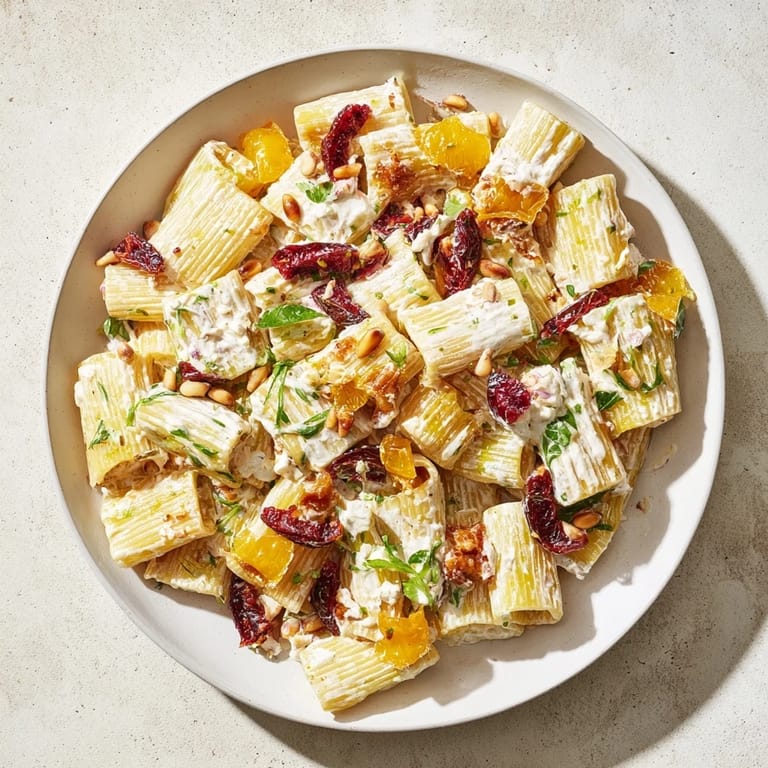
Save This pasta has become the dish I make when I want to feel like I tried without spending hours in the kitchen. It's simple enough that anyone can make it, but special enough that everyone remembers it.
Common Recipe Questions
- → How do I roast grapes for this dish?
Preheat the oven to 220°C (425°F). Toss seedless grapes with olive oil, salt, and pepper, then spread on a baking tray. Roast for 20–25 minutes until soft and blistered, stirring halfway through.
- → Can I use different types of pasta?
Yes, short pasta like penne, rigatoni, or fusilli work well to hold the creamy sauce and roasted grapes.
- → What can I substitute for ricotta cheese?
Goat cheese can be used for a tangier flavor, or a similar fresh cheese that blends smoothly with lemon and herbs.
- → Is it necessary to reserve pasta water?
Reserving some pasta water helps adjust the sauce consistency, making it creamier and ensuring it coats the pasta evenly.
- → Can I omit pine nuts?
Yes, pine nuts are optional and can be left out for a nut-free version without losing the core flavors.