 Save
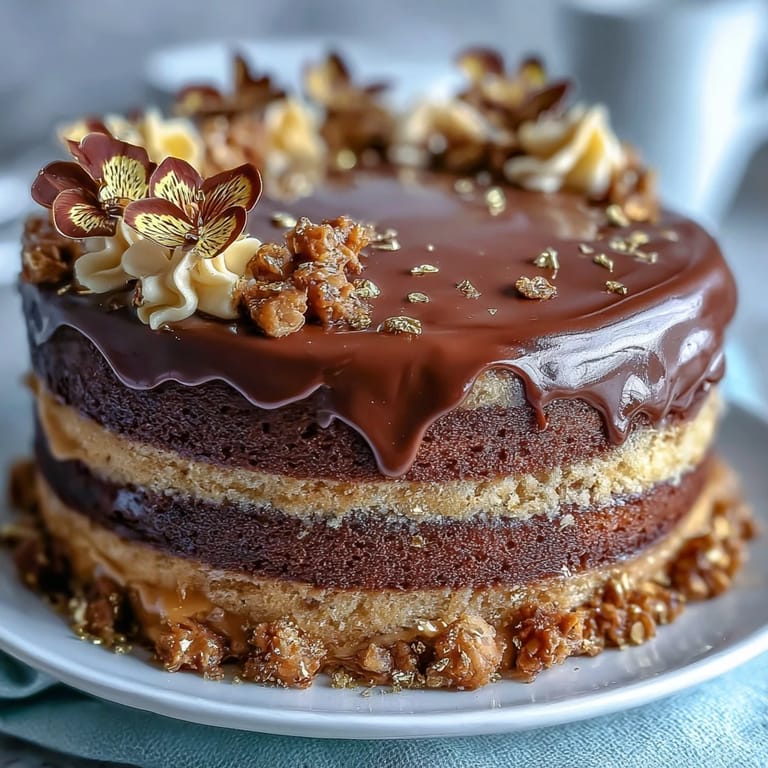
Save The moment my friend Sarah mentioned her graduation, I knew the cake had to be extraordinary. I'd been watching edible gold leaf videos at midnight, mesmerized by how it catches light, and suddenly I understood what would make her day feel genuinely special. That vanilla sponge with Swiss meringue buttercream came together almost like magic, but it was the delicate brush strokes of gold and the careful placement of pansies that made me pause and think about how dessert can be art. Standing in my kitchen surrounded by edible flowers and that shimmering gold, I realized this wasn't just another cake—it was a celebration waiting to happen.
I'll never forget frosting this cake the night before Sarah's ceremony, my kitchen counter covered in fallen edible flowers and a small pot of gold leaf that I kept accidentally breathing on and scattering everywhere. My partner walked in, laughed at the chaos, and we spent an hour carefully arranging pansies and violets while listening to old graduation playlists. When Sarah saw it the next day, her eyes actually welled up—not because it was perfect, but because someone had spent time making something beautiful just for her milestone. That's when I understood the real magic of this cake.
Ingredients
- All-purpose flour (2 1/2 cups): This is your cake's foundation, and using flour at room temperature helps ensure a tender crumb rather than a dense one.
- Baking powder (2 1/2 tsp): Make sure this hasn't been sitting in your cupboard for years, as it loses potency and your cake won't rise properly.
- Salt (1/2 tsp): A tiny amount that brightens vanilla flavor without making anything taste salty.
- Unsalted butter (1 cup for cake, 1 1/2 cups for buttercream): Room temperature is non-negotiable here; cold butter won't cream properly and you'll end up with a grainy texture.
- Granulated sugar (2 cups for cake, 1 1/4 cups for buttercream): This sweetens the cake and helps incorporate air when creaming with butter.
- Eggs (4 for cake, 5 whites for buttercream): Room temperature eggs mix more smoothly and create better emulsions, trust me on this.
- Vanilla extract (1 tbsp for cake, 2 tsp for buttercream): Real vanilla is worth the investment because it makes a noticeable difference in flavor depth.
- Whole milk (1 cup): The acidity in milk helps keep the crumb tender; don't swap for non-dairy without adjusting other ingredients.
- Edible gold leaf sheets: Purchase from reputable sources that specifically label them as food-safe and edible, never use decorative craft gold.
- Assorted edible flowers (pansies, violets, roses): These must be grown specifically for consumption without pesticides, never use florist flowers which are treated with chemicals.
- Food-safe paintbrush: Keep one dedicated solely to cooking so no paint remnants contaminate your decoration.
- Gold ribbon (optional): Just a finishing touch that makes the whole presentation feel intentional and polished.
Tired of Takeout? 🥡
Get 10 meals you can make faster than delivery arrives. Seriously.
One email. No spam. Unsubscribe anytime.
Instructions
- Prepare your pans and preheat:
- Get your oven warming to 350°F while you grease three round pans and line them with parchment—this prevents sticking and makes removal easier. Having everything ready before you start mixing means you won't be scrambling when the batter's ready to bake.
- Combine dry ingredients:
- Whisk flour, baking powder, and salt together in a bowl, which distributes the leavening evenly throughout the batter. Sifting isn't strictly necessary but it does prevent lumps and incorporate a bit of air.
- Cream butter and sugar into submission:
- Beat them together until the mixture looks pale and fluffy, usually about three minutes, because this step incorporates the air that makes your cake tender rather than dense. You'll know it's ready when you lift the beaters and peaks form briefly before falling back.
- Add eggs with patience:
- Add one egg at a time, beating well after each addition, which helps create an emulsion that keeps everything bound together. If the mixture looks slightly curdled, don't panic—it'll come together once you add the flour mixture.
- Alternate flour and milk gently:
- Start and end with the flour mixture, adding it in thirds while alternating with milk, stirring just until combined. Overmixing develops gluten and makes the cake tough, so restrain yourself even if you see a few flour streaks.
- Divide and smooth:
- Pour batter evenly among the three pans and use an offset spatula to smooth the tops level. This ensures even baking and cakes that stack without wobbling later.
- Bake until golden:
- Bake for 28–32 minutes, checking with a toothpick in the center—it should come out clean with just a crumb or two clinging to it. Every oven bakes differently, so start checking at 28 minutes.
- Cool with intention:
- Let cakes cool in the pans for ten minutes (they firm up slightly), then turn them onto wire racks to cool completely. Cooling completely is essential before frosting or the buttercream will melt.
- Make the Swiss meringue buttercream magic:
- Combine egg whites and sugar in a heatproof bowl over simmering water and whisk constantly until the mixture reaches 160°F, which takes about five minutes and kills any food safety concerns. The mixture will feel warm and gritty, then suddenly smooth as the sugar dissolves completely.
- Beat until clouds form:
- Transfer to a stand mixer and beat on high until stiff peaks form and the outside of the bowl is cool to the touch, around 8–10 minutes. This is the most satisfying part—watching it transform from soup to clouds.
- Add butter gradually with care:
- Reduce speed to medium and add butter a few cubes at a time, letting each addition incorporate before adding more. If it breaks and looks curdled, don't give up; keep mixing and it will eventually come back together into silky frosting.
- Season with vanilla and salt:
- Add vanilla extract and a tiny pinch of salt, mixing until smooth and uniform in color. The salt isn't about making it salty—it's about amplifying the vanilla's flavor.
- Assemble the cake structure:
- Place one cake layer on your serving plate and spread with buttercream, then repeat with the second layer, and finally place the third layer on top. Use an offset spatula to ensure even layers of frosting.
- Crumb coat and chill:
- Apply a thin layer of buttercream all over the entire cake, which traps loose crumbs, then refrigerate for 20 minutes. This step prevents crumbs from dragging into your final frosting coat.
- Apply the final frosting layer:
- Spread a smooth, final layer of buttercream over the cake, using warm water on your spatula to help it glide smoothly. Take your time here; this is what people see.
- Apply gold leaf with precision:
- Using a food-safe paintbrush, carefully apply edible gold leaf to sections of the cake where you want shimmer and luxury. Gold leaf is incredibly delicate, so work slowly and let it settle naturally on the frosting.
- Arrange flowers as the final crown:
- Place edible flowers decoratively across the cake, perhaps clustering them where the gold leaf is thickest. Add a gold ribbon around the base if you want the extra flourish.
 Save
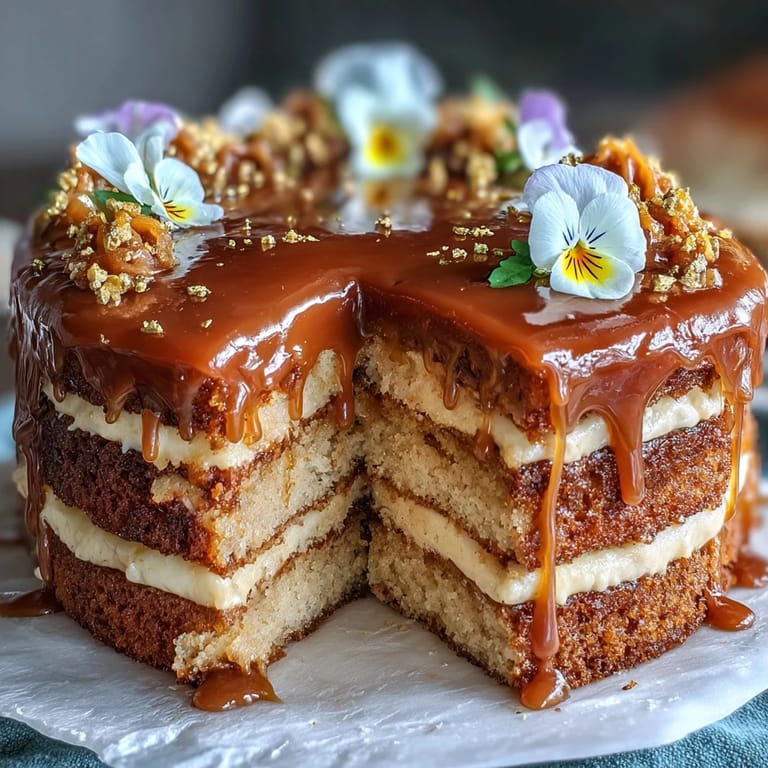
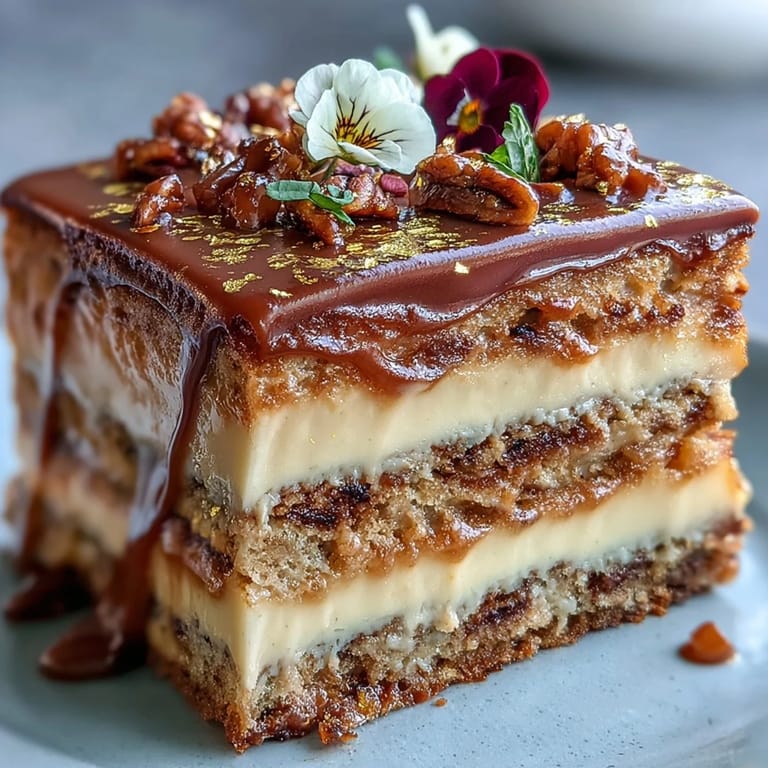
Save There's something about watching someone's face light up when they see a cake they know you made yourself—especially when it looks like it belongs in a magazine. That moment when Sarah cut into hers and the vanilla sponge revealed itself perfectly moist and tender, with that silky buttercream melting on the tongue, made every careful step worthwhile.
The Secret Behind Swiss Meringue Buttercream
Swiss meringue buttercream terrified me the first time I made it, mostly because I didn't understand why you'd deliberately heat egg whites. But that heat is actually the whole point—it pasteurizes them and dissolves the sugar crystals so completely that once you beat the mixture, you get this impossibly silky frosting that tastes like butter clouds. It's also more stable than American buttercream, which means it won't weep or separate in a warm room, making it perfect for a celebration cake that needs to sit out while guests arrive.
Working with Edible Flowers and Gold Leaf
The first time I tried to apply gold leaf, I breathed on it and watched it scatter across the counter like I'd just destroyed something precious. The trick is to barely touch it, using just the tip of a slightly damp paintbrush, and letting it cling to the frosting through static and humidity rather than pressure. Edible flowers should be added just before serving or the night before at the earliest, as they'll start to wilt if they sit too long on the cold frosting.
Variations and Personal Touches
Once you master the basic version, this cake becomes a canvas for your own celebration style. For a chocolate lover's graduation, swap half a cup of flour with cocoa powder to create a mocha undertone that pairs beautifully with vanilla buttercream. You could also infuse the buttercream with lemon zest or a touch of almond extract, adjust the flowers and ribbon to match your school colors, or even add a thin layer of jam between cake layers for extra flavor depth.
- A chocolate variation works wonderfully by replacing 1/2 cup flour with unsweetened cocoa powder, which gives you a subtle chocolate flavor without overpowering the vanilla.
- Fresh berries can nestle between cake layers or be scattered across the frosting if fresh flowers feel too delicate for your comfort level.
- If you're nervous about the Swiss meringue, American buttercream made with powdered sugar works fine too, though it won't have quite the same elegant silkiness.
 Save
Save Making this cake taught me that celebration desserts don't have to be complicated to feel special—they just need someone willing to take time and care with the details. Serve it with sparkling wine or light fruit punch, and watch it become the moment people remember alongside the graduation itself.
Common Recipe Questions
- → What type of cake base is used?
A classic vanilla sponge cake forms the light and airy base of this dessert, made with flour, butter, eggs, and vanilla extract.
- → How is the buttercream prepared?
The buttercream is a Swiss meringue style, created by whisking egg whites and sugar over heat then blending in butter and vanilla until smooth and silky.
- → Are the flowers safe to use on the cake?
Only edible flowers grown without pesticides should be used to ensure they are safe and suitable for decoration.
- → How should the gold leaf be applied?
Apply edible gold leaf gently using a food-safe paintbrush to prevent tearing and maintain its delicate shimmer.
- → Can this cake be adapted for different flavors?
Yes, a chocolate variation can be made by substituting half a cup of flour with cocoa powder for a richer taste.