 Save
Save My mother always said dessert should be an event, not just an afterthought, and pavlova proved exactly what she meant. The first time I attempted one, I was terrified—meringue felt like kitchen magic I wasn't allowed to understand. But watching that glossy cloud transform in the oven, then cracking into that crispy shell to find the soft, marshmallow center waiting underneath, I realized why she loved making these for special occasions. Now whenever Mother's Day rolls around, this is the dish that gets me into her kitchen, armed with egg whites and determination. It's become our thing—impractical, rewarding, and somehow always worth the fuss.
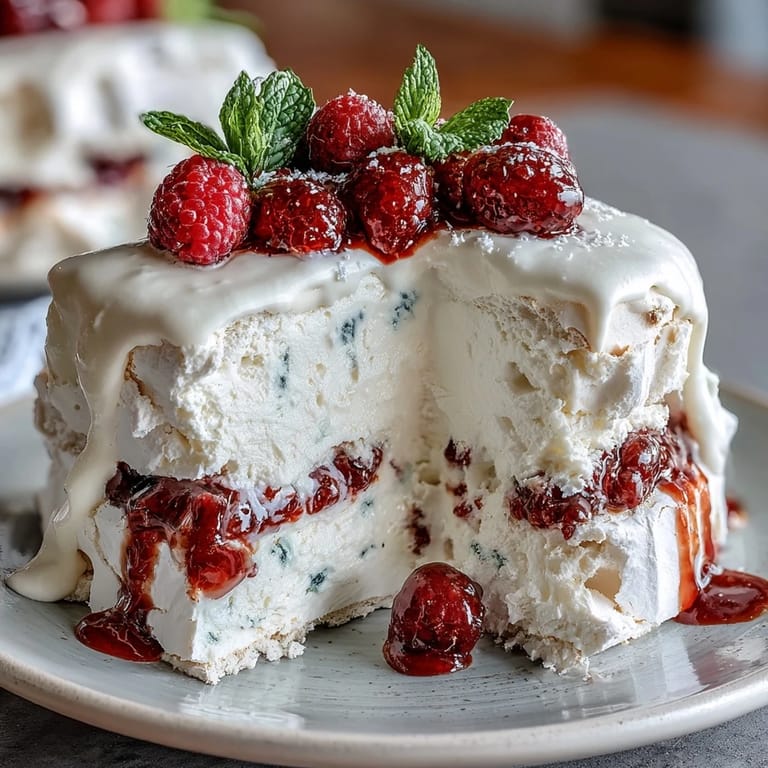
I made this for my mom's fifty-fifth birthday, and my sister walked in mid-whipping, took one look at the towering meringue, and said, "You're showing off now." She wasn't wrong, but when we plated it with those jewel-toned berries and everyone went quiet for just a second before digging in, that moment of silence was worth every careful fold and nervous oven check. That's when I understood—pavlova isn't about perfection, it's about creating something delicate and special that says you really tried.
Ingredients
- Egg whites, 4 large at room temperature: Cold eggs won't whip to stiff peaks, so take them out of the fridge 30 minutes before starting—this one detail changes everything.
- Superfine sugar, 1 cup (200 g): Regular sugar takes forever to dissolve and can make your meringue grainy; superfine is worth hunting down.
- Cornstarch, 1 tsp: This small addition is what keeps the inside soft and marshmallow-like instead of completely hard.
- White vinegar, 1 tsp: Stabilizes the meringue and adds a subtle tang that balances the sweetness in a way you can't quite pinpoint but definitely taste.
- Pure vanilla extract, 1 tsp: Cheap vanilla tastes flat; spend a tiny bit more and the flavor blooms.
- Heavy whipping cream, 1 cup (240 ml) chilled: The cold matters—warm cream won't whip properly, so keep it in the coldest part of your fridge.
- Powdered sugar, 2 tbsp for cream: A touch of sweetness in the whipped cream keeps everything harmonious without being cloying.
- Mixed berries, 4 cups total: Buy them a day or two before if you can, as truly fresh berries have more texture and don't weep as quickly onto the cream.
- Fresh mint leaves, 1 tbsp optional: A sprinkle adds freshness and a pop of color that feels intentional and gathered-from-the-garden, even if you bought it pre-packaged.
Tired of Takeout? 🥡
Get 10 meals you can make faster than delivery arrives. Seriously.
One email. No spam. Unsubscribe anytime.
Instructions
- Set the stage:
- Preheat your oven to 250°F (120°C) and line a baking sheet with parchment paper, tracing a 9-inch circle as a guide—this keeps your nest neat without fussing. A dry oven is a happy oven, so if it's been a steamy cooking day, crack a window.
- Whip those whites:
- In a completely clean, dry bowl (any grease ruins meringue), beat the egg whites with a pinch of salt until soft peaks form—you should see them hold their shape but still curl at the tips. This takes about 2–3 minutes with a mixer.
- Sugar in slowly:
- Add the superfine sugar one tablespoon at a time while beating, waiting between additions so the sugar dissolves completely—rushing this step is where meringues fail. Once all sugar is in, keep beating until the mixture is glossy, thick, and forms stiff peaks (another 5–6 minutes).
- Fold in the secrets:
- Gently fold in the cornstarch, vinegar, and vanilla with a rubber spatula, being careful not to deflate all that air you just whipped in—just a few folds until combined. The vinegar and cornstarch are invisible ingredients that do the heavy lifting.
- Shape the nest:
- Spoon the meringue onto your circle, using the spatula to shape it into a shallow nest with slightly raised edges—this catches the cream and berries. The rough, rustic look is more charming than perfection anyway.
- The long, slow bake:
- Bake for 1 hour 15 minutes until the exterior is pale and crisp but the center still has a slight give when you gently press it. Turn off the oven and crack the door open about 2 inches, letting it cool completely inside—sudden temperature changes cause cracking.
- Whip the cream:
- While the pavlova cools, chill your mixing bowl, then beat the cold heavy cream with powdered sugar and vanilla until soft peaks form—you want it pillowy and spreadable, not stiff. This takes about 2–3 minutes.
- The assembly:
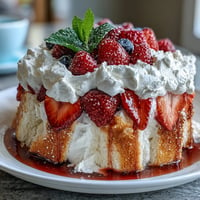
- Once the meringue is completely cool, transfer it carefully to a serving platter—it's fragile, so use two large spatulas if you're nervous. Top with a generous swirl of whipped cream, then scatter the berries and mint leaves across the top.
- The final touch:
- Dust lightly with powdered sugar just before serving if desired—it catches the light and adds a finishing flourish. Slice with a serrated knife dipped in hot water and wiped clean between cuts.
 Save
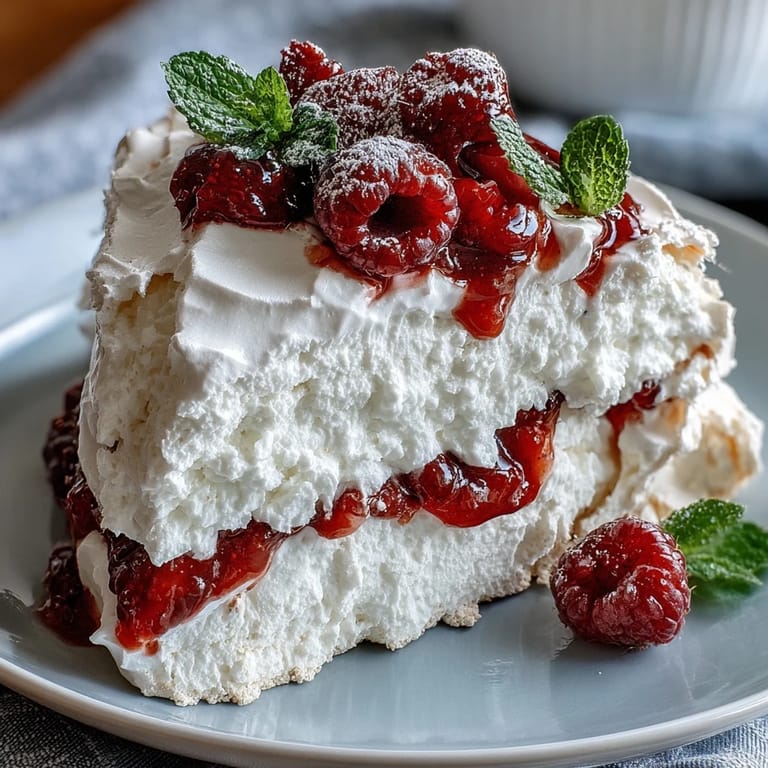
Save There's something about watching someone's eyes light up when they realize that crispy exterior gives way to something tender and chewy—it's a small surprise that reminds you why you bothered with this impractical, beautiful dessert in the first place. Every crack and imperfection tells the story of your effort, and that's what makes it feel genuinely special.
Why This Works on Mother's Day
Pavlova feels fancy without demanding that you spend hours in the kitchen the morning of—you can bake it the day before and assemble it right before guests arrive, which means you're actually present and enjoying the celebration instead of stress-baking in the background. It's also naturally vegetarian and gluten-free, so it accommodates more dietary preferences than you might expect, and the mixed berries feel seasonal and fresh, never boring or store-bought tasting. Plus, there's something inherently celebratory about serving something this beautiful; it says without words that you think someone is worth the care and attention.
Variations and Personal Touches
Once you understand the basic meringue formula, you can play with flavor and topping combinations—I've made chocolate pavlovas by folding in sifted cocoa powder, berry pavlovas layered with berry compote in the cream, and even a passion fruit version where I drizzled the passionfruit curd over the top right before serving. Seasonal fruits work beautifully too; in winter I've used pomegranate seeds and kiwi, and in summer I add fresh peaches or nectarines alongside the berries. The meringue itself can handle these variations without complaint as long as you keep the base ratios the same.
Equipment and Timing Notes
A stand mixer makes this so much easier than hand-whisking, but if you're committed and have patience, a hand mixer or even a whisk will work—just give yourself extra time and be prepared for a seriously good arm workout. The total time looks long, but most of it is unattended baking and cooling, so you can prep other parts of your meal or set the table while the pavlova does its thing in the oven.
- Have all ingredients at the right temperature before you start—this isn't a recipe that forgives cold eggs or warm cream.
- Use a serrated knife for slicing and dip it in hot water between cuts to keep the meringue from shattering.
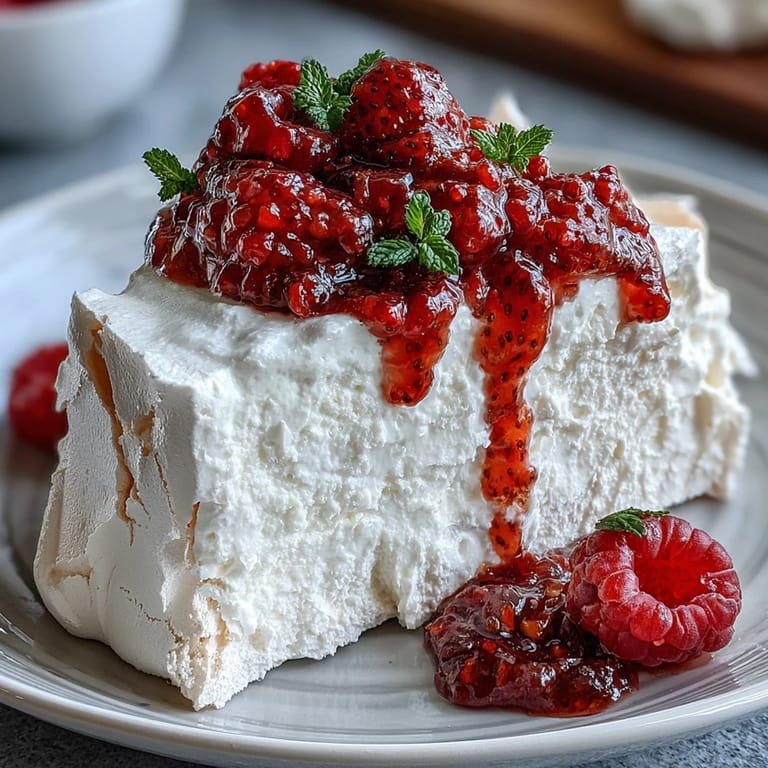
- If cracks form during cooling, don't panic—they add character, and nobody will notice once it's topped with cream and berries.
 Save
Save This pavlova has become my answer to celebrating anyone I care about, because it combines something technically impressive with the comfort of knowing I actually made it myself, imperfections and all. Make one, watch someone's face when they taste that contrast of crispy and soft, and you'll understand why it's been a favorite for generations.
Common Recipe Questions
- → What makes the pavlova meringue crisp yet soft inside?
The meringue is baked at a low temperature for a long time, which dries the exterior to a crisp shell while keeping the center marshmallow soft.
- → Can I substitute the mixed berries with other fruits?
Yes, seasonal fruits like kiwi, peaches, or passionfruit can be used to vary the topping while maintaining fresh flavors.
- → How do I ensure the meringue doesn't crack during baking?
Baking at a consistent low temperature and allowing the pavlova to cool slowly inside the oven with the door slightly open helps prevent cracks.
- → What is the role of cornstarch in the meringue mixture?
Cornstarch helps stabilize the egg whites and adds to the marshmallow texture inside the crisp shell.
- → Is it necessary to use fresh eggs at room temperature?
Room temperature egg whites whip better to create the stable peaks necessary for a light, airy meringue.