 Save
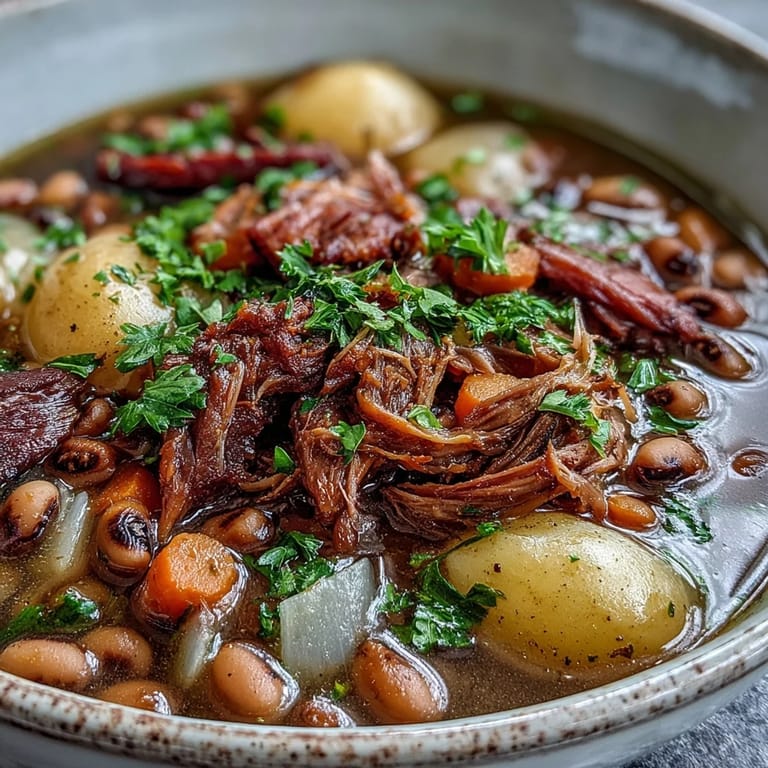
Save My grandmother's kitchen smelled like this stew on New Year's Day—that unmistakable combination of smoked ham and simmering peas that meant good luck was coming. I'd watch her pull those ham hocks from the broth, shred them with two forks, and tell me that a proper stew needs time and patience, nothing rushed. Years later, I found myself making this same dish on a cold January evening, and suddenly I understood why she'd always insisted on doing it her way. The magic isn't in fancy ingredients; it's in letting flavors build slowly while you move about the kitchen doing other things, checking in every so often. This is the kind of stew that fills your home with warmth before it ever touches your mouth.
The first time I made this for someone outside the family was for a dinner party where I was terrified I'd somehow botch the recipe. My friend Sarah arrived early and caught me anxiously stirring the pot, and she laughed and said the house smelled like a Southern grandmother's love. That's when it hit me that this dish carries weight beyond taste—it's about feeding people something that says you've taken care, that you've let time do its work. By the time we sat down, the stew had woven itself into the evening, and everyone wanted the recipe. Now I make it whenever someone needs comfort in a bowl.
Ingredients
- Smoked ham hocks (2, about 1.5 lbs): These are the soul of the stew, packed with collagen that creates a silky broth and meat so tender it shreds at the slightest touch. Don't skip them or swap for bacon—the depth they provide is irreplaceable.
- Dried black-eyed peas (2 cups, soaked overnight): Soaking overnight matters more than you'd think; it ensures even cooking and prevents that grainy texture that ruins otherwise good stew. Canned works in a pinch (use 4 cups, rinsed), but dried brings a slightly earthier flavor.
- Onion, carrots, and celery (the holy trinity): These three vegetables create the aromatic foundation that makes everything taste intentional and balanced.
- Potatoes (2 medium, cut into 1-inch cubes): They soften into the broth while keeping their shape, adding substance without overwhelming the peas.
- Diced tomatoes (1 can with juice): The acidity brightens all those deep, smoky flavors and prevents the stew from feeling one-dimensional.
- Garlic (3 cloves, minced): Added after the soffritto, it blooms quickly and adds a savory note that deepens as the stew simmers.
- Broth (6 cups low-sodium): Use chicken or vegetable—whichever you have on hand, though chicken tends to play better with the ham flavor.
- Bay leaves and thyme: These are your quiet backbone, working together to add herbal depth without announcing themselves.
- Smoked paprika and cayenne: Paprika amplifies the smoke already in the ham hocks; cayenne adds optional heat that builds slowly rather than hitting you all at once.
- Fresh parsley (2 tablespoons, chopped): It's not just for decoration—stirred in at the end, it adds a bright note that reminds your palate the stew is alive and fresh.
Tired of Takeout? 🥡
Get 10 meals you can make faster than delivery arrives. Seriously.
One email. No spam. Unsubscribe anytime.
Instructions
- Soak your peas the night before (or plan ahead):
- If using dried peas, cover them generously with cold water and let them sit overnight on the counter. The next day, drain and rinse them thoroughly. This step softens their skins and ensures they cook evenly, so nothing turns to mush while the rest stays firm.
- Build your flavor base with the aromatic vegetables:
- Heat a splash of oil in your Dutch oven over medium heat, then add the diced onion, carrots, and celery. Sauté for about 5 minutes, stirring occasionally, until they soften and release their fragrance—you're not trying to brown them, just wake them up. When the onions turn translucent and the kitchen starts smelling like a French kitchen, you're ready for the next step.
- Bloom the garlic briefly:
- Stir in your minced garlic and cook for just 1 minute, stirring constantly to prevent burning. You want it fragrant and softened, adding one more layer of savory depth without becoming bitter.
- Combine everything into the pot:
- Add the ham hocks, drained black-eyed peas, cubed potatoes, canned tomatoes with all their juice, broth, bay leaves, thyme, paprika, black pepper, and cayenne if you're using it. The pot will look full but not overflowing. Give it a good stir to distribute everything evenly, then bring the whole thing to a boil.
- Simmer low and slow for 2 hours:
- Once it reaches a boil, reduce the heat to low, cover with the lid slightly ajar or just placed on top, and let it simmer gently. Check it every 30 minutes or so, give it a stir, and make sure nothing's sticking to the bottom. The peas should be completely tender and the ham hocks should be falling apart—if they're still holding strong at the 2-hour mark, give it another 15 minutes.
- Shred the ham hocks and return the meat:
- Remove the ham hocks with tongs and set them on a cutting board. Let them cool just enough to handle, then shred all the tender meat with two forks, discarding the skin, bones, and any excess fat. Return all the shredded meat to the pot and stir it in.
- Taste, adjust, and thicken if needed:
- Taste the stew and add salt as needed (remember, the ham and broth already brought salt, so go easy). If you want it thicker, simmer uncovered for 10–15 minutes more to reduce some liquid and concentrate flavors. If it's already perfect, skip this step.
- Finish and serve with intention:
- Remove the bay leaves, ladle the stew into bowls, and sprinkle fresh parsley over top. Serve with hot sauce on the side so everyone can adjust heat to their preference.
 Save
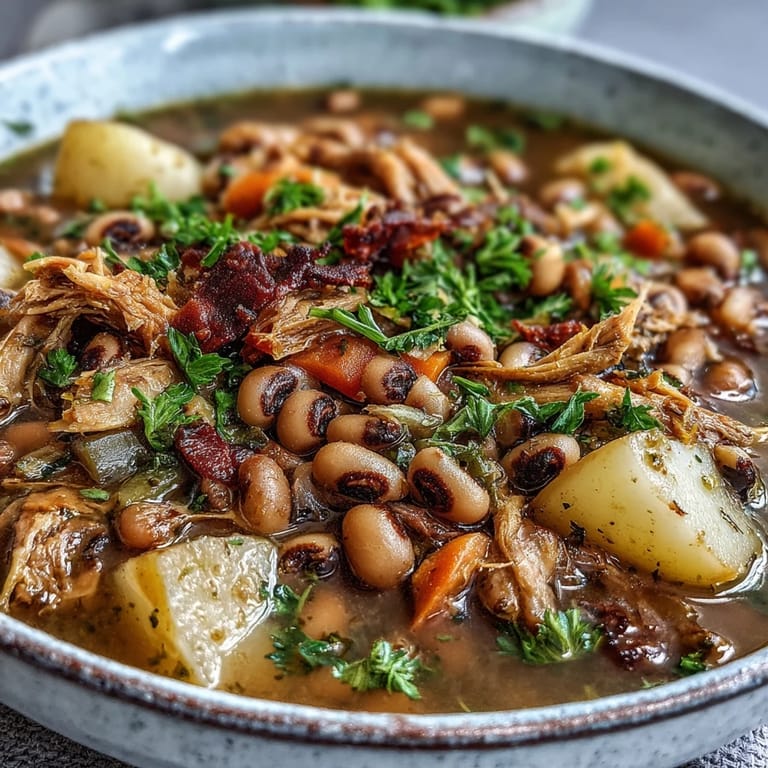
Save There's a moment halfway through cooking when you walk past the stove and pause, just to breathe in what's happening. The whole house has transformed into something warm and welcoming, and you realize that what started as ingredients in bowls has become a story being told in aromatics. This stew doesn't whisper—it announces itself, and people respond to that kind of honesty.
The Science Behind the Slow Simmer
Cooking this stew slowly does more than save you time standing over the pot—it fundamentally changes how the ingredients become one unified dish. The gelatin in the ham hocks breaks down into the broth, creating that silky mouthfeel that makes people ask what's your secret? The peas soften without disintegrating because the low heat respects their structure while the salt in the broth gradually seasons them throughout. Every vegetable releases its sugars gradually, and they caramelize just slightly from the residual heat, adding sweetness that balances the smoke. This is why rushing with high heat or trying to finish in 45 minutes never works—the chemistry needs time.
Make It Your Own (The Optional Variations)
This recipe is a template, not a prison, and I've learned that the best cooks know when to bend the rules. Some people add a splash of vinegar at the end for brightness, others stir in hot sauce while cooking, and I once had a version where someone added a can of diced green chiles. If you're vegetarian, omit the ham hocks entirely and use liquid smoke or extra smoked paprika to carry that essential smokiness—it won't be identical, but it will be delicious. You can also add extra vegetables like diced bell peppers, turnip greens, or even cauliflower, as long as you respect the cooking times and add harder vegetables early, tender ones late. The point is flavor and comfort, and there are many roads that lead there.
Beyond the Bowl: Storage, Serving, and Pairing
This stew actually improves as it sits, flavors melding and deepening overnight in the refrigerator, so make it a day ahead if you can. Store it in an airtight container for up to three days, and it freezes beautifully for up to three months—just leave a little headroom in the container since it expands slightly. Reheating is simple: thaw overnight in the refrigerator, then warm gently over medium-low heat, stirring occasionally and adding a splash of broth if it's thickened too much. Serve it in bowls with cornbread on the side for mopping up the last drops, or ladle it over steamed rice to stretch it further. Hot sauce should always be available—everyone has different heat thresholds, and letting people customize their own experience makes the meal feel more personal. On really cold evenings, I've been known to eat this with just a spoon and nothing else, right from the pot while standing at the kitchen counter, and those moments are often the ones I treasure most.
- Make it the day before for even better flavor—the overnight rest lets everything get to know each other.
- Freeze in portion-sized containers so you can thaw exactly what you need without waste.
- Always have hot sauce within arm's reach, because heat preference is deeply personal and nobody should suffer through bland stew.
 Save
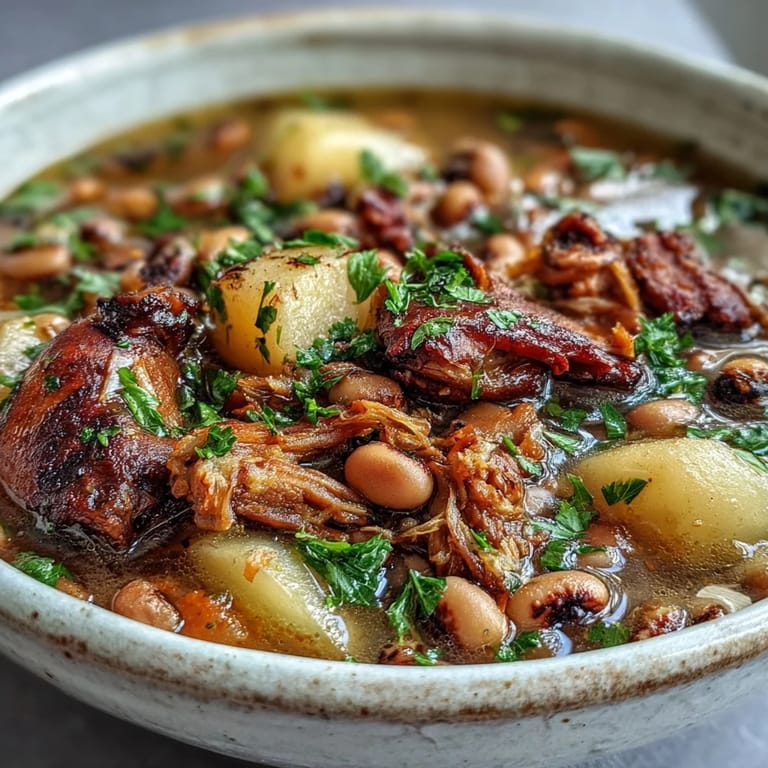
Save This is the kind of stew that asks nothing fancy from you except patience and presence, and in return, it gives you a kitchen that smells like home and a table full of contented people. Make it for yourself, make it for someone you love, make it for the kind of evening that deserves to be wrapped in warmth from the inside out.
Common Recipe Questions
- → Should I use dried or canned black-eyed peas?
Dried black-eyed peas soaked overnight yield the best texture and absorb more flavor, though canned work in a pinch. Dried peas hold their shape better during long simmering.
- → Can I make this vegetarian?
Absolutely. Omit the ham hocks and use extra smoked paprika or liquid smoke. Add a smoked salt or vegetable bouillon for depth. Consider adding mushrooms for umami richness.
- → Why are ham hocks traditional in this dish?
Ham hocks are essential for authentic Southern flavor. The collagen breaks down during simmering, adding body and richness while the smoked meat provides deep, savory notes that define this classic preparation.
- → What should I serve with this stew?
Cornbread is the classic accompaniment, perfect for soaking up the flavorful broth. Steamed rice also works beautifully. A simple green salad with vinaigrette balances the hearty richness.
- → How long does this keep and does it freeze well?
The flavors actually improve after a day or two in the refrigerator. Keeps well for up to 3 days. Freezes beautifully for up to 3 months—thaw overnight and reheat gently with a splash of broth.
- → Is it necessary to soak the peas overnight?
Soaking ensures even cooking and better texture. If time is short, use the quick-soak method: boil for 2 minutes, then let stand 1 hour before cooking. This yields similar results to overnight soaking.