 Save
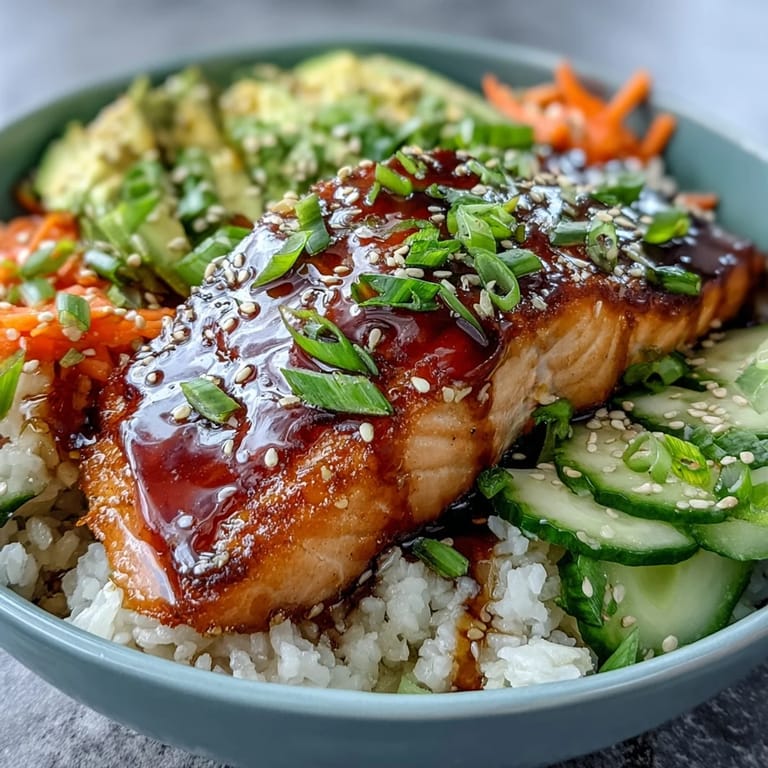
Save There was a night last July when the air was thick and the kitchen windows fogged up from the jasmine rice bubbling away. I had just come back from a brisk walk, craving something bright yet comforting, and that's how this teriyaki salmon bowl became my go-to answer for summer suppers. Watching the salmon sizzle in the pan, I was struck by how easily the sweet and savory glaze came together, its aroma wrapping around me like a gentle hug. Sometimes the hum of the kitchen mixes with the city outside, and suddenly, you realize 15 minutes is just enough to whip up something joyful. I suspect this recipe found me on one of those evenings when simplicity felt like the greatest gift.
One time, my partner wandered into the kitchen midway through cooking and started slicing cucumbers just to help, laughing as he tried to mimic my slightly too-perfect julienne carrots. The sizzle of the salmon drowned out the radio, but we were both focused on the fragrance of soy sauce and ginger catching in the steam. That night, we plated our bowls on the balcony, letting the city lights flicker while sesame seeds sprinkled down like confetti. We didn’t even bother grabbing forks — chopsticks were all we needed for a meal that felt like pure celebration. It’s a recipe that has become shorthand for quick, happy nights together.
Ingredients
- Salmon fillets: Always opt for skinless fillets so the teriyaki glaze can fully coat each surface; fresh salmon never fails, but frozen works if properly thawed.
- Vegetable oil: Just enough to sear and form a light crust; I learned that less oil helps the salmon caramelize instead of getting greasy.
- Salt and pepper: A tiny pinch sharpens the natural flavor of the salmon, so don’t skip it even if the sauce is bold.
- Soy sauce: Choose low sodium if you prefer less saltiness, as the glaze needs balance and depth without overwhelming the salmon.
- Mirin: Japanese rice wine brings a delicate sweetness; if you’re improvising with dry sherry, I recommend a touch more honey to compensate.
- Honey: Its stickiness helps the sauce cling to the fish, and it’s much gentler than refined sugar.
- Rice vinegar: A splash adds brightness; you’ll notice the sauce tastes lively instead of flat.
- Fresh ginger: Grate it just before cooking — the spice is warmer and more fragrant than dried.
- Garlic: Mincing fresh is worth it, as gently sautéed garlic turns aromatic and rounds out the glaze.
- Jasmine rice: Fluffy, fragrant rice is the backdrop for everything; I recommend pre-cooked or leftover rice for real speed.
- Cucumber: Thin slices keep the bite crisp and cool, perfect against the warmth of the salmon.
- Carrot: Julienne for visual appeal and crunch; I sometimes use a peeler for fine ribbons in a hurry.
- Avocado: Slices add creaminess that binds all the textures — be gentle when placing them to preserve their shape.
- Scallions: Scatter just before serving for freshness and a light onion finish.
- Toasted sesame seeds: Toast yourself in a dry pan for fuller flavor; sprinkle generously since they bring a nutty finish with each bite.
Tired of Takeout? 🥡
Get 10 meals you can make faster than delivery arrives. Seriously.
One email. No spam. Unsubscribe anytime.
Instructions
- Whisk the teriyaki sauce
- Grab a mixing bowl, and whisk together soy sauce, mirin, honey, rice vinegar, ginger, and garlic — the aroma is irresistible, almost sharp and sweet in equal measure.
- Sear the salmon
- Heat vegetable oil in a non-stick skillet over medium-high; season the fillets, then lay them in with a satisfying sizzle, watching the edges turn opaque after a couple minutes.
- Glaze in the pan
- Pour your freshly mixed teriyaki sauce over the salmon, letting it bubble and thicken while you gently spoon the glaze atop the fillets until glossy and cooked through.
- Prepare the bowls
- Divide steaming hot jasmine rice into two bowls; arrange cucumber, carrot, and avocado attractively on top — the contrast in color is so inviting.
- Assemble and finish
- Nestle a salmon fillet in each bowl, drizzle with any extra glaze, then scatter scallions and toasted sesame seeds to brighten the finish before serving.
 Save
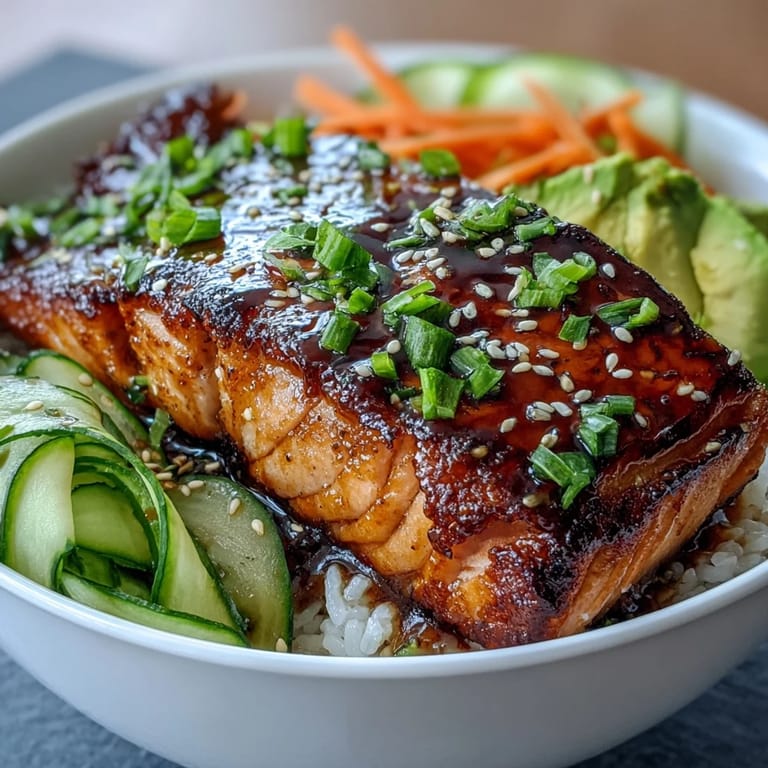
Save Serving this bowl on a rainy day once, I watched my little nephew cautiously poke the avocado before grinning at the first taste — he was hooked. It felt less like dinner and more like a tiny ritual, especially when everyone reaches for seconds of sesame seeds to sprinkle on their own bowl.
How to Make the Sauce Stand Out
I've found that using freshly grated ginger makes the teriyaki sauce truly come alive — it adds warmth and a gentle heat that store-bought versions lack. Sometimes, I grate a bit more than called for, trusting my nose to guide the proportions. If the sauce ever tastes too salty to you, a splash more honey is the quickest fix. Balancing these flavors is all about personal preference, so don’t hesitate to adjust along the way.
Choosing the Right Rice
Jasmine rice is the classic choice for its floral fragrance and lightness, but I've tried brown rice and quinoa for a heartier spin. Occasionally, I've used leftover rice, reheating it gently with a splash of water— a little trick ensures it stays fluffy instead of drying out. The rice becomes a blank canvas for the salmon and sweet glaze, and I love how it can change to match the mood or pantry.
Quick Fixes for Freshness
I keep cucumber and carrot chilled until the last second, so the veggie toppings are extra crisp alongside the warm rice and salmon. The avocado is best sliced right before serving, preventing it from browning and keeping each bite creamy. Scallions and sesame seeds are simple but transformative, turning the bowl from just another meal into something special.
- If you're out of sesame seeds, crushed roasted peanuts add a similar crunch.
- Feel free to add pickled ginger or edamame for more texture.
- Always taste the glaze before pouring — make sure it feels balanced.
 Save
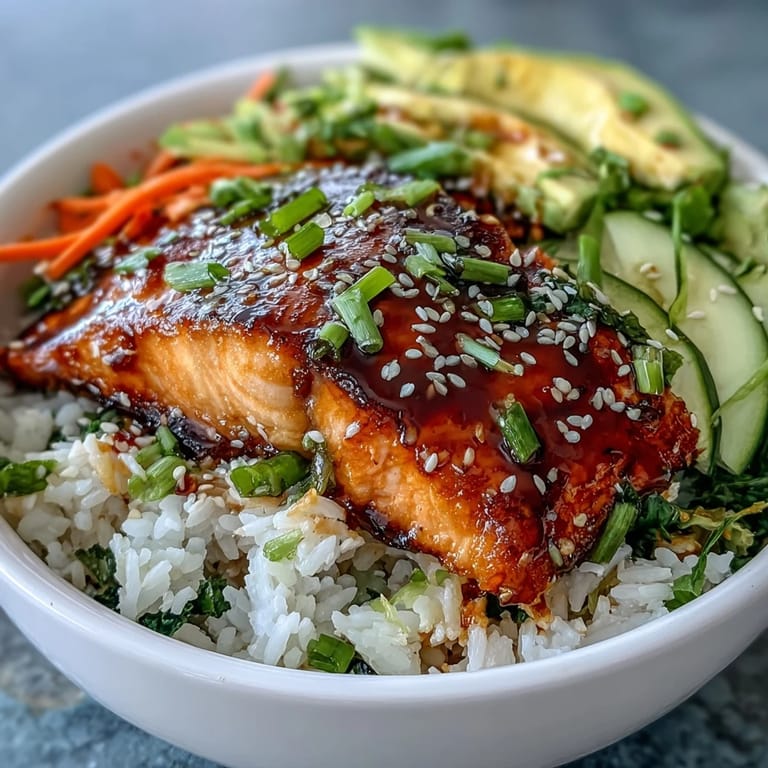
Save This salmon bowl is a recipe I come back to for its ease and irresistible flavors — you’ll see for yourself how satisfying it is to make, and to share.
Common Recipe Questions
- → What can I use instead of mirin?
Dry sherry or a splash of rice vinegar can substitute for mirin, preserving the sauce's depth and sweetness.
- → Is it possible to make this bowl gluten-free?
Replace soy sauce with tamari and check condiments for wheat to create a gluten-free meal option.
- → Can I use a different grain for the base?
Brown rice, quinoa, or cauliflower rice all serve as excellent alternatives to jasmine rice for a hearty bowl.
- → How do I know when the salmon is cooked?
Salmon is ready when opaque throughout and flakes easily with a fork. Searing each side for 2–3 minutes works best.
- → What vegetables can I add for extra freshness?
Try adding pickled ginger, shredded cabbage, edamame, or sliced radish for more texture and color.
- → Is this dish suitable for meal prep?
Yes, assemble components ahead and add the sauce before serving for a convenient, flavorful meal.