 Save
Save There's something about arranging food on a board that makes you slow down. I discovered this dish during a particularly chaotic week when I needed to cook something that asked nothing of me except attention. The vegetables didn't need heat, the cheese didn't need stress, and somehow, by the time I'd finished placing things in pairs across the board, my own breathing had matched the rhythm of the arrangement. It became less about feeding people and more about creating a moment where everything felt intentional.
I made this for my mother one afternoon when she'd been frustrated by the news all morning. We didn't talk much while I arranged it, but when I set it down between us, she laughed. Not because it was funny, but because something about the symmetry and the empty space between the two sides seemed to say what we both needed—that balance exists if you're brave enough to create it deliberately.
Ingredients
- Fresh cucumber, 8 slices: Choose firm, young cucumbers and slice them thin enough to bend slightly without breaking—this is where delicacy matters.
- Baby carrots, 8 whole: Raw and sweet, they bring a subtle earthiness that won't overwhelm the more delicate elements.
- Radishes, 8 halved: Their peppery snap is what keeps this from feeling too precious or precious.
- Goat cheese, 60 g shaped into small rounds: This is your anchor—creamy against everything crisp around it.
- Gluten-free crackers, 8: Choose ones with enough texture to stand up to the cheese without crumbling mid-bite.
- Roasted almonds, 30 g: The nuttiness deepens everything around it, and the crunch is essential to the experience.
- Seedless red grapes, 8: They roll slightly when you arrange them, which is part of their charm.
- Fresh herbs (chives or dill), a small bunch: Use what feels green and alive in your kitchen—these are the final punctuation.
Tired of Takeout? 🥡
Get 10 meals you can make faster than delivery arrives. Seriously.
One email. No spam. Unsubscribe anytime.
Instructions
- Find your board and clear your mind:
- Select a wooden or slate board at least 60 centimeters long and set it somewhere you won't be rushed. This dish rewards a calm hand.
- Build the first pile:
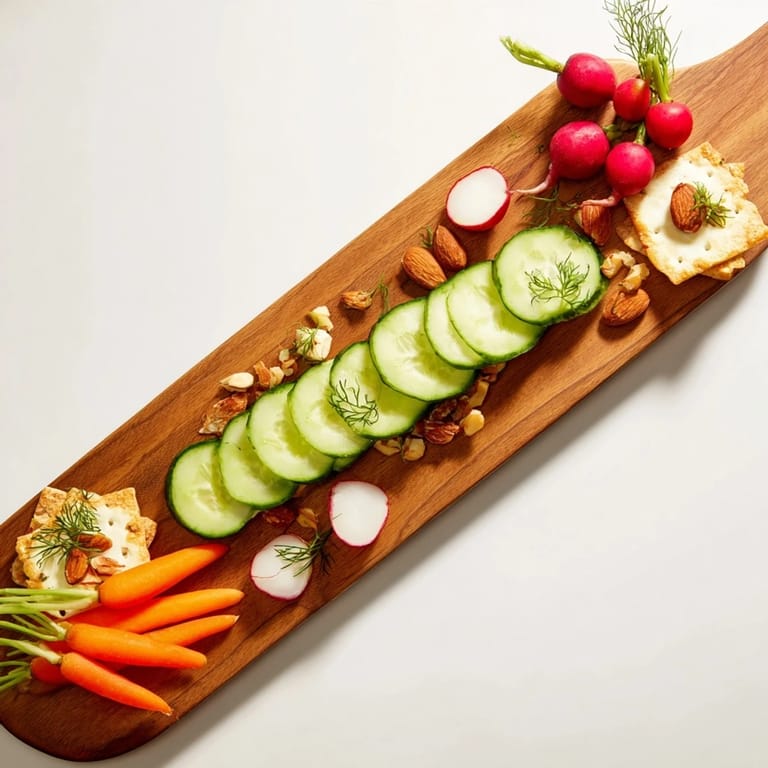
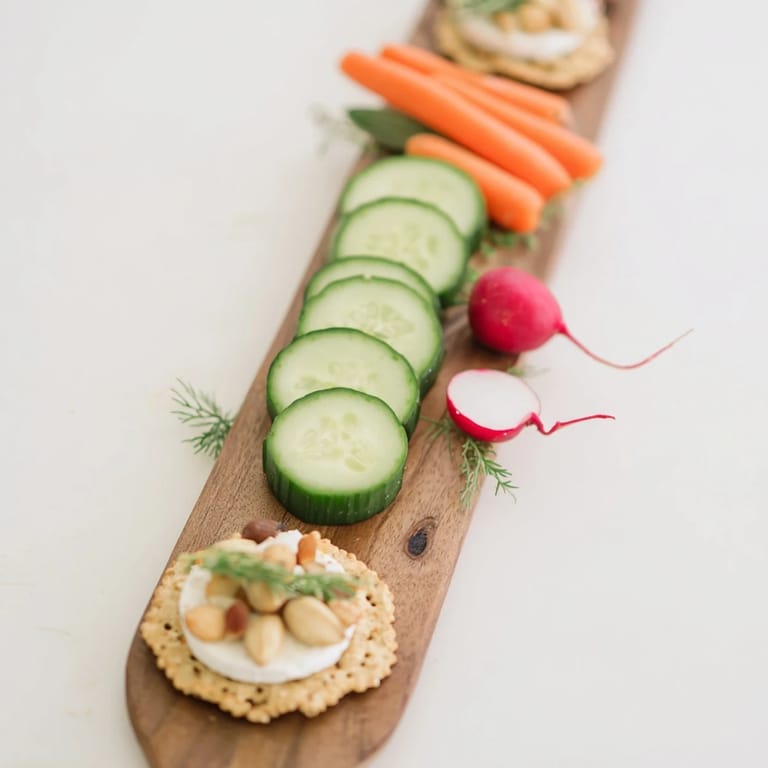
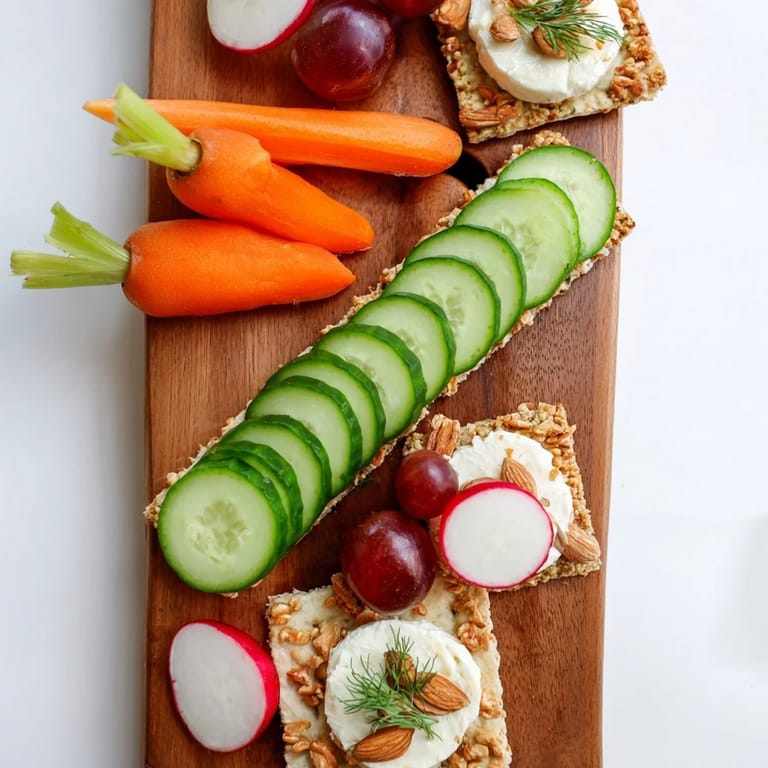
- At one end, create a neat, attractive mound using half of everything: cucumbers as a base, then layer in the crackers, carrots, radishes arranged like a small garden, the grapes nestled in, goat cheese positioned where it catches light, and almonds scattered across the top like intentional accidents. Step back and look at it before moving forward.
- Mirror the other side:
- Move to the opposite end and repeat this exact arrangement with the remaining ingredients. This is where patience becomes part of the recipe—resist the urge to rush or improvise.
- Garnish and breathe:
- Tuck a few sprigs of fresh herbs into each pile for color and aroma. The empty space between them is not a mistake; it's the whole point.
- Serve with intention:
- Bring it to the table and give people a moment to just look before anyone reaches for anything. This matters more than you might think.
 Save
Save The first time someone told me this dish changed how they thought about food presentation, I realized it wasn't really about the ingredients at all. It was about the permission I'd given them to care about symmetry, empty space, and the small ceremonies we build around eating together.
The Art of Negative Space
That empty stretch of board between the two sides isn't laziness—it's the most important part. It's what makes your eye travel from one side to the other, and what gives the whole thing room to breathe. I learned this the hard way by filling every inch once, and the result felt cluttered instead of calm. The emptiness is what transforms this from a cheese board into something with intention.
Choosing Your Canvas
The board itself deserves thought. Slate feels contemporary and a little moody; wood feels warm and lived-in. I've used both, and they change the mood entirely. If you only have ceramic or glass, use it—but if you can choose, let the board be part of the story you're telling. A 60-centimeter board is genuinely the minimum; anything smaller and the balance feels cramped instead of harmonious.
Timing and Temperature
This dish lives in the moment—assemble it as close to serving time as you can, when everything is still cool and the herbs are still bright. If you need to prep ahead, keep the components separate and arrange them right before your guests arrive. The goat cheese will soften as it sits, and while that's not disastrous, the precision of it matters to the whole idea.
- Cut everything just before arranging if possible; cucumber and radishes oxidize faster than you'd think.
- If you're serving with wine, a crisp white like Sauvignon Blanc really does make the whole thing sing together.
- Encourage people to eat slowly and actually taste each pairing—this is meant to be savored, not rushed through.
 Save
Save This dish taught me that cooking isn't always about flavor or technique—sometimes it's about creating a pause in someone's day. That's its own kind of nourishment.
Common Recipe Questions
- → What ingredients are used in the Zen Balance platter?
It features fresh cucumber slices, baby carrots, radishes, red grapes, goat cheese rounds, roasted almonds, gluten-free crackers, and fresh herbs for garnish.
- → How is the platter arranged for visual appeal?
Ingredients are divided into two identical piles at opposite ends of a long board, creating a symmetrical and balanced presentation with empty space in the center.
- → Can I make this dish vegan-friendly?
Yes, by substituting the goat cheese with a plant-based alternative, the platter can be adapted for vegan preferences.
- → What tools are recommended for assembling this dish?
A large wooden or slate serving board, a paring knife, and a cheese knife are ideal for precise and neat arrangement.
- → What beverage pairs well with this artful arrangement?
A crisp white wine such as Sauvignon Blanc complements the freshness and delicate flavors of the ingredients.
- → Is this dish suitable for gluten-free diets?
Yes, by using certified gluten-free crackers, the platter remains gluten-free and suitable for sensitive diets.