 Save
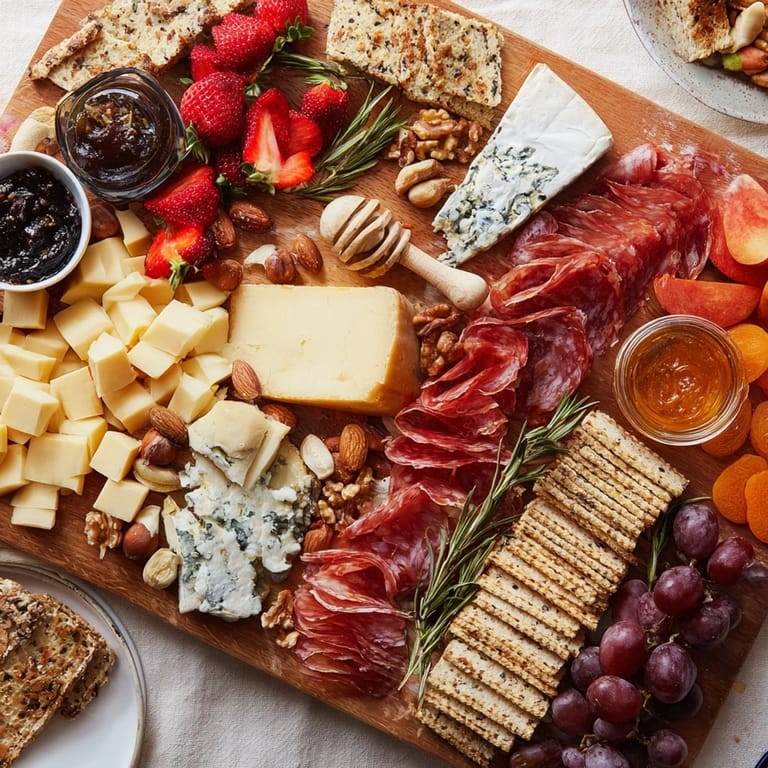
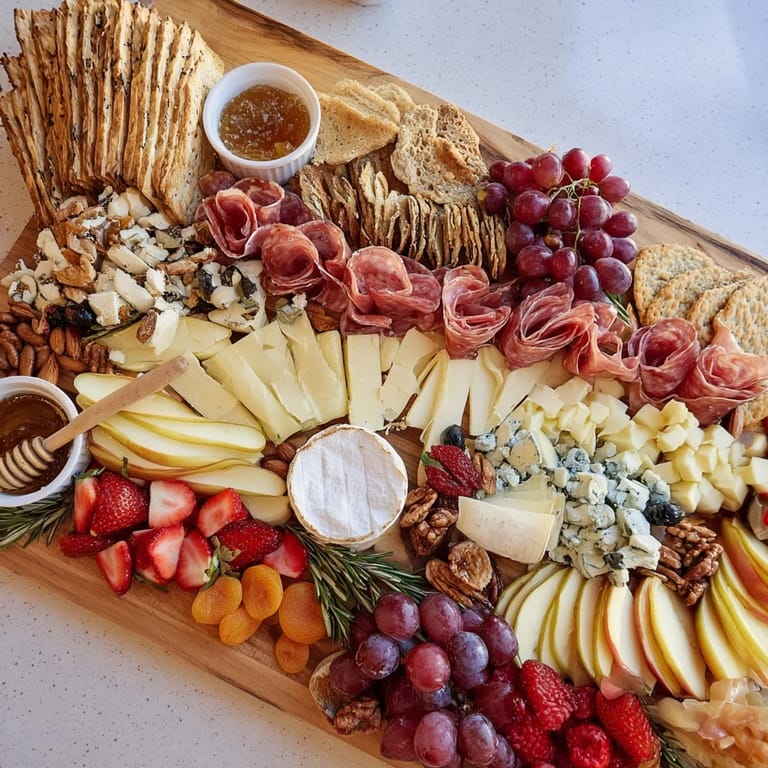
Save The first time I assembled a grazing board that actually cascaded off the table, I realized I'd been thinking about entertaining all wrong. My guests arrived to find not just food, but a deliberate mess—a beautiful overflow of cheese, fruit, and cured meats spilling onto the tablecloth like an accident that was totally on purpose. It was one of those moments where breaking the rules of presentation actually made people feel more welcome, like the abundance was so generous it couldn't be contained. That board became my favorite way to gather people without fussing over plated courses.
I made this board for my sister's book club, and what struck me was how people naturally gravitated to the spillover elements on the table—the stray fig or almond that had tumbled over the edge felt like a little treasure hunt. One guest actually reached down to grab a piece of prosciutto from the tablecloth, and instead of it feeling wrong, it felt like permission to be less formal and more human about eating together.
Ingredients
- Brie, sliced (150 g): The creamy anchor that should sit near the edge—it's forgiving enough to hold its shape while looking generous and soft.
- Aged Cheddar, cubed (150 g): Cut it into irregular chunks so it catches light and looks intentionally rustic, not just diced.
- Blue cheese, crumbled (100 g): Use real crumbles, not pre-crumbled dust—texture matters when things are stacked.
- Goat cheese log, sliced (100 g): Keep it cold until the last moment so the slices don't wilt when they drape over the edge.
- Prosciutto (100 g): Buy sliced from the counter, and let each slice pool naturally in folds—it shouldn't be stretched flat.
- Salami, sliced (100 g): Choose one with good color variation; it photographs better and adds visual depth.
- Red grapes in small clusters (1 cup): Leave a few on the vine for visual interest, and nestle them into gaps like they're hiding.
- Strawberries, halved (1 cup): Cut them just before assembly so they don't weep onto the cheese.
- Blueberries (1/2 cup): Roll these loose on the board and table—they're natural wanderers and enhance the cascade illusion.
- Pear, thinly sliced (1): Slice just before serving and toss in a little lemon juice to prevent browning.
- Dried apricots (1/2 cup): The chewy texture contrasts beautifully with fresh fruit and fills visual gaps efficiently.
- Dried figs, halved (1/2 cup): Split them so guests can see the inside—it's more inviting than whole.
- Almonds (1/3 cup): Toast them lightly if you want more flavor, but raw works fine for a delicate board.
- Walnuts (1/3 cup): Their darker color grounds the board and prevents it from looking too pastel.
- Baguette, sliced and toasted (1): Toast until crisp but not rock-hard; the board's edge will soften it slightly as it sits.
- Assorted crackers (150 g): Mix textures—some thin and delicate, some sturdy enough to hold jam or cheese.
- Honey (1/4 cup): Pour it into a small ramekin and let a few drips lead off the table edge for drama.
- Fig jam (1/4 cup): This bridges sweet and savory and makes the board feel intentional, not random.
- Mixed olives (1/4 cup): Pit them if you can; whole olives with pits feel like a hazard on a casual grazing board.
- Fresh herbs for garnish (rosemary, thyme): A small sprig tucked into cheese or scattered across adds fragrance and makes the whole thing feel like a garden spilled onto your table.
Tired of Takeout? 🥡
Get 10 meals you can make faster than delivery arrives. Seriously.
One email. No spam. Unsubscribe anytime.
Instructions
- Set Your Stage:
- Position a large wooden or marble board so one edge extends naturally over the table's edge, with at least 12 inches of overhang. This isn't reckless—it's the whole point. Make sure the board is stable and won't tip.
- Create the Cheese Cascade:
- Arrange soft cheeses (brie, goat cheese) first in overlapping layers near the board's edge, letting slices extend beyond the boundary so gravity does the visual work. Follow with harder cheeses (aged cheddar, blue cheese) tucked between and over, creating height and texture.
- Drape the Cured Meats:
- Fold prosciutto into loose, undulating waves alongside the cheese, letting some pieces spill onto the table below like they're mid-fall. Scatter salami slices in between, and don't worry about perfect placement—the organic chaos is the style.
- Scatter Fresh Fruit Strategically:
- Cluster grapes where they'll naturally roll off, nestle strawberry halves into crevices between cheeses, and let blueberries loose to wander from board to table. The pear slices should bridge both surfaces, connecting the board to the spillover.
- Fill the Gaps with Texture:
- Tuck dried apricots and fig halves along the board's surface and table edge, then scatter almonds and walnuts to anchor everything visually. Think of these as the connective tissue that makes the cascade feel intentional.
- Position Crackers and Bread Strategically:
- Stand some baguette slices and crackers vertically along the board's edge, lean others at angles as if they're tumbling, and lay a few horizontally near the table spillover. This creates the illusion that everything is mid-fall.
- Add Liquid Elements and Bowls:
- Place small ramekins of honey and fig jam on the board itself, and position olives in a shallow bowl so a few scatter across the table. Let honey drip intentionally down a piece of bread for visual impact.
- Garnish and Breathe:
- Tuck sprigs of fresh rosemary or thyme into cheese gaps and scatter small herb leaves across the board and table. Step back and assess the composition—you should see height, movement, color variation, and a sense that it's almost too abundant to control.
- Serve with Intention:
- Encourage guests to eat from both the board and the table surface, making the waterfall part of the experience rather than a mess to ignore. Set out cheese knives and small plates so people can help themselves without awkwardness.
 Save
Save The magic moment happened when my brother reached under the table to grab a piece of prosciutto that had fallen, and instead of anyone laughing or correcting him, everyone else started doing it too. That's when I knew the board had worked—it transformed the boundary between food and table, between formal service and casual gathering, into something that felt more like play than entertaining.
Why the Waterfall Works
This isn't just a presentation trick; it's a psychological invitation. When food appears abundant enough to literally overflow, guests feel permission to eat more, relax more, and share space without formality. The cascade edge also creates natural visual flow—your eye follows the arrangement down to the table, making the whole spread feel connected and intentional rather than confined. It's the secret language of abundance.
Board Selection Matters
Wood is warmer and more forgiving than marble, but marble photographs like a dream. Whatever you choose, ensure it's at least 20 inches long so the overhang feels generous without being precarious. I learned this the hard way when a 16-inch board looked cramped and fussy instead of abundant—go bigger than you think you need. The surface texture should be slightly rough so items don't slide uncontrollably as guests reach across.
The Art of Intentional Mess
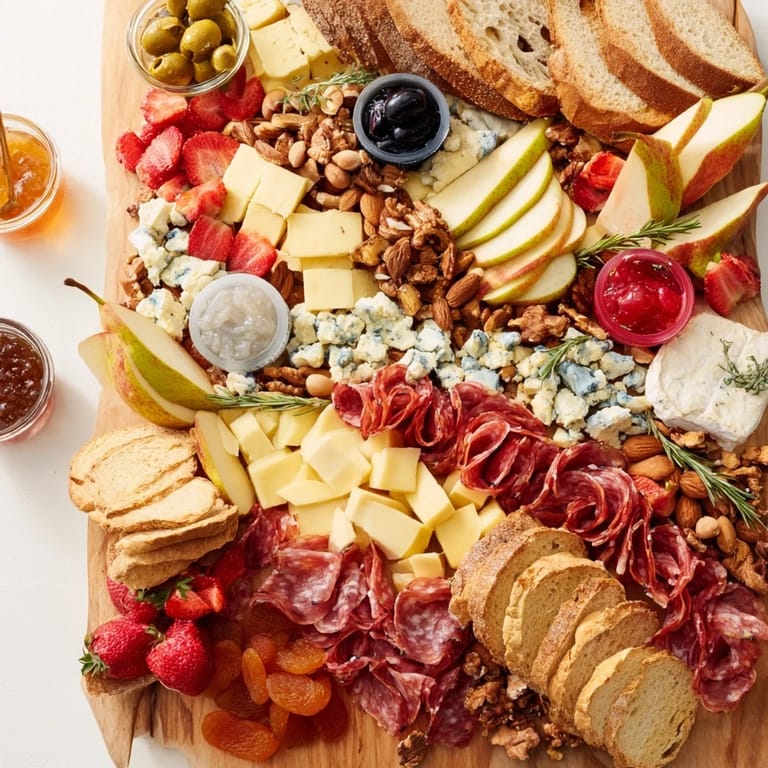
The waterfall effect walks a line between careful composition and controlled chaos—and that balance is what makes people stop and stare. Plan where the major elements will cascade, but leave room for happy accidents. Think about color distribution so the board doesn't look lopsided, and ensure there's height variation so the eye travels through the arrangement instead of getting stuck in one spot.
- Arrange cheese and deli meats near the edge so they drape naturally, then layer fruit around them to catch light and add color.
- Position your ramekins of honey and jam offset from each other so they create rhythm rather than cluttering one section.
- Let the smallest items (blueberries, nuts, herb leaves) scatter last—they're your visual connective tissue.
 Save
Save This board became my go-to because it feels fancy without pretense—generous without waste, visually stunning without stress. Once you've made one, you'll reach for it again and again because guests always remember how welcomed they felt.
Common Recipe Questions
- → How can I adapt the board for a vegan diet?
Substitute plant-based cheese alternatives for the dairy cheeses and omit cured meats. Add extra fruits, nuts, or chocolate pieces for variety.
- → What is the best way to create the cascading effect?
Layer ingredients near the board's edge with some pieces extending past the surface. Arrange fruits and nuts to spill gently onto the table using tiers and overlaps.
- → Which accompaniments complement the flavors well?
Honey, fig jam, and mixed olives provide sweetness and savory notes that enhance the taste of cheeses and cured meats.
- → How long can this board be kept before serving?
Assemble the board shortly before serving to maintain freshness and prevent dried fruit or cheese from drying out.
- → What tools are recommended for assembling this board?
Use a large wooden or marble board, small bowls for dips, cheese knives, and serving tongs for easy arrangement and serving.