 Save
Save The first time I made manti, I was standing in a cramped Istanbul kitchen with my friend's grandmother, flour dusting everything including my hair. She didn't speak much English, but her hands moved with such certainty—rolling dough paper-thin, pinching those tiny corners into perfect little parcels. I kept wondering how something so delicate could survive boiling water, but when those pillows of cheese floated to the surface, still intact and tender, I understood the magic. Now whenever I make them at home, that kitchen moment comes rushing back.
I made this for a dinner party last spring when my neighbor mentioned she'd never had Turkish food. Watching her take that first spoonful—the way her eyes closed when the butter and yogurt hit her tongue—made me realize manti isn't really about the recipe. It's about those moments when simple ingredients become something that stops people mid-conversation.
Ingredients
- All-purpose flour: Two cups creates a dough that's forgiving but still develops enough structure to hold the filling without tearing.
- Egg: One large egg binds everything and gives the dough that slightly rich texture that makes it less likely to crack.
- Turkish white cheese: This is milder and creamier than feta alone—if you can't find it, mix feta with ricotta for a softer result.
- Ricotta cheese: Half a cup balances the salty cheese and adds a silky texture that transforms the filling.
- Fresh parsley: Just two tablespoons, but it's essential—it cuts through the richness with a bright, herbaceous note.
- Greek yogurt: Use full-fat if you can; it coats your mouth in the best way and stands up beautifully to the spiced butter.
- Paprika and Aleppo pepper: These aren't just garnish—they're infused into the butter, creating layers of warmth that tie everything together.
Tired of Takeout? 🥡
Get 10 meals you can make faster than delivery arrives. Seriously.
One email. No spam. Unsubscribe anytime.
Instructions
- Build your dough base:
- Combine flour and salt in a bowl, then create a well and add your egg and water. Mix until shaggy, then knead for about five minutes until the dough becomes smooth and elastic—you should feel it transform under your hands. Let it rest under a cloth for twenty minutes; this is when the gluten relaxes and makes rolling infinitely easier.
- Prepare the cheese filling:
- While dough rests, mix your cheeses with parsley and black pepper in a separate bowl. Taste it and adjust the salt if needed—the filling should taste bold enough to sing through the other components.
- Make the yogurt sauce:
- Whisk together yogurt, minced garlic, and salt until completely smooth. If it tastes too thick, thin it slightly with water—it should spoon easily over the manti without clumping.
- Roll and cut:
- On a lightly floured surface, roll the dough until it's almost transparent—about the thickness of a dime. This takes patience, but thin dough is what makes manti tender rather than chewy. Cut into squares about one and a half inches across.
- Fill and seal:
- Place a tiny amount of cheese—roughly half a teaspoon—in the center of each square, then pinch all four corners together above the filling. They should look like little gathered pouches. Don't overfill or they'll burst.
- Cook until they float:
- Bring salted water to a rolling boil, then add manti in batches so they have room to move. They'll sink, then float to the surface within a few minutes; that's when you know they're done. Fish them out with a slotted spoon and drain well on a clean kitchen towel.
- Create the spiced butter:
- Melt butter in a small pan over medium heat, then stir in paprika and Aleppo pepper. Let it sizzle for just thirty seconds—you want the spices to bloom and perfume the butter, not burn.
- Compose the plate:
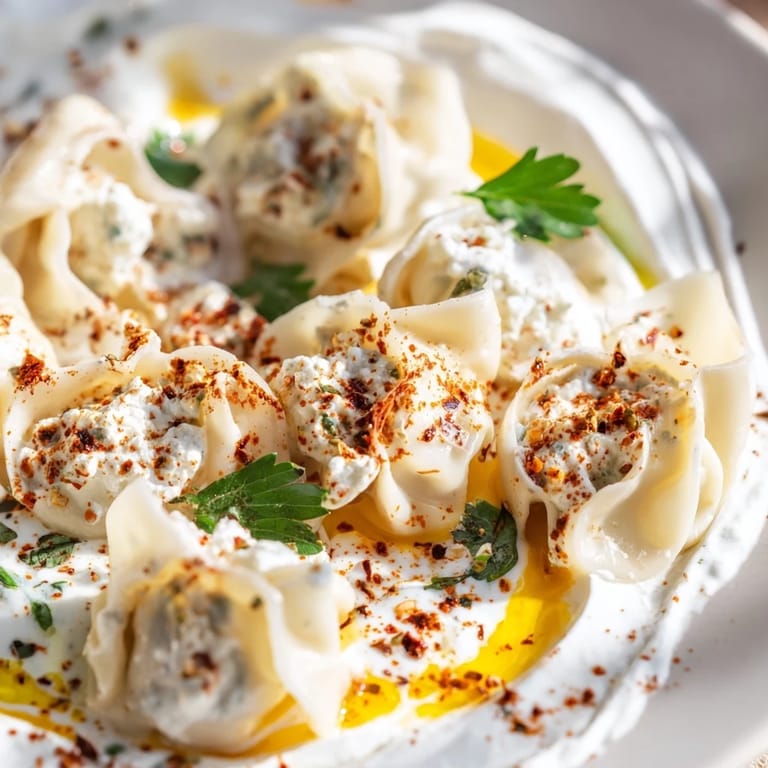
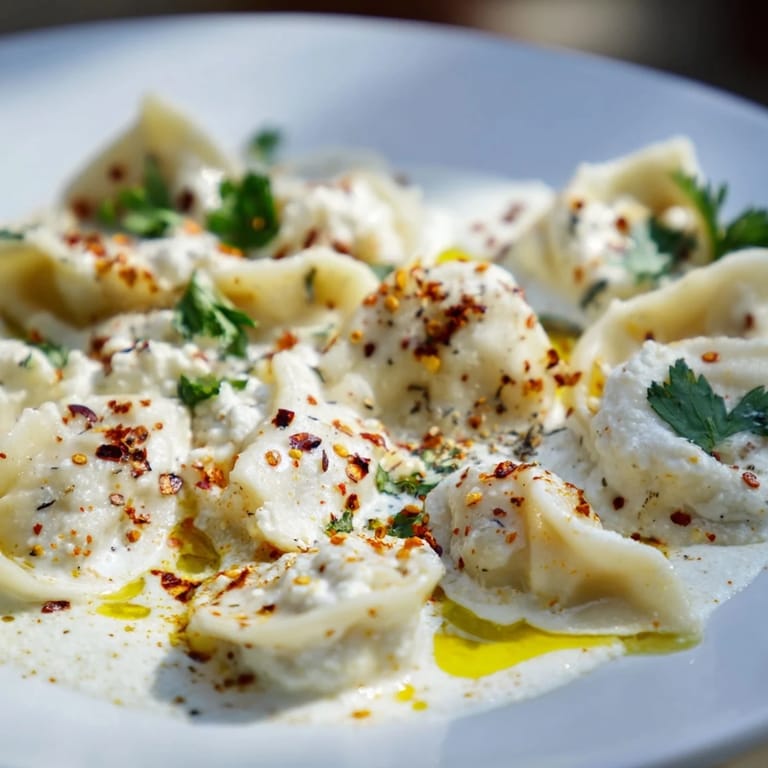
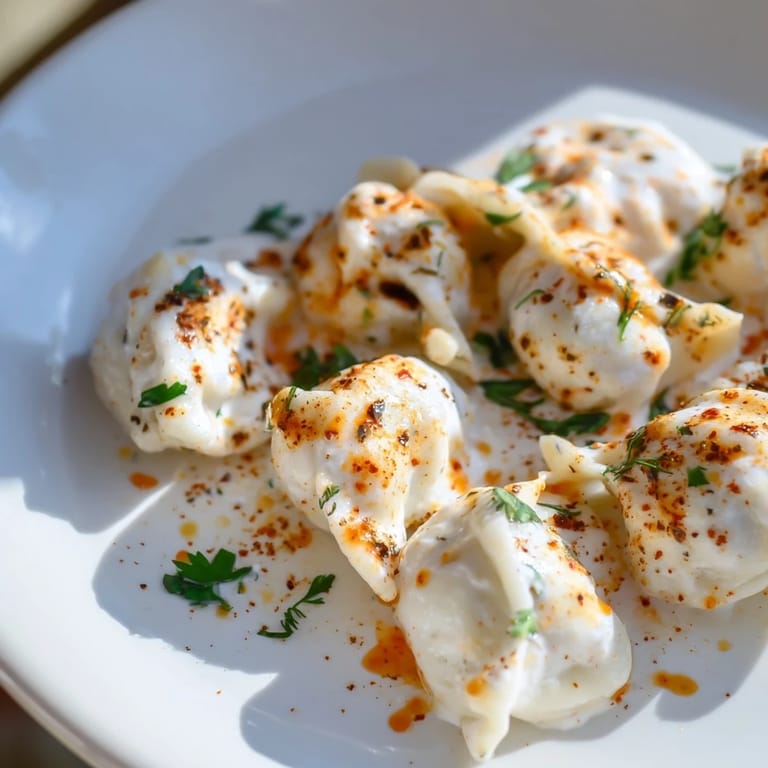
- Arrange warm manti on plates, spoon yogurt sauce generously over top, then drizzle with that precious spiced butter. The heat from the manti will slightly warm the yogurt, creating something between a sauce and a dressing that's absolutely unforgettable.
 Save
Save There was a moment during that Istanbul afternoon when the grandmother handed me a finished manti to taste, still warm from the water. It was perfectly sealed, perfectly tender, and she watched my face with quiet satisfaction. That's when I realized manti isn't difficult—it just requires attention, the way real cooking always does.
The Secret of Tender Dough
The resting period isn't just tradition; it's chemistry. When you let dough sit, the flour fully hydrates and the gluten network develops gently, which means less kneading is needed afterward. This results in a softer, more cooperative dough that rolls thinner without tearing. I learned this the hard way by trying to skip the rest, and the manti were noticeably tougher that night.
Why the Filling Ratio Matters
It's tempting to stuff these little pockets generously, but restraint is what makes them work. A half teaspoon of filling means the dough can seal properly and the cheese cooks evenly without bursting through. I've found that slightly under-filled is always better than slightly over-filled—the filling expands slightly as it cooks, and you want that surprise of creamy cheese balanced against the tender wrapper, not a dumpling that falls apart on your fork.
Bringing It All Together
The magic happens in those final moments when warm manti meets cool yogurt and that whisper of spiced butter ties everything together. The temperature contrast, the flavors layering against each other—it's simple and complex at the same time, which is exactly what makes this dish so memorable and worth making again and again.
- Serve immediately after plating; manti are at their best when the dough is still warm and the yogurt is cool.
- A garnish of fresh parsley or a pinch of sumac adds color and a bright note that bridges the dish beautifully.
- Leftover manti can be reheated gently in the oven, though they're honestly best fresh.
 Save
Save Making manti takes you into a rhythm that's almost meditative—rolling, filling, pinching. It's the kind of cooking that rewards slowness and presence, and the payoff is a dish that tastes like someone spent the whole day thinking about you.
Common Recipe Questions
- → What cheeses are best for the filling?
Use Turkish white cheese or feta combined with ricotta for a creamy, tangy filling that holds well inside the dumplings.
- → How thin should the dough be rolled?
Roll the dough very thin, approximately 2 millimeters, to achieve delicate dumplings that cook evenly and stay tender.
- → Can I substitute the spiced butter ingredients?
Yes, paprika and Aleppo pepper can be replaced by chili flakes and smoked paprika for a similar smoky heat.
- → What is the best way to cook the dumplings?
Boil them in salted water until they float and become tender, usually about 5 to 7 minutes, then drain carefully.
- → How can I add extra flavor to the dish?
Sprinkle sumac or dried mint atop the finished dish to add a tangy or refreshing herbal note.