 Save
Save My coworker brought one of these bowls to lunch last summer, and I remember being struck by how the coconut-soaked quinoa actually tasted creamy without being heavy. She'd made it the night before, and even cold it had this alive quality—the vegetables still crisp, the dressing coating everything in this perfect balance of salty and sweet. I asked for the recipe that afternoon, and it's been my go-to whenever I need something that feels both indulgent and genuinely good for me.
I made this for a friend who'd just started eating vegetarian, and watching her face light up when she tasted it told me everything I needed to know. She'd been worried about missing richness in her meals, but this bowl delivered exactly that—complexity, satisfaction, all the comfort she was looking for. It's become her weekly lunch now, and honestly, that's when you know you've got something special.
Ingredients
- Quinoa, rinsed: Don't skip the rinsing—it removes the natural coating that can make quinoa taste bitter and grainy.
- Coconut milk, full-fat or light: Full-fat gives you that luxurious richness, but light works if you prefer something less heavy; both work beautifully here.
- Water: This balances the coconut flavor so it doesn't overwhelm; use filtered water if you have it for the clearest taste.
- Salt: Season the cooking liquid generously so the quinoa absorbs flavor as it cooks.
- Red bell pepper, thinly sliced: The sweetness cuts through the savory dressing and adds a fresh crunch that matters.
- Carrot, julienned or shredded: Julienne them thin so they soften slightly from the warm quinoa while still keeping bite.
- Cucumber, thinly sliced: Use English cucumber if you can—fewer seeds and a milder, crisper texture.
- Purple cabbage, shredded: This adds earthy sweetness and gorgeous color; it also holds up better than green cabbage when dressed.
- Edamame, cooked and shelled: Buy them frozen already cooked to save yourself time—just thaw and shell them.
- Fresh cilantro, chopped: Add this just before serving so it stays bright and herbaceous rather than turning dark and bitter.
- Sesame seeds: Toast them yourself if you have time; the difference in flavor is remarkable and worth the extra minute.
- Creamy peanut butter: Use natural peanut butter if you prefer, but make sure it's well-stirred so the oil is evenly distributed.
- Soy sauce: Tamari is your friend here if you need gluten-free, and honestly it tastes slightly cleaner.
- Rice vinegar: This is milder than distilled vinegar and won't overpower the dressing with sharpness.
- Lime juice, fresh: Bottled works in a pinch, but fresh lime makes the dressing taste alive rather than flat.
- Maple syrup or honey: These balance the umami and salt; maple syrup is vegan but honey adds a subtle floral note.
- Toasted sesame oil: A little goes a long way—this is where the dressing gets its nutty, almost caramel-like depth.
- Warm water: Start with less and add gradually so you don't thin the dressing too much; you want it pourable, not runny.
Tired of Takeout? 🥡
Get 10 meals you can make faster than delivery arrives. Seriously.
One email. No spam. Unsubscribe anytime.
Instructions
- Toast and rinse the quinoa:
- Rinse it under cold water in a fine-mesh strainer, shaking gently until the water runs clear—this removes the saponin coating that can taste soapy. Some people like to toast the rinsed quinoa in a dry pan for 2 minutes before cooking for a nuttier flavor, though it's entirely optional.
- Cook the coconut quinoa:
- Combine the rinsed quinoa, coconut milk, water, and salt in a medium saucepan and bring to a boil over high heat. Once it's boiling, reduce to low, cover, and let it simmer gently for 15 minutes until all the liquid is absorbed and you can see small spirals popping out of each grain.
- Rest the quinoa:
- Remove from heat and keep it covered for 5 minutes—this allows the grains to finish setting without becoming mushy. Fluff it with a fork and taste; add a pinch more salt if needed.
- Prep your vegetables while the quinoa cooks:
- This is the perfect time to slice the bell pepper, julienne or shred the carrot, slice the cucumber and cabbage, and shell your edamame. Keep everything separate so you can arrange the bowl beautifully and control which flavors you're getting with each bite.
- Whisk the dressing:
- In a small bowl, combine the peanut butter, soy sauce, rice vinegar, lime juice, maple syrup, and sesame oil. Whisk until it's mostly smooth, then add warm water one tablespoon at a time, whisking between additions until you reach a consistency that's pourable but still has body—it should coat a spoon.
- Assemble the bowls:
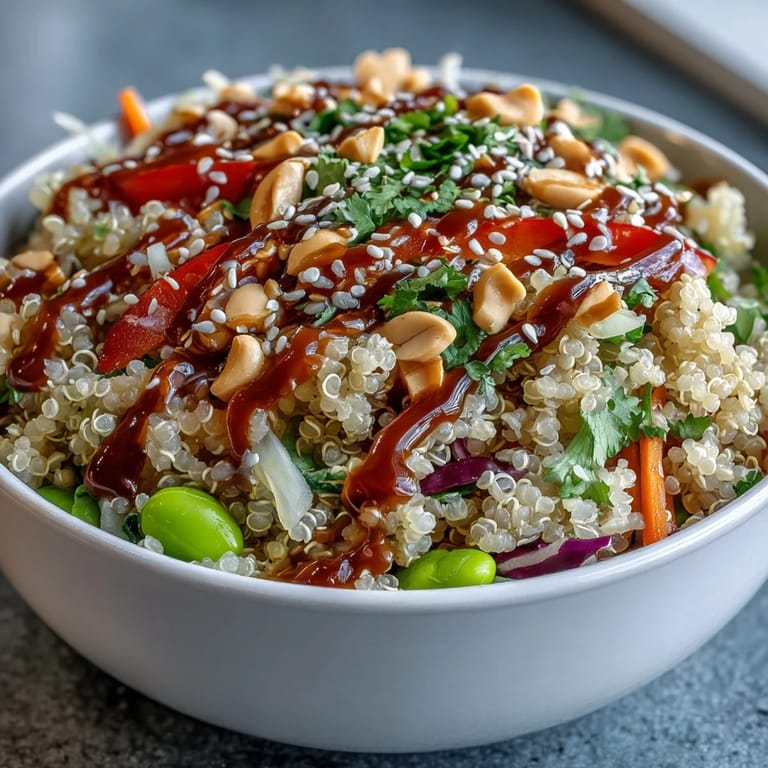
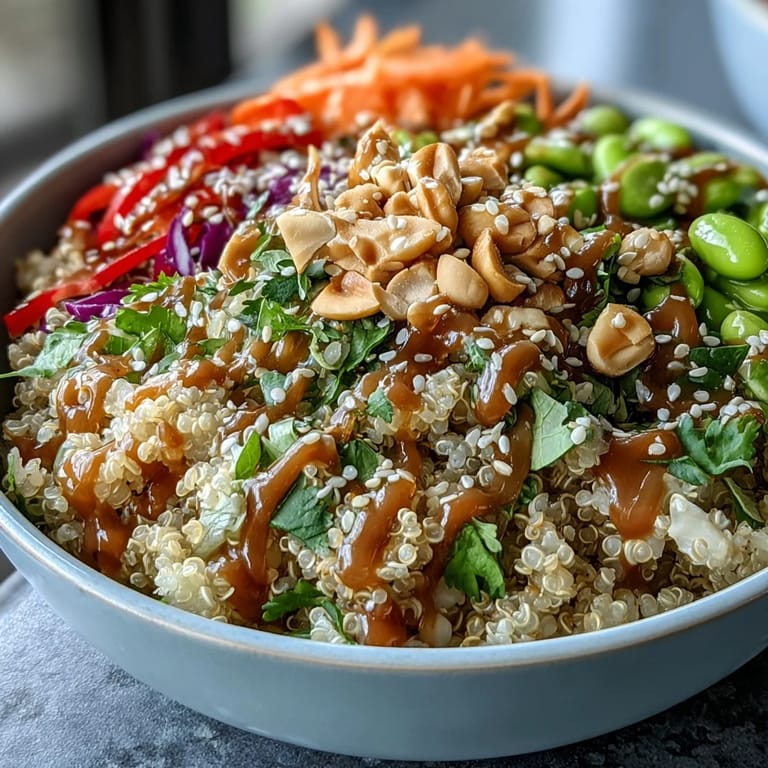
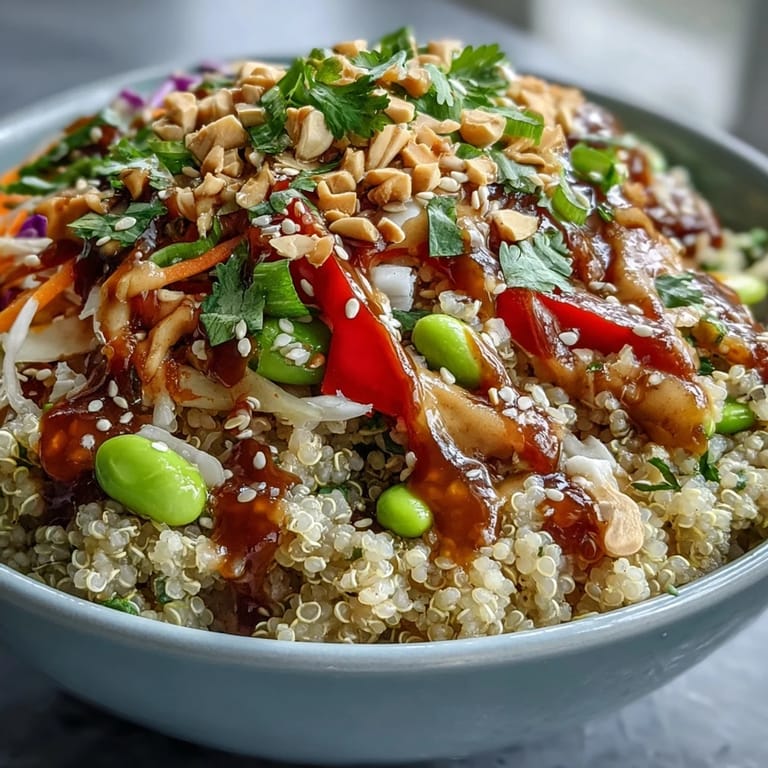
- Divide the warm (or cooled) coconut quinoa among four bowls, creating a bed in the center. Arrange the vegetables and edamame in little piles around the quinoa—this not only looks beautiful but lets people choose their ratios.
- Dress and garnish:
- Drizzle the peanut dressing generously over each bowl, then scatter cilantro and sesame seeds on top. Serve immediately if you love contrast between warm and cool, or chill the whole thing if you prefer a refreshing cold bowl.
 Save
Save The magic of this bowl is how it comes together at the last second—the warmth of the quinoa softening the raw vegetables just slightly while keeping their snap, the cilantro releasing all its fragrance when you break it, the dressing tying everything into one coherent conversation. It stopped being just lunch and became the thing I make when I want to feel taken care of, even if I'm taking care of myself.
Why This Works as a Complete Meal
Quinoa is a complete protein, meaning it contains all nine essential amino acids, so even without the edamame you'd have a balanced dish. But the edamame, vegetables, and peanut dressing layer protein and healthy fats on top, creating something that actually satisfies rather than leaving you hungry an hour later. The coconut milk adds richness that makes your body feel nourished, which is different from just feeling full.
Cold Bowl vs. Warm Bowl
I've eaten this both ways, and they're genuinely different experiences. Warm, the coconut flavors are more pronounced and the vegetables soften slightly from the heat, creating this unified dish. Cold, it becomes more about individual textures and flavors—the crunch stays sharper, the cilantro stays brighter, and it's more refreshing. Pick based on your mood and the season; both are equally valid.
Customizing Without Losing the Soul
The structure here is flexible enough that you can swap almost any vegetable based on what you have or what's in season. I've made it with shredded zucchini, snap peas, roasted broccoli, and even leftover roasted sweet potato, and it's worked every time. What matters is keeping that creamy coconut base and that peanut dressing constant—those are the anchors that make it recognizable as this dish.
- Grilled tofu or tempeh adds substance and smoke if you want to make it heartier.
- A fried or poached egg on top transforms it into something even more breakfast-like, which honestly, no one should judge you for eating at dinner.
- Crushed peanuts, cashews, or even toasted almonds work if you want to add crunch without changing the entire flavor profile.
 Save
Save This is the kind of recipe that becomes part of your rotation because it's genuinely good for you and genuinely tasty—no sacrifice required. Make it once and you'll understand why it showed up in my lunch rotation and never quite left.
Common Recipe Questions
- → Can I make this bowl ahead of time?
Absolutely. The quinoa and vegetables can be prepared up to 3 days in advance. Store the dressing separately and add just before serving to maintain the crisp texture of the vegetables.
- → What protein options work well?
Grilled tofu, tempeh, or baked tofu add excellent plant-based protein. Shredded chicken or grilled shrimp also pair beautifully with the Thai-inspired flavors if you're not following a vegetarian diet.
- → How do I store leftovers?
Keep components in separate airtight containers in the refrigerator for up to 4 days. The quinoa can be gently reheated or enjoyed cold. Store the dressing in a small jar and give it a good shake before using.
- → Can I use other grains?
Brown rice, jasmine rice, or even cauliflower rice work well as alternatives. Adjust cooking times accordingly—brown rice will take longer, while cauliflower rice cooks in just 5-7 minutes.
- → Is the peanut dressing necessary?
The dressing is essential for the authentic Thai flavor profile, but you could substitute with a cashew butter or sunflower butter version if avoiding peanuts. The creamy element balances the crisp vegetables perfectly.
- → What vegetables can I substitute?
Snap peas, shredded Brussels sprouts, radishes, or mango work wonderfully. Use whatever seasonal produce is available—the key is maintaining a mix of colors and textures for the most satisfying bowl.