 Save
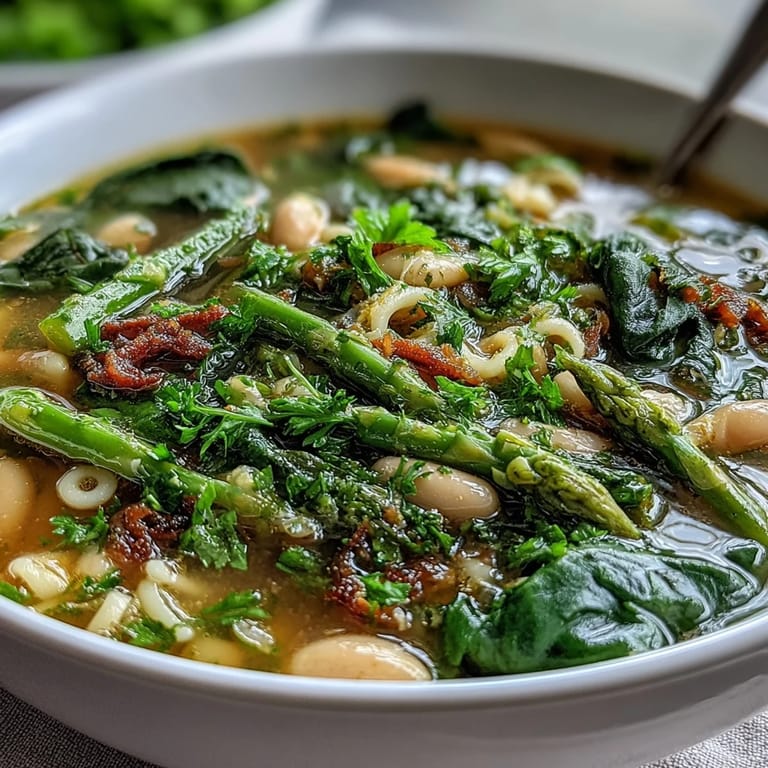
Save There's something about the first warm week of spring that makes me want to fill a pot with whatever vegetables I can find at the market. One Saturday morning, I grabbed an armful of asparagus, some fresh peas still in their pods, and decided to build a soup around them instead of the heavy winter broths I'd been making for months. The result was this bright, herbaceous minestrone that tastes like the season itself—alive and generous without being heavy.
I made this for my neighbor last April when she was recovering from surgery and couldn't face the heavy casseroles everyone was dropping off. She called the next day just to ask what was in it, saying it was the first thing that actually tasted like food rather than obligation. Now whenever spring arrives, she texts me asking if I'm making the asparagus soup.
Ingredients
- Olive oil: Start with just a tablespoon—you want to listen to it sizzle gently as the vegetables soften, not rush them with too much heat.
- Onion, carrots, and celery: This holy trinity builds the foundation, and dicing them roughly equal sizes means they'll soften at the same pace.
- Garlic: Two cloves minced fine will distribute their warmth throughout without overpowering the delicate spring vegetables.
- Zucchini: A small one works best—you want it to stay tender and bright green, not watery.
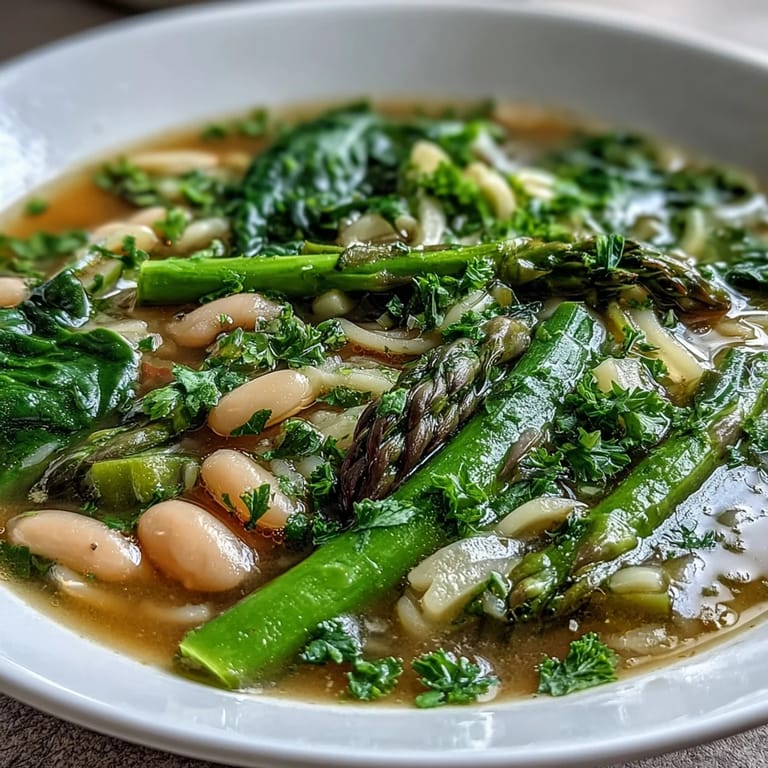
- Asparagus: Cut into one-inch pieces so they cook evenly and don't disappear into the broth, and trim those woody ends first or they'll fight your teeth.
- Fresh peas: Frozen ones work brilliantly here and honestly taste better than sad fresh ones from the back of your fridge.
- Baby spinach or Swiss chard: Added at the very end so the leaves stay vibrant and don't turn to mush.
- White beans: Cannellini beans have a creamy texture that thickens the broth naturally as they break down slightly during cooking.
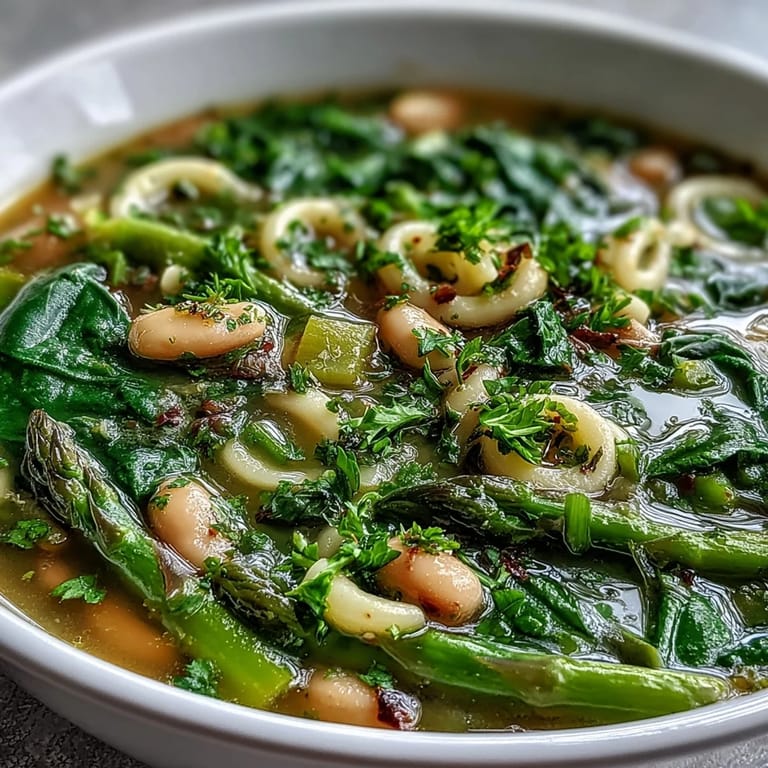
- Small pasta: Ditalini or small shells nestle into each spoonful, and using gluten-free versions doesn't change the character of the soup at all.
- Vegetable broth: Low-sodium allows you to taste the vegetables and herbs without oversalting as you go.
- Dried thyme and oregano: These Italian herbs bloom as the soup simmers, filling your kitchen with an aroma that makes people appear in the doorway asking what's for dinner.
- Bay leaf: One leaf adds subtle depth without announcing itself—remember to fish it out before serving or your guests will find it the hard way.
- Lemon zest: Stirred in at the end, this tiny bit of brightness lifts everything else like someone just opened a window.
- Fresh parsley: Chopped and scattered in last, it adds a grassy freshness that makes the soup taste newly made.
Tired of Takeout? 🥡
Get 10 meals you can make faster than delivery arrives. Seriously.
One email. No spam. Unsubscribe anytime.
Instructions
- Warm your foundation:
- Heat the olive oil in a large pot over medium heat, then add your diced onion, carrots, and celery. Listen for that gentle sizzle and let them soften for five minutes, stirring occasionally—you're not rushing them, just coaxing them to release their sweetness.
- Build the aromatics:
- Stir in the minced garlic and cook for just one minute until the smell hits you like a warm greeting. Add the zucchini and cook for two more minutes, letting these softer vegetables get acquainted with the heat.
- Create the broth:
- Pour in your vegetable broth slowly, giving yourself a moment to add the thyme, oregano, and bay leaf. Bring it all to a gentle boil, watching as the liquid turns faintly golden from the herbs.
- Add heartiness:
- Stir in the white beans and pasta, then reduce the heat and let it simmer for ten minutes. The pasta will soften and the broth will thicken slightly as the starch releases into the liquid.
- Welcome spring vegetables:
- Add the asparagus and peas, letting them cook for five to seven minutes until the pasta is tender and the vegetables are bright but cooked through. Taste as you go—this is when you'll know if your soup needs a pinch more salt.
- Finish with freshness:
- Stir in the spinach or chard along with the lemon zest and fresh parsley, cooking just two more minutes until the greens wilt into the broth. Remove the bay leaf, season with salt and pepper, and you're done.
 Save
Save My daughter, who was going through a phase of rejecting anything green, actually asked for seconds of this soup. I didn't tell her until she was three bowls in that the spinach was in there, and by then she'd already decided she liked it. That quiet moment of her realizing her own taste had shifted felt like winning something.
The Magic of Spring Vegetables
Spring vegetables are different from their summer counterparts—they're tender, almost delicate, which means they need less time in the pot and reward you with better flavor if you respect that. Asparagus in particular has this brief window where it's perfect, and I've learned to use it generously in April and May knowing it'll disappear from the market soon enough. The combination of asparagus with young peas and tender zucchini creates layers of flavor that feel sophisticated without requiring any real technique.
Making It Your Own
This soup is a canvas more than a prescription, and I've made it with fava beans instead of white beans, added green beans when asparagus wasn't available, and once threw in some thinly sliced leeks at the beginning just because I had them. The structure stays the same—soften the aromatics, build the broth, add heartier vegetables first, delicate ones last—but the specific vegetables can shift with what's in front of you at the market. My grandmother used to say a good cook adapts to the season, and minestrone is exactly the kind of soup that rewards that flexibility.
Serving and Storing Suggestions
Ladle this into bowls while it's hot and let people dress it themselves with grated Parmesan and a swirl of good olive oil—it gives the soup a luxurious finish that feels intentional. Leftovers keep beautifully for three days in the refrigerator, and the flavors actually deepen as the vegetables continue softening, though you might need to add a splash of water when you reheat since the pasta absorbs liquid overnight.
- Serve with crusty bread for scooping up the last drops of broth.
- A squeeze of fresh lemon juice at the table brightens everything one final time.
- This soup freezes well for up to two months if you undercook the pasta slightly, knowing it'll soften more as it thaws and reheats.
 Save
Save This minestrone reminds me every spring that the simplest food—vegetables, beans, broth—can taste like care when you pay attention to the timing and the season. Make it when asparagus is good, and you'll understand why people have been making versions of this soup for centuries.
Common Recipe Questions
- → Can I use fresh beans instead of canned?
Yes, fresh white beans can be used but may require pre-cooking until tender before adding to the soup to ensure proper texture.
- → What can I substitute for ditalini pasta?
Small shell pasta or gluten-free varieties like rice or corn pasta work well as substitutes, maintaining the soup's texture.
- → How do I make this dish vegan?
Simply omit the Parmesan garnish or replace it with a plant-based cheese alternative or nutritional yeast for a similar umami flavor.
- → Can I prepare this soup in advance?
Yes, the flavors develop nicely when refrigerated overnight. Reheat gently, adding fresh herbs or lemon zest to refresh before serving.
- → What other vegetables complement this soup?
Fava beans, green beans, or additional leafy greens like Swiss chard add variety and enhance the fresh spring profile.