 Save
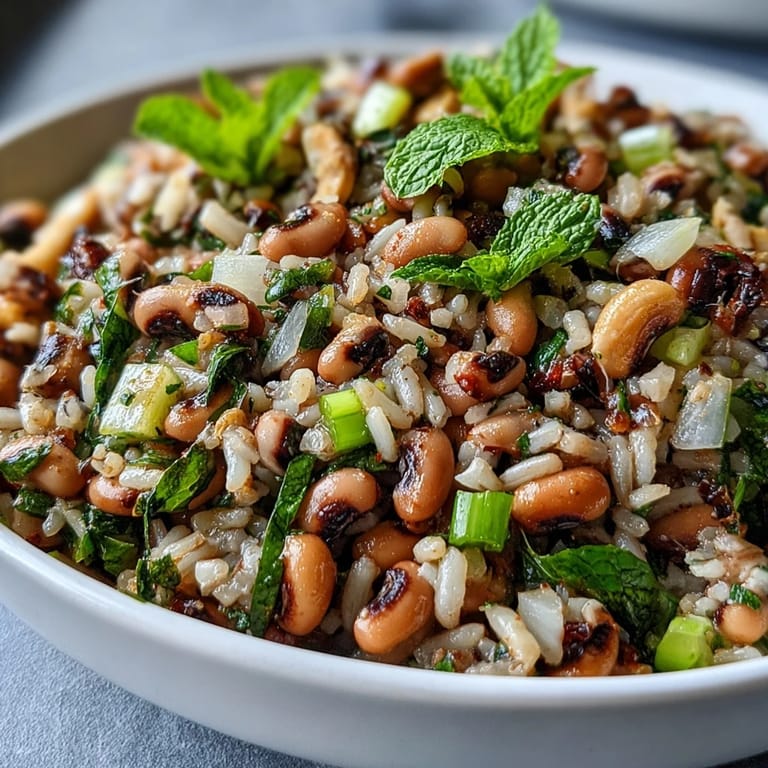
Save My aunt brought this salad to a Fourth of July picnic years ago, and I watched everyone go back for seconds before the main course even hit the table. There's something about the way those black-eyed peas hold onto the bright lemon dressing, how the mint keeps everything tasting alive and summery, that made me ask for her recipe on the drive home. She laughed and said it wasn't complicated, just good ingredients treated with respect, and she was right—this became the salad I make when I want to impress without stress.
I made this for a potluck where someone forgot to mention it was a competition, and my salad somehow won over three different casseroles and a fancy dessert. The secret wasn't anything fancy—just that I'd learned to let the vinaigrette really coat everything, and those thirty minutes in the fridge made the peas taste like they'd absorbed actual sunshine. A friend asked if I'd added some special Southern ingredient I wasn't telling anyone about, and I realized that sometimes the magic is just patience and good technique.
Ingredients
- Black-eyed peas: Canned works perfectly fine if you rinse them well—I learned this saves you from babysitting a pot, and they taste just as good, slightly softer even.
- Brown rice: The nutty flavor here matters more than using white rice; it gives the whole dish backbone and makes it feel like actual food instead of just a side.
- Red onion: Dice it small so the sharpness distributes evenly, and if raw onion feels too intense, soak the pieces in cold water for five minutes first.
- Celery: Fresh and crisp is non-negotiable; this vegetable's entire job is textural contrast, so choose the palest, crunchiest stalks you can find.
- Fresh mint: This isn't optional—dried mint tastes dusty by comparison, and the fresh leaves bring an herbaceous brightness that makes the whole salad sing.
- Extra-virgin olive oil: Don't use the cheap stuff here; the oil carries half the flavor, and a good one changes everything.
- Fresh lemon juice: Squeeze it yourself right before mixing; bottled juice tastes flat and slightly bitter by comparison.
- Lemon zest: That tiny bit of peel holds the most volatile, fragrant oils; don't skip it or rush past it.
- Dijon mustard: It acts as an emulsifier so your dressing doesn't separate, plus it adds a subtle sophistication that people taste but can't name.
- Honey or maple syrup: Just enough to round out the acidity and keep the dressing from tasting aggressively tart.
Tired of Takeout? 🥡
Get 10 meals you can make faster than delivery arrives. Seriously.
One email. No spam. Unsubscribe anytime.
Instructions
- Gather and prep your vegetables:
- Have everything diced and ready before you touch the dressing—this matters because you want to dress the salad while everything is still at the same temperature. Use a sharp knife and go slow; uneven pieces mean uneven flavor distribution.
- Combine the base:
- In a large bowl, toss together the black-eyed peas, cooled brown rice, red onion, celery, and mint with a gentle hand. You're not trying to mash anything here, just let them get acquainted.
- Build your vinaigrette:
- Pour the olive oil into a small jar or bowl, then add the lemon juice, zest, mustard, and sweetener—the order matters slightly because the mustard helps everything emulsify together. Whisk or shake vigorously until it looks creamy and unified, about thirty seconds.
- Marry the flavors:
- Drizzle the dressing over the salad and toss everything together with enough enthusiasm that every piece gets coated, but gently enough that you're not crushing the peas. Taste it immediately—this is when you catch any seasoning gaps.
- Chill and let time do its work:
- Cover the bowl and refrigerate for at least thirty minutes; this allows the ingredients to get to know each other and the rice to absorb some of that bright vinaigrette. You can make this up to a day ahead, though the mint stays fresher if you add it closer to serving time.
- Serve with intention:
- Whether you pull it straight from the fridge or let it come to room temperature for ten minutes, a scattered handful of extra mint leaves on top transforms it from good to restaurant-quality.
 Save
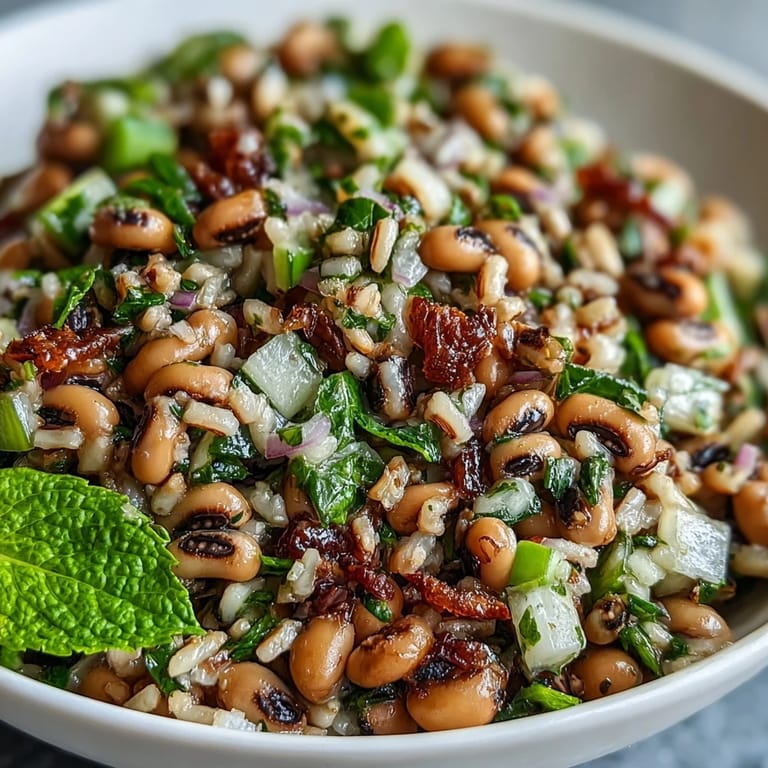
Save My neighbor tasted this at a block party and told me it reminded her of something her grandmother used to make, though she couldn't quite remember what. I realized then that food doesn't have to be complicated to carry weight—sometimes it just needs to taste like someone cared enough to get the details right, to use real mint instead of reaching for a shortcut. That's when I understood why my aunt guarded this recipe so carefully; it wasn't about the ingredients at all.
Why This Salad Works Year-Round
Summer is obvious—everything is bright, it's refreshing in the heat, and you can make it hours ahead without worry. But I've brought this to fall picnics where it tasted just as good alongside heavier foods, almost a palate cleanser between bites of richer dishes. Winter potlucks benefit from that touch of lemon, and spring gatherings feel lighter because of the fresh mint.
The Lemon-Mint Partnership
These two flavors are what separate this salad from every other grain bowl you've made; they're not competing, they're dancing. The lemon brings brightness and acidity, cutting through the earthiness of the black-eyed peas, while the mint adds a cool, almost floral note that prevents anything from tasting heavy or one-dimensional. I once tried making this with parsley because I'd used up my mint, and while it was decent, it lost something essential—that summery, almost effervescent quality that makes people reach for another spoonful.
Storage and Make-Ahead Strategies
This salad is forgiving in the best ways possible, which is why I make it whenever I'm heading somewhere and can't predict timing. The peas actually improve as they sit, absorbing more flavor each hour, and the brown rice soaks up the vinaigrette so nothing tastes dry by the next day. Keep the fresh mint separate if you're making this more than a few hours ahead—add it right before serving so it stays bright green and fragrant instead of wilting into the bowl.
- Make the vinaigrette first, in the morning even, and store it in a jar you can shake before pouring.
- Prep all your vegetables the night before and store them separately in the fridge so everything stays crisp.
- Combine everything except the mint up to twelve hours ahead; the flavors will only deepen.
 Save
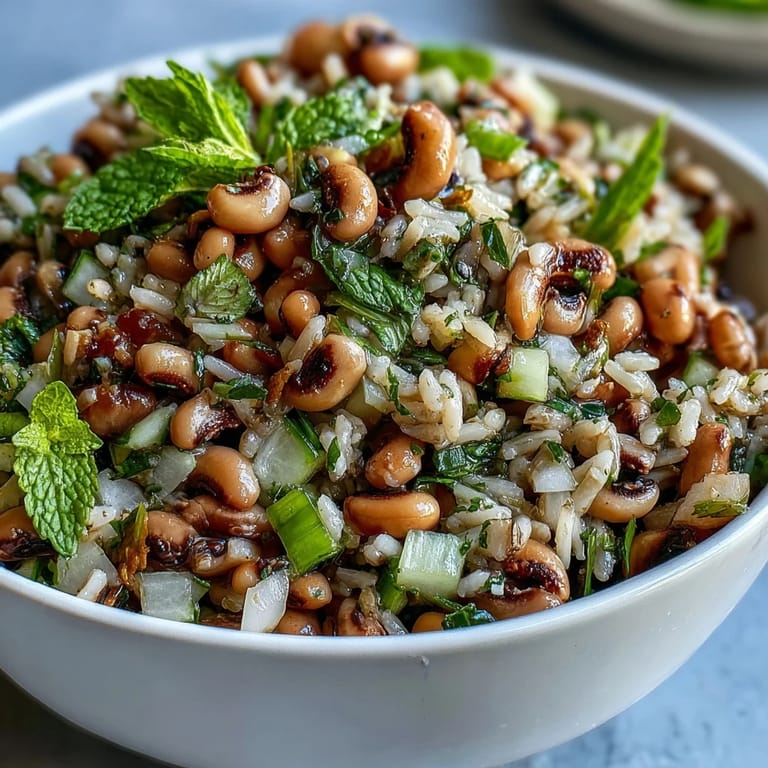
Save This is the salad I've made more times than I can count, and it's never let me down. Every time someone asks for the recipe, I hand it over gladly because the real secret is just showing up, using good ingredients, and trusting the process.
Common Recipe Questions
- → Can I use dried black-eyed peas instead of canned?
Yes, soak and cook dried peas according to package directions before using. One 15-ounce can equals about 1½ cups cooked peas.
- → How long does this salad keep in the refrigerator?
Properly stored in an airtight container, the salad stays fresh for 3-4 days. The flavors actually improve after sitting overnight.
- → What can I substitute for fresh mint?
Fresh parsley or cilantro work beautifully as alternatives. Each herb brings a different flavor profile while maintaining the fresh element.
- → Is this salad served warm or cold?
Best served chilled or at room temperature. Refrigerate for at least 30 minutes before serving to allow flavors to meld together.
- → Can I add protein to make this a complete meal?
Grilled chicken, shrimp, or chickpeas pair wonderfully. Feta cheese also adds protein while complementing the Southern flavors.
- → What other vegetables work well in this salad?
Diced cucumber, bell peppers, cherry tomatoes, or shredded carrots add color and crunch. Adjust based on seasonal availability.