 Save
Save My neighbor Maria taught me to make sopa azteca one afternoon when the smell of charring chiles drifted across our shared fence. She didn't measure anything, just moved through her kitchen with the kind of confidence that comes from making a dish a hundred times, and I scrambled to keep up, writing notes on whatever scrap of paper I could find. What struck me most wasn't the recipe itself, but how she paused before serving to taste the broth, adjusted the salt with a thoughtful nod, and explained that the soup only works when you respect each ingredient's job. That lesson stuck with me, and now every time I make this, I think of her kitchen and that particular golden hour light.
I made this for my sister on a rainy Sunday when she needed comfort more than conversation, and watching her face soften as she tasted it reminded me that food really does speak when words don't quite fit. The panela cheese melted just slightly into the hot broth, the cilantro added that brightness she needed, and by the end of the bowl, we were talking about everything that mattered. That's when I understood this soup wasn't just Mexican street food anymore, it was a way to say I'm here, I see you.
Ingredients
- Vegetable oil: Use a neutral oil that can handle high heat without smoking; this matters most when frying the tortilla strips.
- White onion and garlic: These form the flavor foundation, so chop them evenly so they cook at the same pace.
- Roma tomatoes: Look for ones that yield slightly to pressure but aren't mushy, as they break down beautifully during cooking.
- Dried pasilla and guajillo chiles: Toast them dry first to wake up their deep, complex flavors without burning them.
- Vegetable broth: A good quality broth makes the difference, so taste it first before adding extra salt.
- Oregano and cumin: These dried spices add earthiness, but they can overpower if you're heavy-handed, so start with what's listed and adjust.
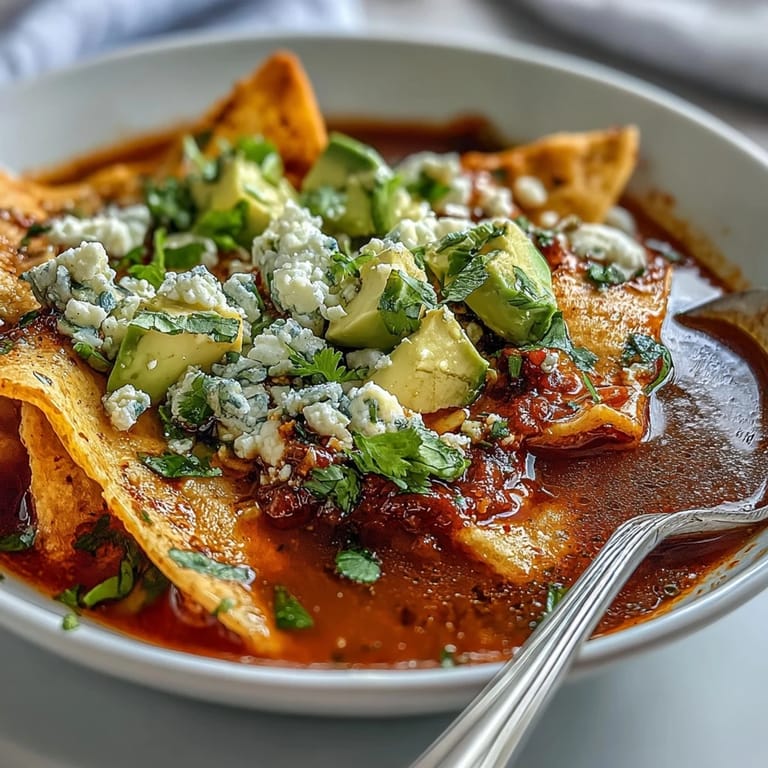
- Corn tortillas: Fresh tortillas fry better than stale ones, and cutting them into even strips helps them cook uniformly.
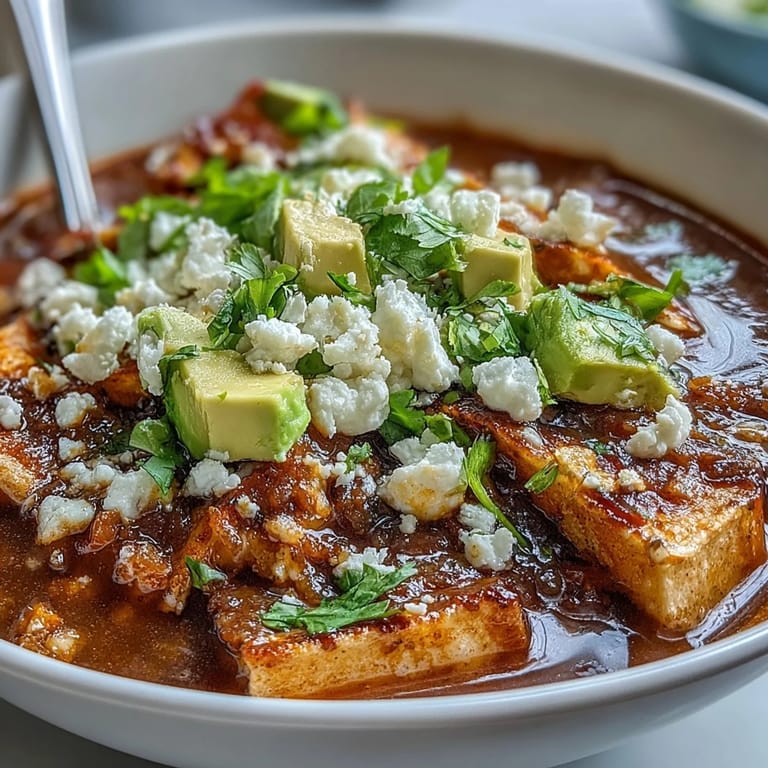
- Panela cheese: This mild, crumbly cheese won't melt completely into the broth, which is exactly what you want for texture.
- Fresh avocado: Dice it just before serving so it doesn't brown, and if you're making this ahead, add it to individual bowls rather than the whole pot.
- Fresh cilantro: This is your brightness, so don't skip it or swap it for dried, which tastes like hay in comparison.
- Crema or sour cream: Optional, but the richness it adds is worth the splash.
- Lime wedges: Serve these on the side so everyone can squeeze them in to their own taste.
Tired of Takeout? 🥡
Get 10 meals you can make faster than delivery arrives. Seriously.
One email. No spam. Unsubscribe anytime.
Instructions
- Build Your Flavor Base:
- Heat the oil in a large pot over medium heat until it shimmers, then add the chopped onion and let it soften into translucency for about three minutes, stirring occasionally. When the onion turns soft and pale, add the garlic and cook for just one more minute so it doesn't burn and turn bitter.
- Develop the Tomato Layer:
- Add your chopped tomatoes to the pot and let them cook down for about five minutes, stirring now and then so they soften evenly and start to break apart. You'll notice the tomatoes releasing their juice and the whole mixture taking on a deeper color, which is exactly what you want.
- Toast the Chiles:
- While the tomatoes are cooking, take a dry skillet and toast the stemmed and seeded pasilla and guajillo chiles over medium heat for just one to two minutes until they're fragrant and slightly darkened. The smell will tell you when they're ready, so keep your face close and pay attention, but don't let them burn or they'll taste bitter.
- Blend Into Velvet:
- Pour the softened tomatoes, onions, and garlic into a blender along with the toasted chiles and one cup of the vegetable broth, then blend until the mixture is completely smooth with no chile pieces visible. You might need to work in batches depending on your blender size, and it's fine to let it cool slightly before blending if it's steaming hot.
- Simmer and Season:
- Return the blended mixture back to the pot and pour in the remaining broth, then add the oregano, cumin, salt, and pepper and stir everything together. Bring it to a boil, then lower the heat and let it simmer gently for fifteen minutes so the flavors meld together, and taste it halfway through to see if you need more salt.
- Fry the Tortilla Strips:
- While the broth is simmering, heat about one inch of oil in a separate skillet over medium-high heat and test it with a small piece of tortilla to make sure it's ready. Working in small batches so you don't crowd the pan, fry the tortilla strips for one to two minutes until they're golden and crispy, then transfer them to paper towels to drain.
- Compose and Serve:
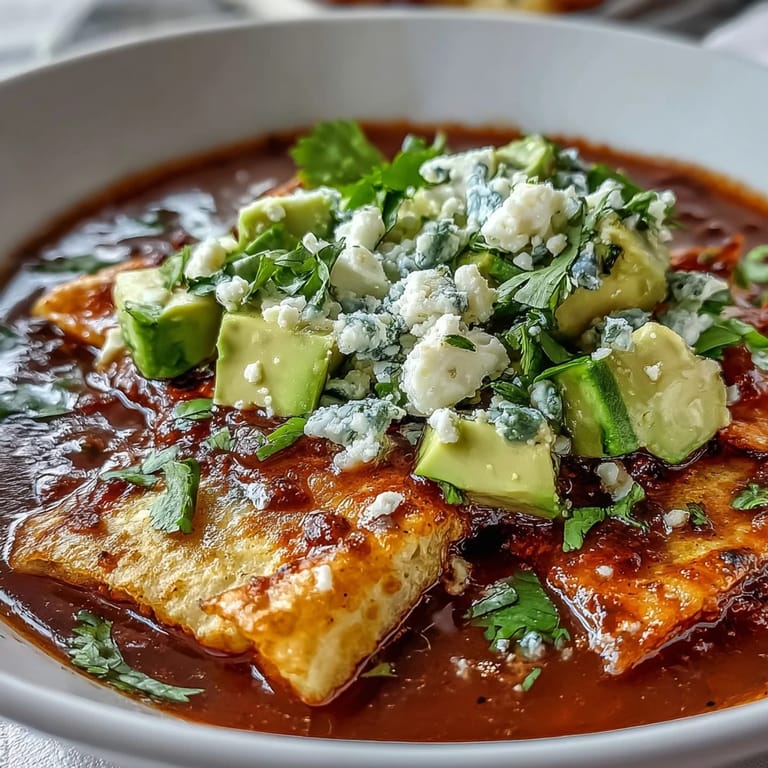
- Divide the crispy tortilla strips among your bowls, ladle the hot broth over them immediately so they stay crispy, then top each bowl with panela cheese, fresh diced avocado, cilantro, and a drizzle of crema if you're using it. Serve right away with lime wedges on the side so everyone can brighten their bowl to their own taste.
 Save
Save There's a moment right after you ladle the broth into the bowl and hear the tortillas crackle and soften slightly that feels like kitchen magic, and then you take that first spoonful with all the layers together and suddenly understand why Maria made this soup the way she did. It's not fancy or complicated, but it's complete in a way that makes you feel cared for.
The Art of Toasting Chiles
Toasting dried chiles might seem like a small step, but it's the difference between a one-dimensional soup and one with real character. When heat touches those chiles, their oils release and their flavors deepen from dusty and muted to warm and almost sweet. I learned this the hard way by once skipping this step entirely, and the soup tasted flat no matter how much salt I added. Now I toast them in a dry skillet, watching them change color and breathing in that toasted aroma, because that's when I know I've unlocked what they have to offer.
Blending for Silky Broth
The blender is what transforms your chunky tomato mixture into a smooth, elegant broth that coats the back of a spoon. Make sure you're not trying to blend a pot of boiling liquid, because that's how you end up with hot soup all over your ceiling, which I definitely haven't done. Let it cool for a minute or two first, work in batches if your blender feels nervous about the volume, and blend until there are no visible chile pieces left.
Timing Your Components
The trickiest part of making this soup isn't any single step, it's making sure everything finishes at the right time so you can serve it while the tortilla strips are still crispy. Start frying your tortillas when the broth is already simmering so they're done around the same moment everything's ready, and if you finish the tortillas early, set them on a paper towel and don't cover them with another towel or they'll steam and soften.
- If you're cooking for guests, make the broth completely ahead of time and reheat it gently while you fry the tortillas fresh.
- Prep all your garnishes in separate bowls before you start cooking so you're not dicing avocado while the broth boils over.
- Keep the lime wedges in the refrigerator until serving so they're cold and juicy, which makes the squeeze more satisfying.
 Save
Save Make this soup when you want to feel like you're sitting in someone's kitchen being fed with love, because that's what it tastes like. Maria's lesson about respecting each ingredient still guides my hand every time I make it.
Common Recipe Questions
- → What makes Sopa Azteca different from regular tortilla soup?
Sopa Azteca traditionally features dried chiles like pasilla and guajillo that are toasted and blended into the broth, creating a deeper, more complex smoky flavor compared to standard tortilla soup that might use only fresh chiles or chili powder.
- → Can I make the tortilla strips ahead of time?
Tortilla strips are best fried fresh for maximum crispiness, but you can prepare them up to a day in advance. Store in an airtight container at room temperature and recrisp in a 350°F oven for 5 minutes before serving.
- → What can I substitute for panela cheese?
Queso fresco, feta, or mild cotija cheese work well as substitutes. These cheeses provide similar saltiness and texture that won't overwhelm the smoky broth. Fresh mozzarella can work in a pinch but will be milder.
- → How can I adjust the spice level?
Remove seeds and membranes from the dried chiles before toasting for milder heat. Add a chipotle pepper in adobo sauce for extra smokiness and spice, or incorporate fresh jalapeños when serving for those who prefer more heat.
- → Is Sopa Azteca gluten-free?
Corn tortillas are naturally gluten-free, making this soup suitable for gluten-free diets. However, always check labels to ensure corn tortillas weren't processed in facilities with wheat to avoid cross-contamination.
- → Can I freeze Sopa Azteca?
Freeze the broth separately for up to 3 months. Tortilla strips, avocado, and dairy garnishes don't freeze well, so add these fresh when reheating. Thaw broth overnight in the refrigerator and reheat gently before assembling.