 Save
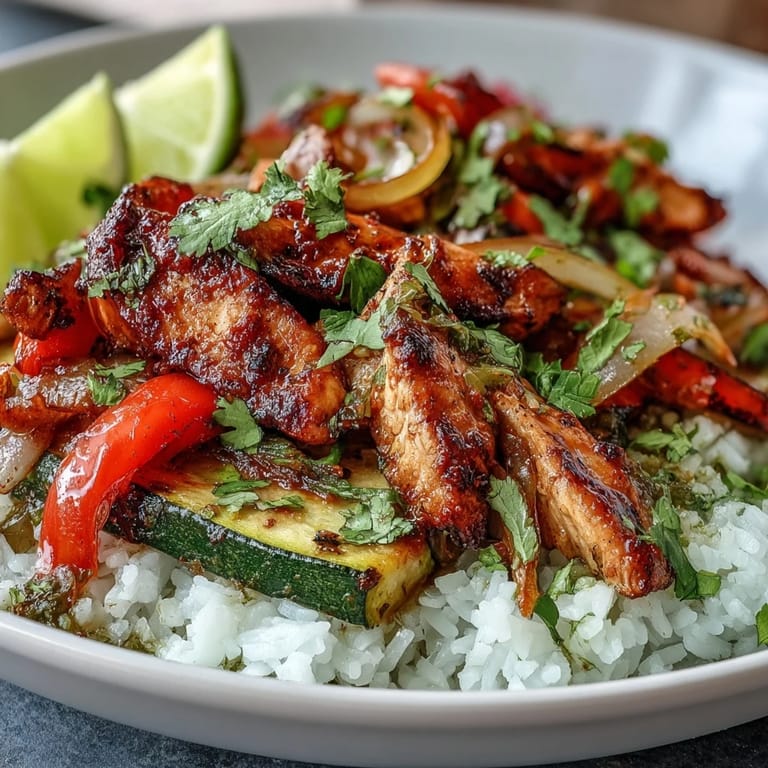
Save There's something almost meditative about spreading seasoned chicken and vegetables across a sheet pan, watching them transform in the oven while you pour a drink and settle into the evening. I discovered this bowl on a Tuesday night when I was tired of complicated cooking but desperately craving something vibrant and satisfying. The beauty of it is that everything happens at once, no babysitting multiple pots, no timing gymnastics—just one pan doing all the heavy lifting while you actually relax.
My partner once claimed they weren't a "fajita person," which I took as a personal challenge. I made this bowl on a random Friday, piled theirs high with cilantro and lime, light on the heat. They've asked me to make it nearly every week since, and now they request extra charred edges on the peppers. Food has a funny way of changing minds when you're not trying to convince anyone of anything.
Ingredients
- Boneless, skinless chicken breast or thighs (500g): Thighs stay juicier and more forgiving, but breasts work beautifully if you slice them thin and don't overcook them—I learned this by ruining three batches before switching to thighs.
- Bell peppers and red onion: Any color combination works, though I find red and yellow peppers have more natural sweetness, which balances the spice perfectly.
- Zucchini (optional): Adds bulk and a mild sweetness, though I skip it half the time and no one notices.
- Olive oil: Don't use your fancy stuff—a basic extra virgin works great, and you'll use about two tablespoons to coat everything evenly.
- Chili powder, cumin, smoked paprika: This trio is the soul of the bowl—smoked paprika especially brings a depth that makes people ask what your secret ingredient is.
- Garlic powder, onion powder, dried oregano: These create layers so you're not just tasting one-note heat, but actual complexity.
- Salt, black pepper, cayenne: Taste as you go with these three because everyone's heat tolerance is different, and there's no point ruining dinner chasing internet measurements.
- Rice or cauliflower rice (2 cups cooked): Rice feeds your soul, cauliflower rice feeds your macros—pick your battle.
- Optional toppings (avocado, cilantro, salsa, cheese, sour cream, lime): These are where personality happens—I've had guests literally argue about whether cilantro or salsa should go on first, so just set them all out and let chaos reign.
Tired of Takeout? 🥡
Get 10 meals you can make faster than delivery arrives. Seriously.
One email. No spam. Unsubscribe anytime.
Instructions
- Get your oven ready:
- Preheat to 220°C (425°F) and line a large baking sheet with parchment paper—this prevents sticking and makes cleanup laughably easy.
- Build your bowl base:
- In a large bowl, toss together the chicken strips, sliced bell peppers, red onion, and zucchini if using. The pieces should be roughly similar in size so everything cooks at the same pace.
- Make the magic seasoning:
- In a small bowl, whisk together olive oil and all your spices until it forms a loose paste. Pour it over the chicken and vegetables, then toss everything together with your hands until every piece is lightly coated—don't be shy about it.
- Spread and roast:
- Arrange the seasoned chicken and vegetables in a single layer on your prepared sheet pan. Pop it into the oven and roast for 20 to 25 minutes, giving everything a stir halfway through so it browns evenly instead of sticking to one side.
- Cook your base while waiting:
- Use these 20 minutes to prepare your rice or cauliflower rice according to package directions—or if you're already having rice cooked, now's when you warm it up.
- Assemble and top:
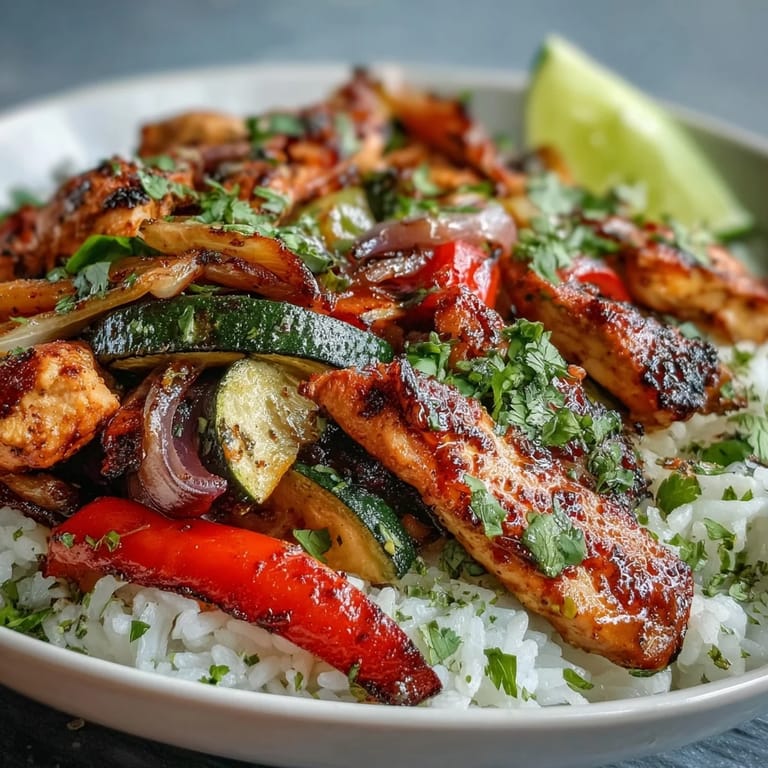
- Divide your cooked rice into four bowls, then spoon the roasted chicken and vegetables over top. This is where you and your guests get creative—lay out all the optional toppings and let people build their own experience.
 Save
Save There was a night when my kid actually ate vegetables without complaining, which felt like witnessing a small miracle. They'd constructed their own bowl with precision, choosing which peppers, how much cilantro, exactly where the lime juice went. Suddenly it wasn't food I was making for them—it was a canvas they were painting, and they were invested in every choice.
The Charred Edge Situation
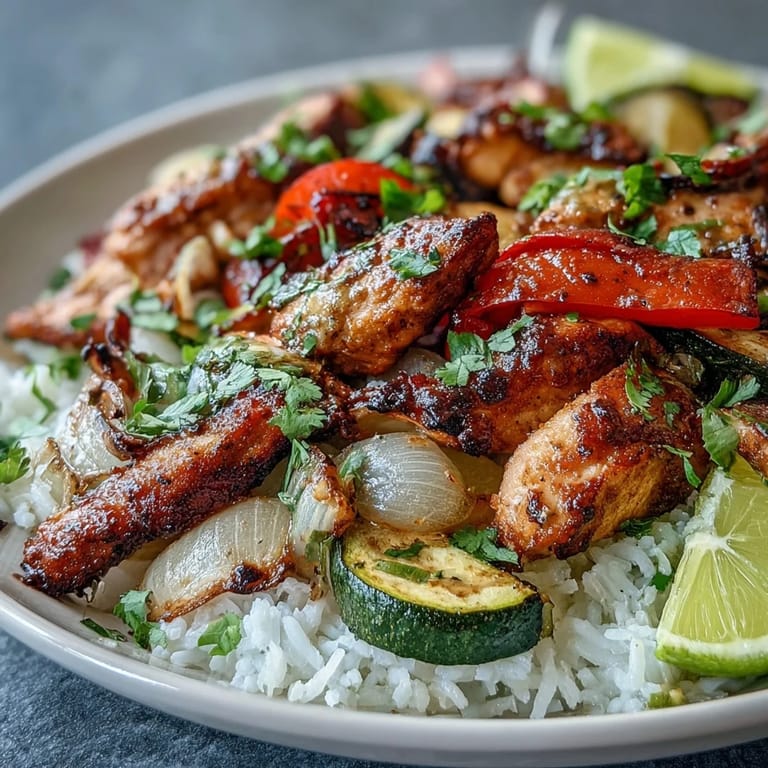
People often ask why their roasted vegetables taste boring compared to restaurant versions, and the answer is usually that they're afraid of a little char. That dark, slightly crispy exterior isn't burned—it's caramelization, where the natural sugars in the peppers and onions break down into pure flavor. I used to pull my pan out early because I thought darker meant overdone, until someone told me to stop being timid. Now I actually look for those browned spots, and the difference is night and day.
Playing with Heat
The cayenne pepper is optional for a reason—not everyone wants to feel their dinner, and that's completely fine. I've made this bowl for my mom who thinks anything spicier than black pepper is aggressive, and for my brother who dumps hot sauce on everything and still asks for more. The base seasoning blend is actually quite mild, so you can scale the heat however you want without changing the fundamental flavor profile.
Making It Your Own
Once you've made this once, you'll start seeing variations everywhere. My neighbor adds black beans and corn, which stretches it further and adds texture. Someone else I know swaps the chicken for marinated portobello mushrooms and serves it to their vegetarian friends. The sheet pan method works with almost any protein and vegetable combination you can think of, so don't feel locked into the exact recipe.
- For vegetarian versions, use thick-sliced portobello mushrooms or extra-firm tofu cut into strips, which will absorb all those fajita flavors beautifully.
- Black beans or corn add bulk, texture, and make people feel like dinner is more substantial than it actually is.
- If you want fajita wraps instead of a bowl, just wrap the filling in warm tortillas and load on the toppings—same cooking method, completely different presentation.
 Save
Save This bowl has become my go-to when I want to feel like I cooked something elaborate but actually just wanted to relax and enjoy dinner. It's the kind of meal that tastes impressive without demanding anything complicated from you.
Common Recipe Questions
- → Can I make this dish vegetarian?
Absolutely. Replace the chicken with portobello mushroom strips or extra-firm tofu cut into strips. Both options absorb the fajita seasoning beautifully and provide a satisfying texture.
- → What vegetables work best in fajita bowls?
Bell peppers and red onion are classic fajita vegetables. You can also add zucchini, sliced mushrooms, or corn for extra variety. The key is to cut vegetables into uniform strips so they roast evenly.
- → How do I store and reheat leftovers?
Store the roasted chicken and vegetables separately from the rice in airtight containers in the refrigerator for up to 4 days. Reheat in the microwave or in a skillet over medium heat until warmed through. Add fresh toppings after reheating.
- → Can I adjust the spice level?
Yes. The cayenne pepper adds heat, so reduce or omit it for a milder version. You can also add extra chili powder or a pinch of red pepper flakes if you prefer more spice.
- → What's the difference between using rice versus cauliflower rice?
Rice provides more carbohydrates and a traditional texture, while cauliflower rice is lighter and keeps the dish low-carb and gluten-free. Both work equally well as a base for the fajita mixture.
- → Can I meal prep these bowls?
These are excellent for meal prep. Roast a large batch of the chicken and vegetables at the start of the week, portion with your chosen base, and simply add fresh toppings when ready to eat.