 Save
Save I discovered the magic of a proper charcuterie moment while watching my neighbor arrange meats and cheeses on a board with the kind of casual confidence I'd only seen in Italian films. She wasn't fussing—just layering, tasting, adjusting. That night, when she placed it on the table, people didn't just eat; they gathered around it like it held secrets. That's when I understood: the best appetizers aren't about perfection, they're about generous abundance and the permission to eat with your hands.
My sister brought this to a potluck last spring, and I watched three people—who'd arrived hungry and slightly grumpy—lose themselves in the simple act of choosing. A piece of prosciutto, a sliver of manchego, a halved grape. Minutes passed with just the sound of people enjoying without performing. That's when I realized this isn't really a recipe; it's permission to slow down and taste things intentionally.
Ingredients
- Flatbreads (lavash, naan, or ciabatta): These are your foundation—they need enough structure to hold weight but enough give to tear easily, which is why ciabatta works better than most store-bought options.
- Olive oil and garlic: This isn't just seasoning; it's what transforms plain bread into something warm and inviting the moment people arrive.
- Prosciutto: Paper-thin and salty, it's the voice that carries across all the other flavors.
- Salami and soppressata: These bring texture and a gentle funk that makes everything else taste brighter.
- Smoked turkey breast: Your chance to balance richness with something lighter; don't skip it.
- Brie, aged cheddar, and manchego: Three different personalities—one soft and subtle, one sharp, one nutty—so everyone gets their moment.
- Blue cheese: This is the dare, the thing that separates this from ordinary boards; use it boldly or skip it without guilt.
- Grapes, tomatoes, olives, and roasted red peppers: These are your color, your surprise, your freshness—they stop the rich elements from feeling heavy.
- Fresh basil and honey or fig jam: Basil adds a last-minute brightness; honey creates that sweet-savory dance that makes people reach for one more piece.
Tired of Takeout? 🥡
Get 10 meals you can make faster than delivery arrives. Seriously.
One email. No spam. Unsubscribe anytime.
Instructions
- Toast the flatbread foundation:
- Preheat your oven to 200°C (400°F) and brush your flatbreads with olive oil, then scatter minced garlic across them like you're blessing bread. Warm them for 5–7 minutes until they're crispy at the edges but still flexible enough to hold their cargo without cracking.
- Arrange your rafts:
- Lay the warm flatbreads on your largest board or platter, spacing them like they're floating and inviting people to choose their own adventure. The warmth will wake up the flavors in everything that lands on them.
- Layer with intention:
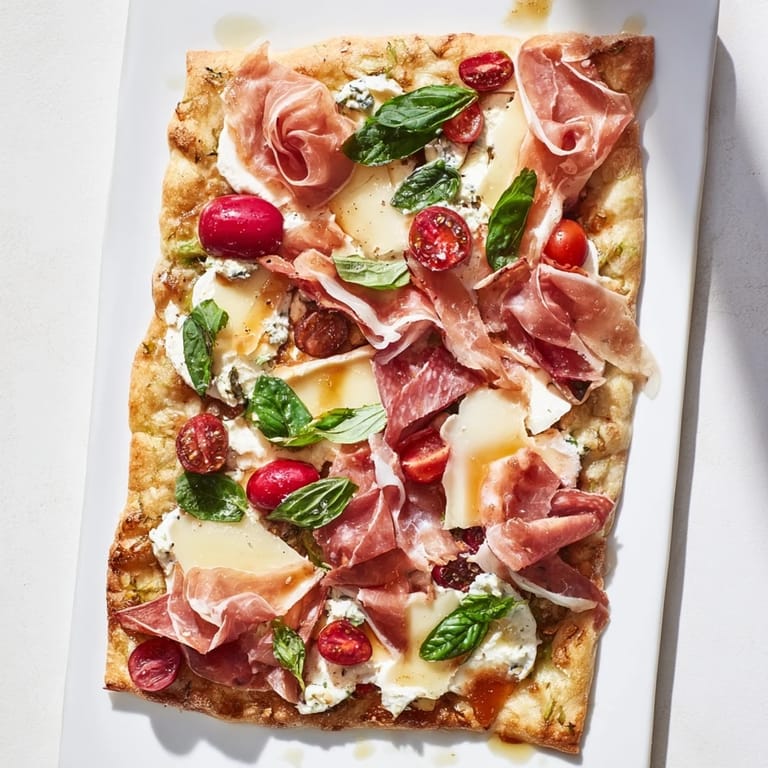
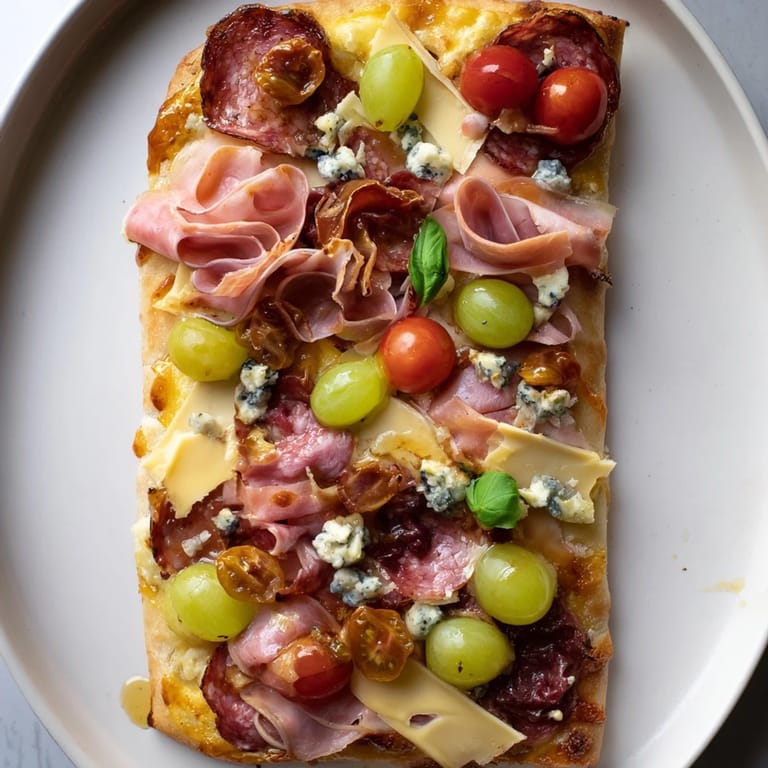
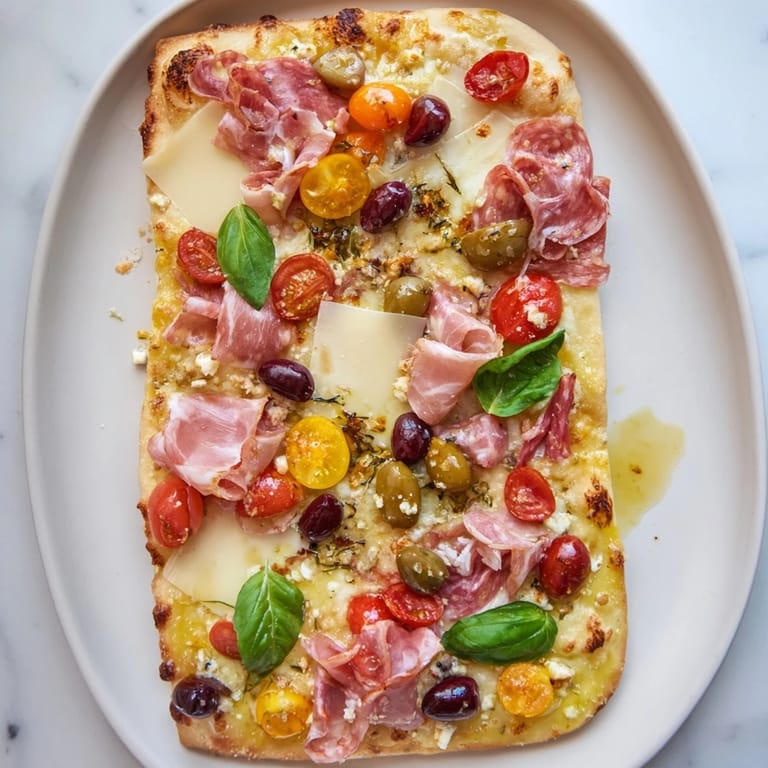
- Drape meats and cheeses across each flatbread in alternating stripes or scattered patterns—there's no rule, only what looks generous. Let textures speak to each other: the softness of brie next to the snap of aged cheddar.
- Fill the spaces:
- Scatter halved grapes, cherry tomatoes, marinated olives, and roasted red peppers around and between the rafts like edible treasures. These aren't afterthoughts; they're the moments of brightness that keep the plate from feeling too heavy.
- The final touch:
- Top with fresh basil leaves just before serving, and set honey or fig jam nearby for drizzling or dipping. Tell your guests they can tear off pieces, combine flavors, and build their own perfect bite.
 Save
Save There was a moment at that potluck when my sister caught someone—a usually reserved coworker—closing their eyes while tasting brie with roasted red pepper. That's the moment I knew this dish had done its job. It wasn't about the ingredients; it was about creating space for people to feel small joys, uncomplicated and allowed.
Why This Becomes a Favorite
This recipe works because it respects what people actually want to eat—choice without pressure, abundance without overwhelm. I've learned that the best gatherings aren't about impressing anyone; they're about giving people permission to enjoy without thinking too hard. These flatbreads do exactly that.
Making It Your Own
The beauty of this dish is that it's a suggestion, not a mandate. Swap meats and cheeses based on what you love or what's available—use different regional varieties, add sliced pears or figs, toss in marcona almonds for crunch, or include pickled vegetables if they speak to you. I've seen versions with roasted garlic, caramelized onions, and even a drizzle of aged balsamic that elevated everything.
The Board Is Your Canvas
The presentation matters because food enters through the eyes first, and a generous, colorful board tells people they're welcome and cared for. You're not just serving food; you're inviting people into a moment where tasting becomes an event. A wooden board, a ceramic platter, even a clean white surface—whatever you choose, make sure there's breathing room and contrast between colors, because that's what makes people want to start.
- Choose a board large enough that ingredients aren't crowded; empty space is as important as fullness.
- Arrange elements so someone can build a bite without creating a precarious tower that falls apart.
- Add a small bowl of honey or fig jam on the side so people can experiment without waste.
 Save
Save This dish taught me that the best recipes aren't complicated—they're generous. They show up for people and make gathering feel less like an obligation and more like a gift.
Common Recipe Questions
- → What flatbreads work best for this dish?
Rectangular flatbreads like lavash, naan, or ciabatta work well because they provide a sturdy base and crisp nicely when warmed.
- → Can I substitute the meats and cheeses?
Yes, feel free to swap meats and cheeses according to preference or availability to customize flavors and textures.
- → How should I serve the flatbreads for gatherings?
Arrange the warmed flatbreads spaced apart on a large board, layering the toppings for an inviting, shareable presentation.
- → What accompaniments enhance the flavor?
Fresh grapes, cherry tomatoes, olives, roasted red peppers, basil leaves, and a drizzle of honey or fig jam add brightness and contrast.
- → Are there recommended drink pairings?
A crisp white wine or a light-bodied red wine pairs perfectly, complementing the savory and creamy elements of the flatbreads.