 Save
Save I stumbled onto this recipe after a dinner party disaster when my lemon posset split and I had extra caramelized sugar sitting in a bowl, staring at my plain seared chicken. On a whim, I torched the sugar right onto the meat and the smell that filled my kitchen was intoxicating. My friend tasted it and said it reminded her of something between savory and dessert, and honestly, that's exactly what this dish became. Now I make it whenever I want pasta to feel like an occasion without the fuss.
The first time I served this to my family, my brother kept asking what the glaze was, convinced I'd used some fancy French technique. When I told him it was just sugar and a kitchen torch, he laughed and said I was showing off. But really, it's one of those tricks that feels luxurious and takes almost no effort. I love how the pasta soaks up the lemony cream and how each bite of chicken has that crisp, sweet edge that keeps you coming back.
Ingredients
- Boneless, skinless chicken breasts: Pat them really dry before seasoning or the sugar won't caramelize properly, I learned that the hard way with a soggy first attempt.
- Granulated sugar: White sugar works best for a clean brûlée, brown sugar can burn too quickly under the torch.
- Lemon zest and juice: Use fresh lemons only, bottled juice tastes flat and won't give you that bright pop you need here.
- Heavy cream: This is what makes the sauce velvety and rich, you can swap in crème fraîche if you want a tangier finish.
- Parmigiano-Reggiano: Grate it yourself from a block, pre-grated cheese has anti-caking agents that make the sauce grainy.
- Linguine or spaghetti: I prefer linguine because it holds the sauce better, but spaghetti works just fine if that's what you have.
- Garlic: Mince it finely so it melts into the sauce and doesn't overpower the lemon.
- Fresh parsley: Adds a pop of color and a fresh herbal note that balances the richness.
Tired of Takeout? 🥡
Get 10 meals you can make faster than delivery arrives. Seriously.
One email. No spam. Unsubscribe anytime.
Instructions
- Season and Sear the Chicken:
- Pat the chicken dry with paper towels, then rub with salt, pepper, and lemon zest until every inch is coated. Heat olive oil in a skillet over medium-high heat and sear the chicken for about 4 to 5 minutes per side, listening for that satisfying sizzle that tells you it's getting a good crust.
- Brûlée the Sugar:
- Sprinkle a tablespoon of sugar evenly over the top of each chicken breast while they're still in the pan. Use a kitchen torch to caramelize the sugar until it turns golden and glossy, moving the flame in small circles to avoid burning. If you don't have a torch, slide the pan under a hot broiler for a minute or two, but watch it like a hawk because it goes from perfect to burnt in seconds.
- Rest and Slice:
- Transfer the chicken to a cutting board and let it rest for a few minutes so the juices redistribute. Slice it thinly on a diagonal, and you'll see that beautiful caramelized crust on every piece.
- Boil the Pasta:
- Bring a big pot of salted water to a rolling boil and cook your pasta until al dente, tasting a strand a minute before the package time to make sure it still has a little bite. Before draining, scoop out half a cup of the starchy pasta water and set it aside.
- Build the Sauce:
- In a large skillet, melt butter and olive oil together over medium heat, then add the minced garlic and stir until it smells fragrant, about a minute. Toss in the lemon zest and juice, followed by the heavy cream, and let it all come to a gentle simmer before stirring in the Parmigiano-Reggiano until the sauce is smooth and silky.
- Toss and Finish:
- Add the drained pasta to the skillet and toss it in the sauce, adding splashes of the reserved pasta water until everything is glossy and coats the noodles perfectly. Taste and adjust with salt and pepper, remembering the cheese is already salty.
- Plate and Garnish:
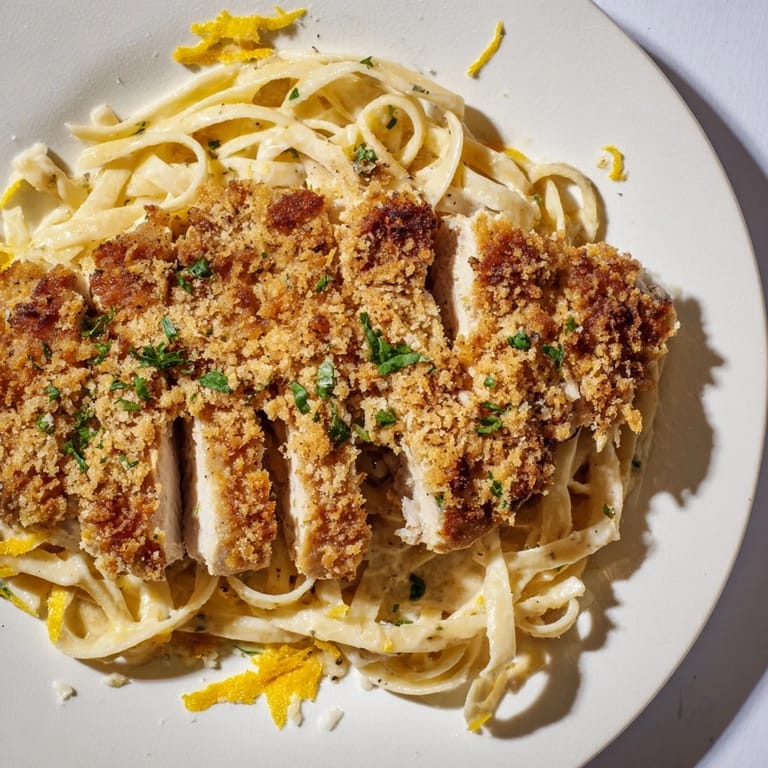
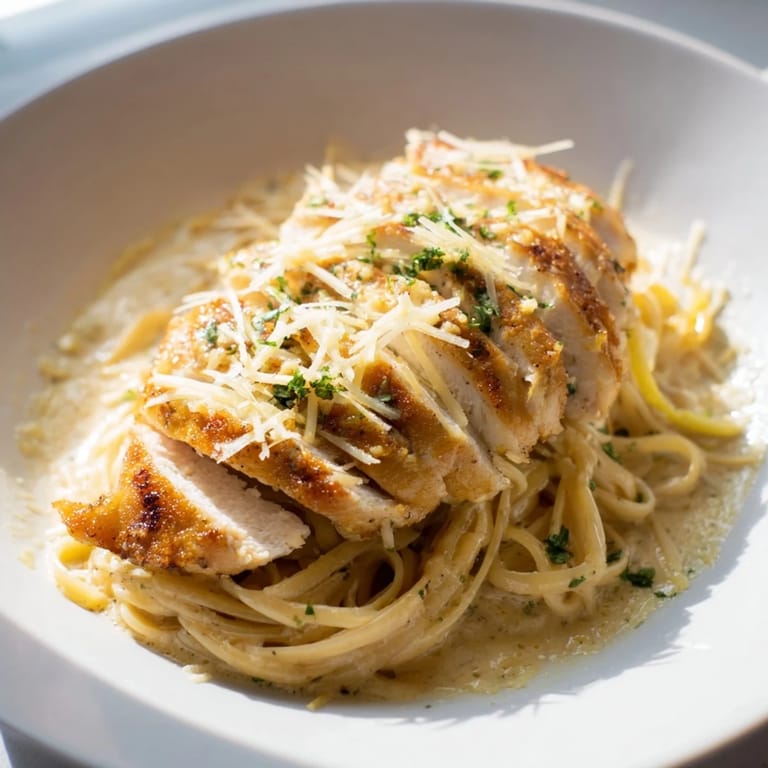
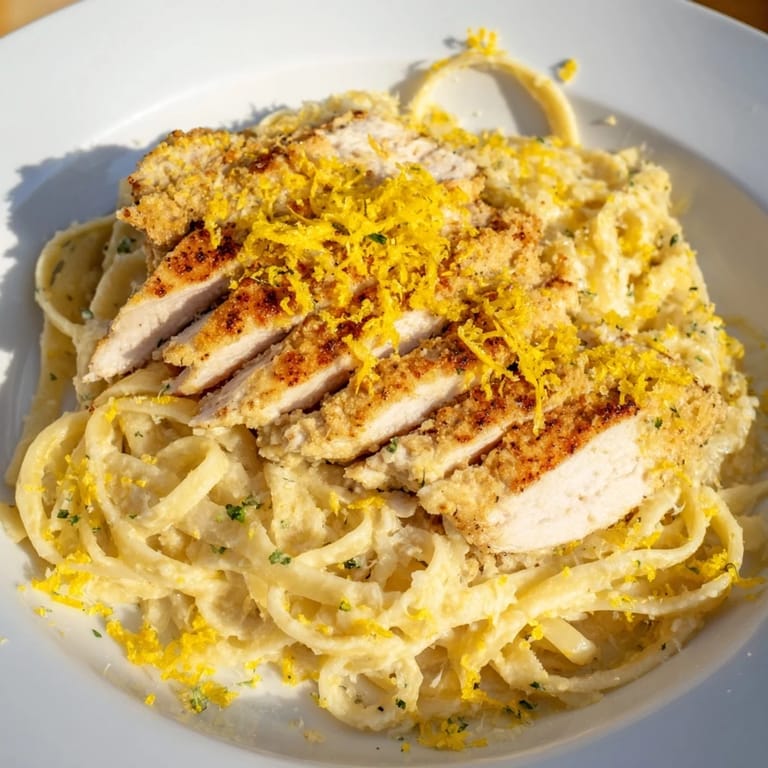
- Twirl portions of pasta onto plates, then lay the sliced chicken on top in a fan. Finish with a sprinkle of extra lemon zest, more cheese, and fresh parsley for that final touch of brightness.
 Save
Save One rainy evening, I made this for a friend who was going through a rough week, and she said the lemon reminded her of sunshine. We ate it straight from the pan at my kitchen counter with a bottle of cold white wine, and it was one of those simple moments that somehow felt like everything. This dish has a way of turning an ordinary night into something you remember.
How to Get the Perfect Brûlée Crust
The trick is to sprinkle the sugar in an even, thin layer so it melts uniformly. Hold the torch about two inches away and keep it moving in slow circles, watching the sugar bubble and turn amber. If you see dark spots forming, pull the torch back immediately. For broiler method, preheat it on high and position the rack close to the heat, then watch through the oven door because it can go from caramelized to charred in under a minute.
Making It Ahead and Storing
You can sear and brûlée the chicken a few hours ahead, then just reheat it gently in a low oven before slicing. The pasta sauce is best made fresh, but if you need to prep it early, stop before adding the cheese and pasta, then finish it when you're ready to serve. Leftovers keep in the fridge for up to two days, and I reheat them in a skillet with a splash of cream or milk to bring the sauce back to life.
Variations and Substitutions
If you want extra texture, toss in toasted pine nuts or panko breadcrumbs just before serving. For a lighter version, swap the heavy cream with half and half, though the sauce won't be quite as rich. You can also use chicken thighs instead of breasts if you prefer darker meat, just adjust the cooking time since thighs take a bit longer.
- Try adding a handful of baby spinach or arugula to the pasta for a pop of green.
- Use crème fraîche instead of heavy cream for a tangier, slightly lighter sauce.
- Swap linguine for gluten-free pasta if needed, just watch the cook time since it can get mushy fast.
 Save
Save This recipe has become my go-to when I want to impress without spending all day in the kitchen. The combination of creamy, bright, and just a little sweet never fails to make people smile.
Common Recipe Questions
- → How is the lemon-sugar crust achieved on the chicken?
After searing the chicken, a layer of granulated sugar is evenly sprinkled on top. Using a kitchen torch or broiler, the sugar is caramelized to form a golden, crisp crust that adds a sweet, tangy contrast to the savory meat.
- → What pasta types work best with this dish?
Long, thin pasta such as linguine or spaghetti pairs well, allowing the creamy lemon sauce to coat each strand evenly and complement the tender chicken slices.
- → Can I substitute heavy cream in the sauce?
Yes, crème fraîche can be used for a slightly tangier and lighter sauce variation while maintaining creaminess.
- → How do I adjust the dish for a gluten-free diet?
Simply replace the dried linguine or spaghetti with gluten-free pasta to accommodate gluten sensitivity without altering flavors.
- → What herbs and garnishes enhance the flavors?
Fresh parsley adds a bright herbal note, while additional lemon zest sprinkled on top enhances the citrus aroma and taste.