 Save
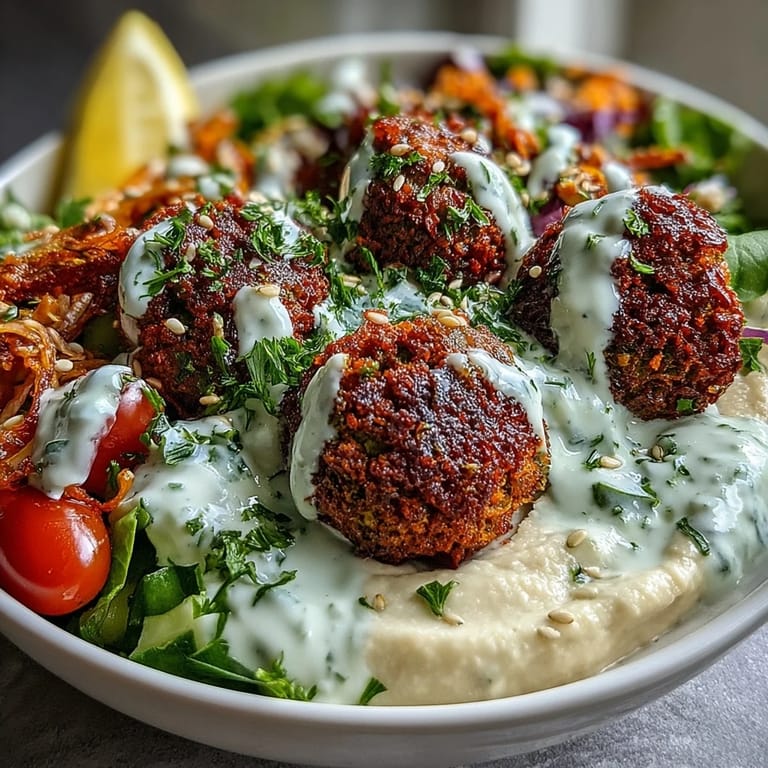
Save There's something about assembling a falafel bowl that feels less like cooking and more like creating art on a plate. I discovered this particular combination at a tiny Mediterranean spot tucked between two storefronts, where the owner would layer everything with such care that you could tell the bowl mattered to her. Now I make versions at home, and honestly, it's become my go-to when I want something that tastes restaurant-quality but comes together in barely half an hour.
I'll never forget the afternoon my neighbor watched me make this for a casual lunch, and her face when she tasted the tahini-soaked greens was honestly priceless. She came back the next week asking if I could teach her, and now it's become our thing—we prep ingredients together while catching up, then split a bowl and call it a productive afternoon. Food has a way of doing that, turning a simple lunch into an actual moment worth remembering.
Ingredients
- Falafel (12 balls): Store-bought saves tremendous time and honestly works beautifully here, though homemade gives you control over texture and spice level.
- Hummus (1 cup): This is your creamy foundation, so choose one you'd actually eat straight from a spoon—the quality really shows.
- Tzatziki (1 cup): The cooling, herbaceous contrast that prevents the bowl from feeling one-note; use full-fat yogurt versions for best results.
- Tahini sauce (1/4 cup): Drizzled warm, this transforms from ingredient to the moment where everything clicks together.
- Mixed salad greens (4 cups): A combination of textures matters here—peppery arugula, tender spinach, and crisp romaine all contribute something different.
- Cherry tomatoes (1 cup, halved): Their natural sweetness balances the earthiness of everything else, and halving releases just enough juice to dress the greens.
- Cucumber (1/2 cup, sliced): Keeps things refreshing and adds a clean crunch that cuts through the richer elements.
- Red onion (1/4 cup, thinly sliced): A little sharpness goes a long way; don't skip this even though it's easy to overlook.
- Shredded carrots (1/4 cup): These add sweetness, color, and a satisfying texture variation across each bite.
- Fresh parsley (2 tablespoons, chopped): More than decoration—it brightens everything with a fresh herbal note.
- Toasted sesame seeds (1 tablespoon): Toast them yourself if you can; the aroma is worth the extra minute, and the flavor is noticeably deeper.
- Lemon wedges: Your final say in every bite; don't serve the bowl without these within arm's reach.
Tired of Takeout? 🥡
Get 10 meals you can make faster than delivery arrives. Seriously.
One email. No spam. Unsubscribe anytime.
Instructions
- Warm your falafel gently:
- Follow package directions if store-bought, or if you made them fresh, reheat at 375°F for about 5 minutes until they're warm and the exterior is crisp again. You want them hot enough to release a little steam when you bite into them.
- Build your base with spreads:
- Scoop hummus generously onto each bowl or plate, then add a dollop of tzatziki beside it—they should be visible, not hidden. This isn't just spreading; it's creating pockets of flavor you'll hit throughout eating.
- Layer in the greens and vegetables:
- Arrange mixed greens as a bed, then scatter tomatoes, cucumber, onion, and carrots over the top with the same care you'd use arranging flowers. Each vegetable should be visible and accessible, not buried under its neighbors.
- Crown with falafel:
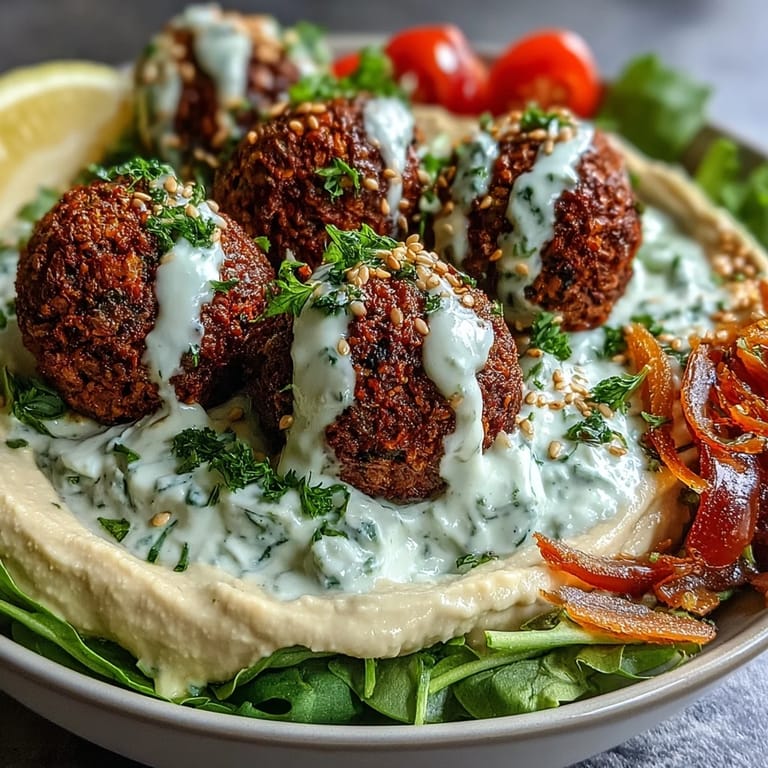
- Place 3 warm falafel balls per serving directly on the vegetables where they'll stay warm and slightly soften the greens underneath. This positioning matters because you want falafel in every bite.
- Finish with tahini and garnish:
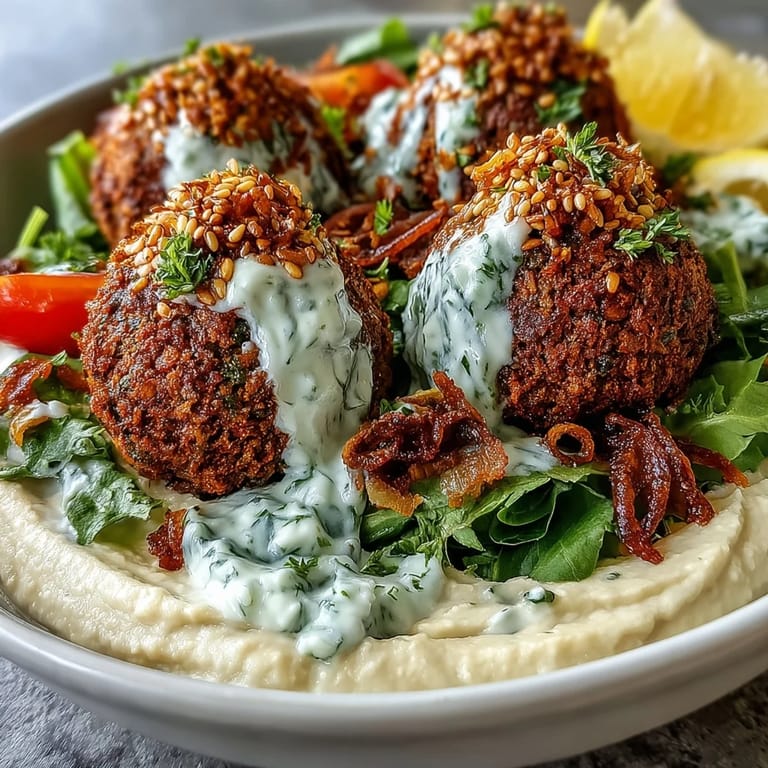
- Drizzle tahini sauce in a light pattern across the bowl, then scatter parsley and sesame seeds over everything. Add a lemon wedge to the side, nestled right where your hand naturally reaches for it.
- Serve with intention:
- These bowls are best eaten immediately while falafel is still warm and greens haven't started to wilt.
 Save
Save What started as a quick weeknight solution has become something more meaningful—it's the meal I make when I want to nourish someone, or when I need to nourish myself properly. There's dignity in taking ten minutes to arrange food with care, and this bowl somehow makes that feel effortless.
Why This Combination Works
Every element here has a job, and none of them compete. The creamy spreads provide richness, the greens give structure and freshness, the vegetables add brightness and texture variation, and the falafel is the anchor that makes this a real meal instead of a salad. The tahini sauce is what ties everything together—without it, the bowl feels scattered; with it, every component suddenly belongs to the same story. This is why it matters that you warm the falafel and why you don't skip the lemon wedge, even though both seem optional.
Customizing Your Bowl
The beauty of this format is that it adapts to whatever you have on hand or whatever you're craving that day. One week you might add quinoa or brown rice if you want extra substance, the next week you might toss in kalamata olives or pickled vegetables for a salty contrast. Some versions I've made include roasted chickpeas for extra crunch, or a fried egg on top when I'm feeling indulgent. The core stays the same, but the variations keep it from ever feeling repetitive, no matter how often you make it.
Pairing and Storage
These bowls pair beautifully with crisp white wines or mint tea—something refreshing that doesn't compete with all the layered flavors happening on the plate. If you're prepping for the week, store components separately in your fridge and assemble fresh each time you want to eat; the greens will stay crisp, the spreads stay fresh, and the falafel can be gently reheated whenever you're ready.
- Prep vegetables and store in airtight containers up to 3 days ahead, which means you're genuinely minutes away from a complete meal.
- Keep falafel in the fridge and warm gently in a 375°F oven just before serving so they regain their exterior crispness.
- Make or buy extra tahini sauce and store it in a jar; you'll find yourself drizzling it on everything once you start.
 Save
Save Make this bowl, and I think you'll understand why it's become such a reliable favorite. It's nourishing, it's beautiful, and it tastes like someone cared enough to build it properly.
Common Recipe Questions
- → Can I make falafel from scratch?
Absolutely. Homemade falafel requires soaked chickpeas, fresh herbs, and spices blended together, formed into balls, and fried until golden crispy. The cooking time will extend beyond 10 minutes but yields superior flavor.
- → What can I substitute for tzatziki?
Dairy-free options include coconut yogurt blended with cucumber and dill, or simply increase the hummus portion and add extra tahini drizzle for creaminess without dairy.
- → How long does this bowl keep?
Store components separately in airtight containers for up to 4 days. Keep the crispy falafel away from moisture and sauces to maintain texture. Assemble fresh bowls when ready to eat.
- → What protein additions work well?
Grilled chicken strips, roasted chickpeas, or lentils add extra protein. For vegetarian variety, crumble feta cheese over the top or add dolmas (stuffed grape leaves) as a side.
- → Can I meal prep this bowl?
Perfect for meal prep. Portion hummus, tzatziki, and tahini into small containers. Chop vegetables and store separately. Warm falafel before assembling each bowl for the best texture.
- → What other vegetables can I add?
Roasted eggplant, bell peppers, radishes, pickled turnips, or grilled zucchini complement the Mediterranean flavors beautifully. Kalamata olives and artichoke hearts add briny depth.