 Save
Save My grandmother used to make Hoppin John every New Year's Day without fail, and I'd watch her crisp that bacon until the kitchen smelled like pure celebration. She swore the black-eyed peas brought luck to whoever ate them first, and honestly, the tradition stuck with me more than the superstition. Years later, I realized it wasn't the luck that mattered—it was how this humble one-pot dish could feed a crowd and taste like home all at once. The combination of smoky bacon, tender peas, and fluffy rice is so satisfying that it's become my go-to when I want something that feels both comforting and special. Now I make it whenever I need to feel grounded.
I made this for a New Year's potluck once, and watching people go back for seconds while swapping stories about their own family traditions—that's when I understood why this dish has survived generations. Someone's grandmother had a version with hot sauce mixed right in, another guest added collard greens, and suddenly everyone was talking about their own spin on it. That night taught me that Hoppin John isn't rigid or precious; it's a canvas for memory and regional flavor.
Ingredients
- Thick-cut bacon (6 oz): The foundation of everything—thick-cut gives you more rendered fat and flavor than thin bacon, and those crispy bits become golden garnish.
- Onion, celery, and garlic: This aromatic trio builds the savory backbone; don't skip mincing them finely or they'll overpower the delicate peas.
- Green bell pepper (optional): Adds sweetness and a slight vegetal brightness that balances the smokiness beautifully.
- Dried black-eyed peas (1½ cups): Soaking overnight is non-negotiable if using dried; it cuts cooking time and ensures even texture without splitting.
- Low-sodium chicken or vegetable broth (4 cups): The liquid that becomes infused with bacon fat and aromatics, so use broth you'd actually taste.
- Bay leaf, dried thyme, and cayenne: These three work together quietly—thyme adds earthiness, cayenne a gentle heat that creeps up on you, and bay leaf ties it all together with subtle sophistication.
- Long-grain white rice (2 cups): The fluffy canvas that catches all the savory, pea-studded sauce; don't use short-grain or it'll gum up.
- Unsalted butter or oil (1 tablespoon): A small amount keeps the rice from sticking and adds richness without overshadowing the peas.
- Scallions and hot sauce: Fresh scallions brighten everything at the last moment, while hot sauce lets each person customize their own heat level.
Tired of Takeout? 🥡
Get 10 meals you can make faster than delivery arrives. Seriously.
One email. No spam. Unsubscribe anytime.
Instructions
- Render the bacon until it sings:
- Cook your diced bacon over medium heat until it's golden and crisp, about 6 to 8 minutes—you want it to pop between your teeth. Scoop out half for garnish and let the rest stay behind with those precious drippings that are about to make everything taste incredible.
- Build your aromatic base:
- Toss in your chopped onion, celery, and bell pepper, letting them soften in that bacon fat for about 5 minutes until they're translucent and fragrant. Add your minced garlic last and cook just 1 minute so it wakes up without burning.
- Combine and simmer gently:
- Pour in your soaked peas, broth, bay leaf, thyme, and cayenne, then bring everything to a boil before dropping the heat to low. Let it simmer uncovered for 35 to 45 minutes (20 to 25 if using canned peas) until the peas are creamy inside but still hold their shape.
- Cook the rice alongside:
- While your peas bubble away, combine rice, water, butter, and a pinch of salt in a separate pot, bring to a boil, then cover and drop the heat to low. After 15 minutes when the water's absorbed, remove from heat and let it rest covered for 5 minutes so the grains stay separate and fluffy.
- Plate and garnish with intention:
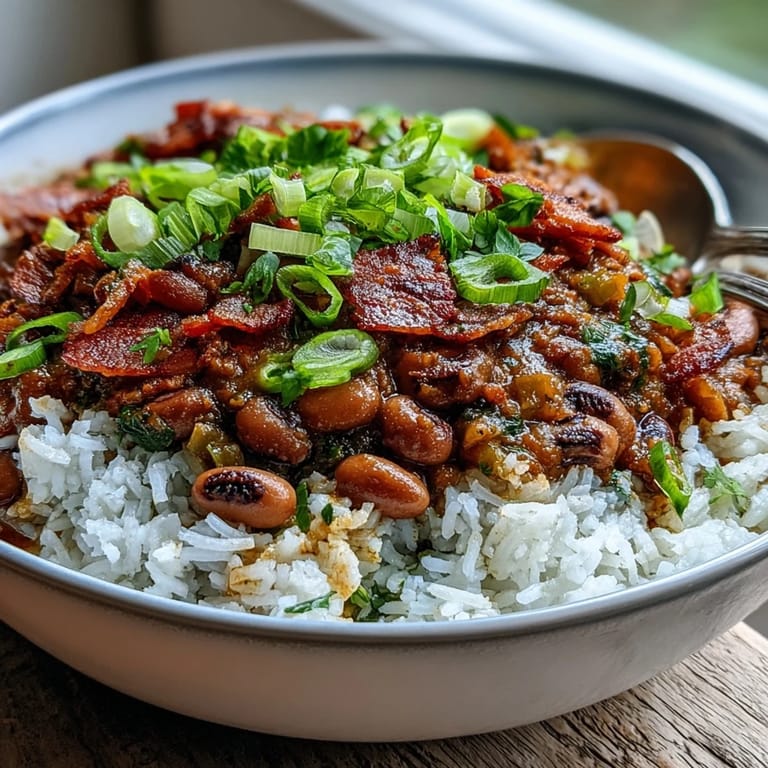
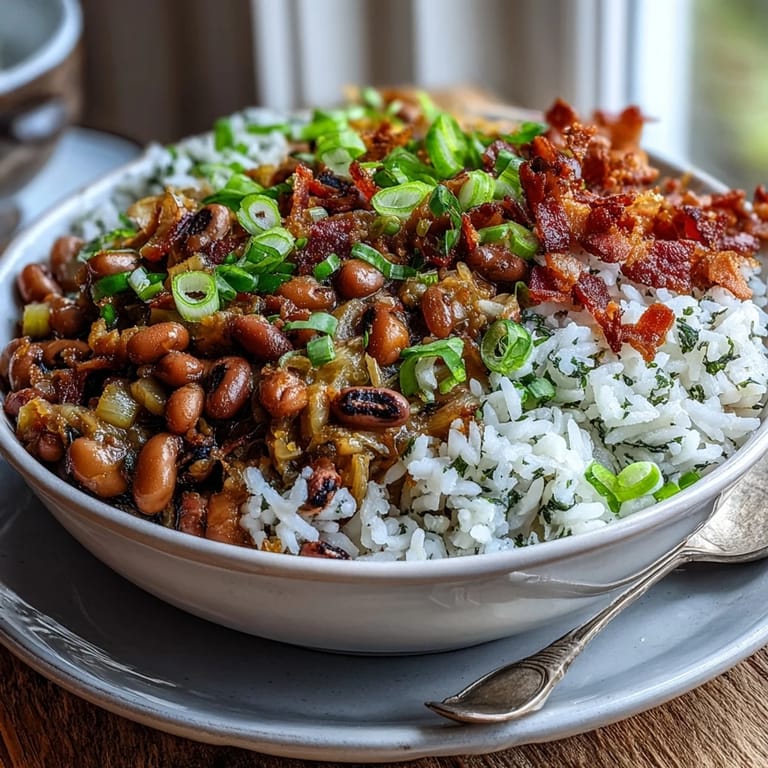
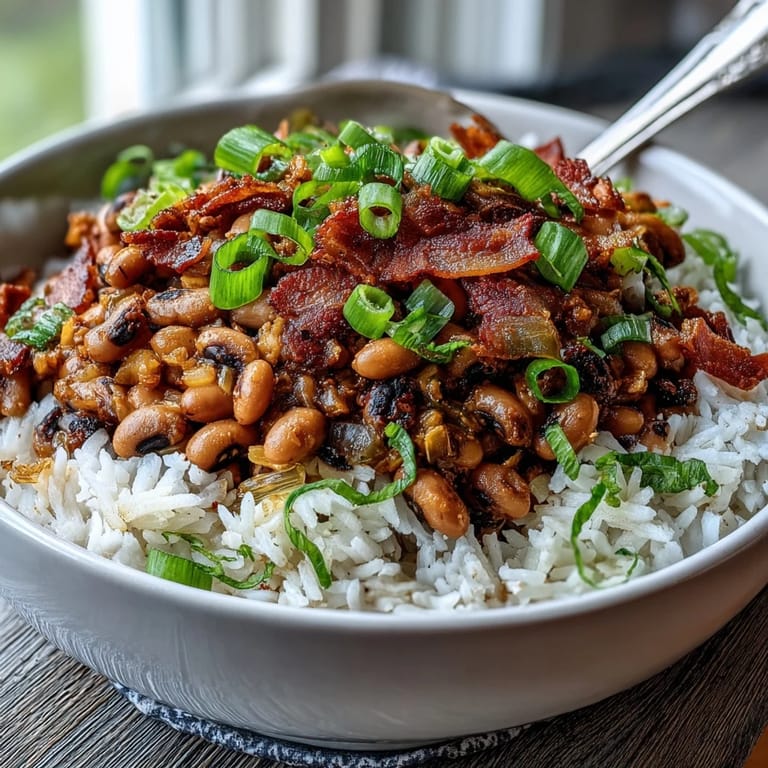
- Spoon those creamy peas over the rice, top with your reserved crispy bacon and fresh sliced scallions, then pass hot sauce around the table so everyone can adjust to their taste.
 Save
Save There's a moment near the end of cooking when you lift the lid and that steam hits your face carrying all those smoky, savory notes—that's when you know it's going to be good. I've learned to pause there, take a breath, and feel grateful for something so simple that tastes this full.
The Soul of Southern Cooking
Hoppin John represents something deeper than just a recipe—it's about layering flavors slowly and letting time do the work. The smoky bacon fat coating each pea, the onions and celery surrendering into the broth, the way rice absorbs all those savory juices—this is how Southern cooking teaches patience. You're not rushing; you're building something that tastes like it matters.
Making It Your Own
The beauty of this dish is that it invites adaptation without losing its soul. Some people stir in collard greens at the last minute, others add diced tomatoes for brightness, and vegetarians swap the bacon for smoked paprika to keep that essential smokiness. I once made it with a splash of vinegar added right before serving, and the acid cut through the richness in a way that changed everything for the better.
Serving and Storage Wisdom
This dish tastes even better the next day when flavors have had time to marry, so don't hesitate to make it ahead. Store the peas and rice separately in the refrigerator for up to three days, then warm gently on the stove with a splash of water if needed.
- Serve alongside cornbread and a big green salad with vinaigrette to balance the richness.
- Leftovers transform beautifully—cold pea and rice mixture stuffed in a bell pepper, or reheated gently with a fried egg on top becomes a different meal entirely.
- This recipe doubles easily if you're feeding a crowd, and it freezes well for up to two months if you skip the fresh scallion garnish until after thawing.
 Save
Save Hoppin John has taught me that the most meaningful food isn't complicated—it's built on respect for simple ingredients and the time you give them to transform. Make this, share it, and watch how it becomes part of your own story.
Common Recipe Questions
- → Why is Hoppin John eaten on New Year's Day?
Black-eyed peas represent coins and symbolize prosperity and good luck for the coming year. This Southern tradition dates back to the Civil War era and remains a cherished New Year's ritual across the American South.
- → Do I need to soak dried black-eyed peas overnight?
Yes, overnight soaking ensures even cooking and proper texture. If you're short on time, canned black-eyed peas work perfectly and reduce simmering time to just 20-25 minutes.
- → Can I make Hoppin John vegetarian?
Absolutely. Simply omit the bacon and add smoked paprika or liquid smoke to maintain that signature smoky flavor. Use vegetable broth instead of chicken broth for a completely plant-based version.
- → What should I serve with Hoppin John?
Cornbread and sautéed collard greens or kale make the perfect accompaniment. Hot sauce, pickled peppers, or diced raw onions add brightness and heat to cut through the richness.
- → How long does Hoppin John keep in the refrigerator?
Stored in an airtight container, it keeps well for 4-5 days. The flavors often improve after a day or two. Reheat gently with a splash of broth to restore consistency.