 Save
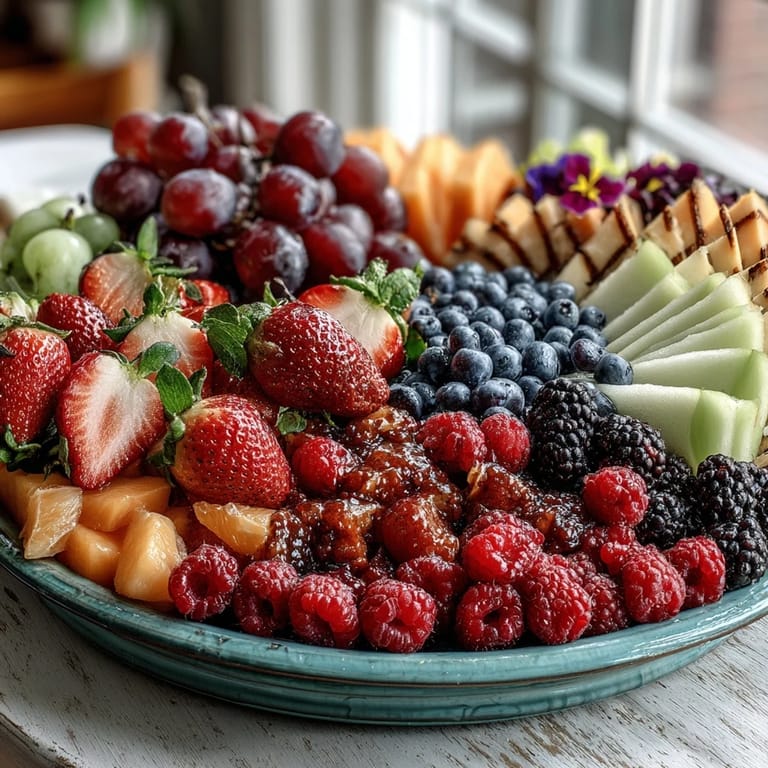
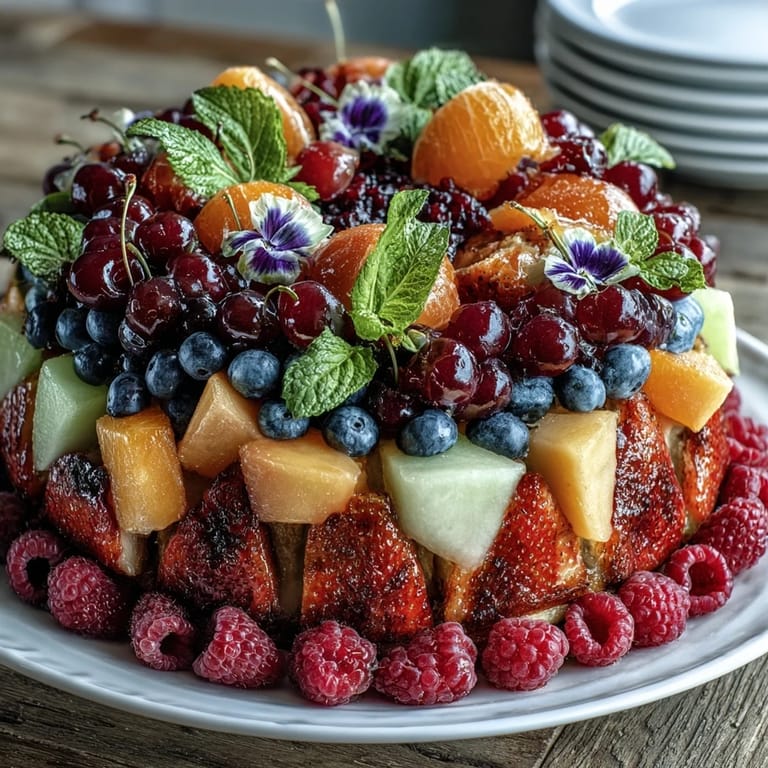
Save My cousin texted me three weeks before her graduation asking if I could help make the dessert table look less boring. She wanted something that felt celebratory but not overdone, and honestly, I'd been craving an excuse to play with edible flowers anyway. That afternoon in her kitchen, surrounded by grocery bags and what felt like every fruit stand in the city, we realized we weren't just making food—we were creating a centerpiece that guests would photograph before eating. The energy completely changed once we started arranging colors instead of following a recipe.
When the first guests arrived and saw that table, the room went quiet for a second. Then someone said it looked like edible confetti, and suddenly everyone was gravitating toward it, snapping photos, asking what the purple flowers were. My cousin caught my eye from across the room with this huge smile, and I knew we'd nailed it. Those little moments when food becomes an actual conversation starter—that's when you remember why you bother making things look pretty.
Ingredients
- Fresh Fruit (grapes, strawberries, pineapple, watermelon, cantaloupe, blueberries, raspberries, kiwis, oranges): The foundation of your table—choose ripe fruit that feels heavy for its size, which means maximum flavor and juice.
- Edible Flowers (pansies, violas, nasturtiums, marigolds, borage): These are your secret weapon for turning a fruit display into something guests won't forget; always verify they're pesticide-free and certified food-grade.
- Fresh Mint Leaves: A green accent that adds subtle flavor and fills gaps in your arrangement naturally.
- Lemon Slices (optional): These brighten the overall look and prevent browning if you're working ahead.
Tired of Takeout? 🥡
Get 10 meals you can make faster than delivery arrives. Seriously.
One email. No spam. Unsubscribe anytime.
Instructions
- Wash and Dry Everything First:
- Rinse all fruits and flowers gently under cold water, then pat completely dry with paper towels—any moisture will cause things to look wilted and slide around on your table. This step takes five minutes but saves you thirty minutes of frustration.
- Cut Your Fruits to Size:
- Use a sharp knife to cut larger fruits into bite-sized pieces, or grab a melon baller for those satisfying watermelon and cantaloupe balls. The goal is pieces that fit in someone's mouth without making them work too hard.
- Build Your Color Sections:
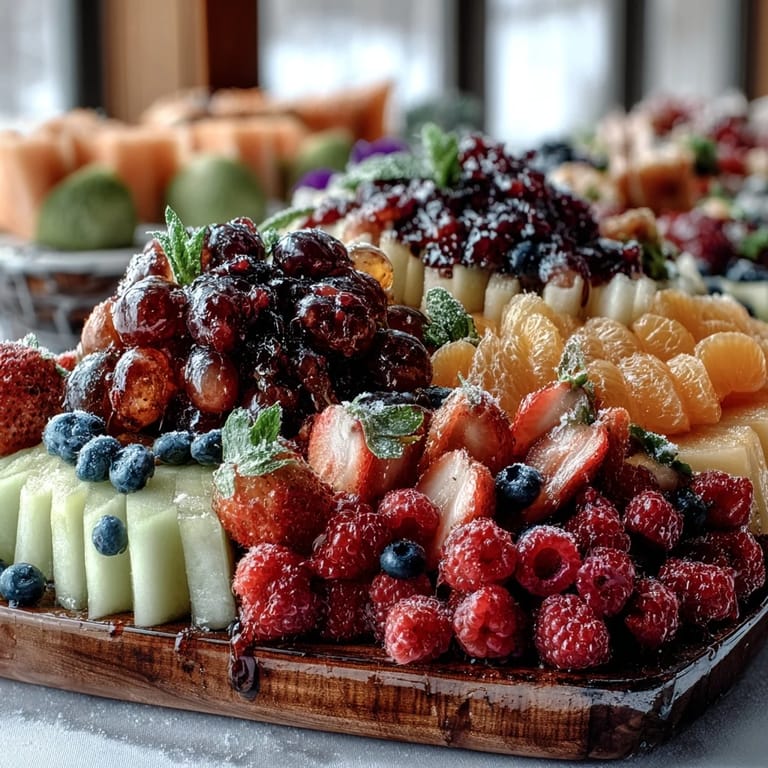
- Start with your table or board completely empty and imagine dividing it into natural sections—one for reds, one for yellows, one for greens. Overlapping pieces slightly as you go creates movement and makes everything look more abundant than it actually is.
- Layer in Flowers and Greenery:
- Once your fruit is down, tuck edible flowers and mint leaves between clusters like you're solving a beautiful puzzle. The flowers should feel like happy accidents, not perfectly placed decorations.
- Add Final Garnish and Chill:
- If using lemon slices, scatter them across the arrangement, then cover loosely and refrigerate until service time. Arrange as close to serving as possible to keep everything looking fresh and vibrant.
 Save
Save There's something deeply satisfying about watching someone's face light up when they see a fruit table done right. It's not fancy cooking, but it requires thought and taste and an understanding that presentation matters just as much as flavor. That graduation party became the party people still ask about, and half the compliments were about that fruit table sitting in the corner.
Choosing Fruits by Season
Summer gives you the obvious wins—berries are at their peak, watermelon and cantaloupe are sweet and juicy, and stone fruits like peaches and plums add warm colors. But don't sleep on fall and winter either. In cooler months, persimmons, pomegranate seeds, and citrus varieties become your best friends, and honestly, a winter fruit table with deep reds and golds can feel even more special because it's unexpected.
The Edible Flower Question
I used to think edible flowers were purely decorative until I actually tasted a nasturtium—peppery and bright, with a subtle bite that made sense on a fruit table. Pansies are milder and almost sweet, violas have a delicate floral note, and borage flowers are beautiful blue-purple and surprisingly refreshing. The key is using them sparingly enough that they accent your fruit rather than overwhelm it, and always, always knowing exactly where they came from and how they were grown.
Making It Your Own
This isn't a rigid formula—it's a framework for creating something that reflects what you have access to and what you think looks beautiful. I've made versions with tropical fruits piled high, versions with almost entirely berries for a jewel-toned effect, and versions where I went heavy on the edible flowers because that's what I could source that week. The real skill is learning how colors talk to each other and trusting your instinct about what feels balanced.
- Offer a honey-yogurt dip or coconut-based dip on the side if you want to add richness without weighing down the fresh simplicity.
- Set up a small sign listing which flowers are used if your guests are curious or have any sensitivities they want to check.
- Keep extra fruit in the fridge during the party so you can top up sparse sections without anybody noticing.
 Save
Save A fruit table done right is one of those rare dishes that makes people happy the moment they see it. Whether you're celebrating a graduation or just a Friday night, this simple arrangement has a way of turning an ordinary moment into something memorable.
Common Recipe Questions
- → What types of fruits work best for this display?
Seedless grapes, berries, melons, pineapple, and citrus fruits provide a colorful and diverse selection suitable for arranging in sections.
- → How should I prepare the edible flowers?
Use only pesticide-free, food-grade edible flowers. Rinse gently and pat dry before tucking them between fruit clusters for decoration.
- → Can I prepare the fruit table in advance?
It's best to assemble the fruit table shortly before serving to maintain freshness and prevent wilting.
- → Are there garnish options to enhance flavor?
Fresh mint leaves and lemon slices work well as garnishes, adding both aroma and a hint of citrus.
- → What tools are recommended to arrange the fruit?
A large serving table or board, sharp knife, cutting board, and optionally a melon baller help create neat and appealing fruit pieces.