 Save
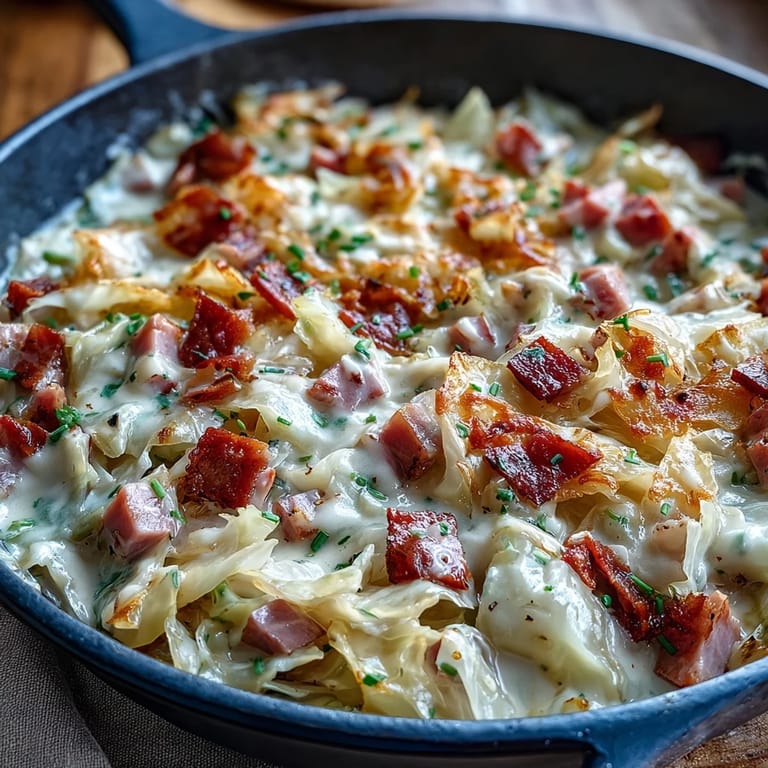
Save There's something about a skillet meal that feels like a small victory, especially when you're staring down a weeknight with nothing but good intentions and an empty stomach. I discovered this creamy cabbage and ham combination during one of those evenings when my fridge was half-empty and my energy was even lower—no complicated mise en place, just a head of cabbage, some ham from Sunday dinner, and a few dairy staples that happened to be calling my name. Twenty minutes later, something magical happened in that skillet, and I realized I'd stumbled onto one of those meals that tastes far more indulgent than it has any right to be.
My neighbor dropped by unexpectedly on a Tuesday evening just as this was coming off the heat, and I found myself dishing out a plate almost without thinking. She took one bite and her eyes went wide in that way that makes you feel like you've just shared something precious—turns out, she'd been looking for exactly this kind of comfort food that doesn't make her feel sluggish afterward. Now she texts me photos of her own skillet attempts, and I'm convinced this dish has quietly become the backbone of her weeknight rotation too.
Ingredients
- 1 medium head green cabbage, cored and thinly sliced (about 6 cups): The foundation of everything here—slice it thin enough that it wilts into silky ribbons rather than staying stubbornly chunky.
- 1 small yellow onion, finely chopped: This builds the aromatic base and sweetens the sauce as it softens, so don't skip the mincing step.
- 2 cloves garlic, minced: Fresh garlic makes all the difference; jarred garlic will leave your sauce tasting flat and one-dimensional.
- 2 cups cooked ham, diced (about 250 g): Use the good ham if you can—that smoky, slightly salty quality elevates the entire dish and gives it backbone.
- 3/4 cup heavy cream: This is what transforms the skillet into a proper comfort meal, so use the real thing and not a substitute.
- 2 oz (60 g) cream cheese, softened: The secret to a sauce that's silky without being heavy; letting it sit at room temperature for a few minutes makes stirring so much easier.
- 1/2 cup shredded cheddar cheese: Sharp cheddar adds more personality than mild, though either works if that's what you have on hand.
- 2 tbsp olive oil or unsalted butter: Butter will give you a richer flavor, while olive oil keeps things slightly lighter—choose based on your mood.
- Salt and black pepper, to taste: Taste as you go because the ham already brings saltiness to the party.
- 1/2 tsp smoked paprika (optional): This adds a whisper of smoke and depth that makes people ask what your secret is.
- 2 tbsp fresh parsley, chopped: The green finish brightens everything up and feels like a small luxury at the end.
Tired of Takeout? 🥡
Get 10 meals you can make faster than delivery arrives. Seriously.
One email. No spam. Unsubscribe anytime.
Instructions
- Start with the aromatics:
- Heat your oil or butter over medium heat until it's shimmering, then add the chopped onion and let it soften for 2–3 minutes, stirring occasionally. The smell alone will make you feel like you're in control of something.
- Bloom the garlic:
- Add your minced garlic and cook for just 30 seconds—you want it fragrant, not burnt, so stay right there and stir. This brief moment is where deep flavor gets created.
- Make room for the cabbage:
- Pile in all that sliced cabbage, season generously with salt, pepper, and paprika if you're using it, then sauté for 5–7 minutes, stirring now and then. Watch it transform from raw and rigid into something soft and almost melting.
- Warm through the ham:
- Stir in your diced ham and let it cook for about 2 minutes just to heat it through. This isn't about cooking the ham—it's already cooked—it's about marrying all the flavors together.
- Build the creamy sauce:
- Lower your heat to low, then add the heavy cream and softened cream cheese, stirring gently until the cream cheese disappears into the sauce. The magic happens when you don't rush this step—let the heat do the work rather than boiling everything.
- Finish with cheese:
- Sprinkle in your shredded cheddar and stir until it melts completely into the sauce, about 1–2 minutes. The whole skillet should be glossy and silky at this point.
- Taste and adjust:
- Take a spoon, taste it, and add more salt or pepper if it needs it—trust your palate here. A pinch of nutmeg or a dash of Dijon mustard can add intrigue if you want to be adventurous.
- Serve with celebration:
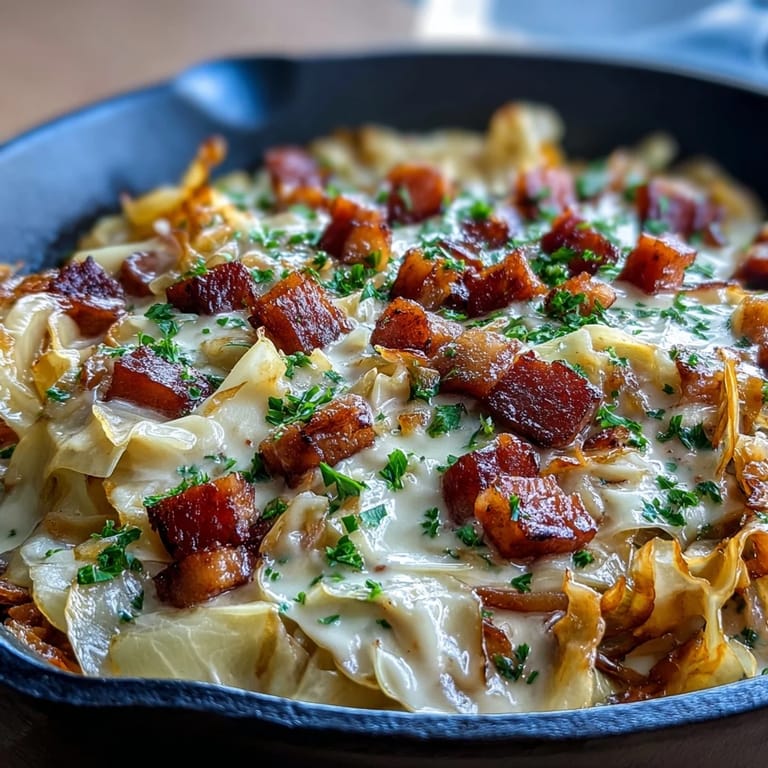
- Remove from heat, scatter fresh parsley on top, and bring the whole skillet to the table if you're feeling dramatic. There's something satisfying about a one-pan meal that doesn't require any plating theater.
 Save
Save This dish taught me something important during a particularly hectic winter: sometimes the most nourishing meals are the ones that don't demand your full attention. There's a quiet joy in realizing that comfort doesn't have to be complicated, and dinner can be both deeply satisfying and ready before your appetite gets too insistent.
The Beauty of One-Pan Cooking
There's an almost meditative quality to building flavor in a single skillet, watching vegetables soften and meats warm through while everything stays in one place. You're not managing multiple burners or juggling pots, just present and attentive to what's happening in front of you. It's the kind of cooking that lets your mind settle while your hands stay busy, and somehow the food tastes better when you've been fully there for it.
Variations That Keep Things Interesting
Once you've made this recipe a few times, you'll start seeing it as a template rather than a rigid formula, which is exactly how it should be. Different cheeses—Swiss, Gruyère, even a sharp provolone—will shift the flavor profile in subtle but delightful ways. Mushrooms sautéed alongside the onions add earthiness, while a splash of apple cider vinegar at the end brings a bright note that cuts through the richness beautifully.
Serving Suggestions and Leftovers
Serve this straight from the skillet with a side salad tossed in a sharp vinaigrette to balance all that cream, or over cauliflower rice if you're being extra vigilant about carbs. The next day, leftovers reheat gently on the stovetop with a splash of cream, and they're somehow even better after a night in the fridge as the flavors deepen and marry together. It also freezes beautifully for up to three months, though you'll want to thaw it overnight and give it low-heat love to bring it back to its creamy glory.
- Pair it with a crisp green salad dressed in vinaigrette for brightness and balance.
- Serve over cauliflower rice, eggs, or alongside crusty bread if you're not keeping things low-carb.
- Store leftovers in an airtight container and reheat gently on the stovetop with a splash of cream to restore creaminess.
 Save
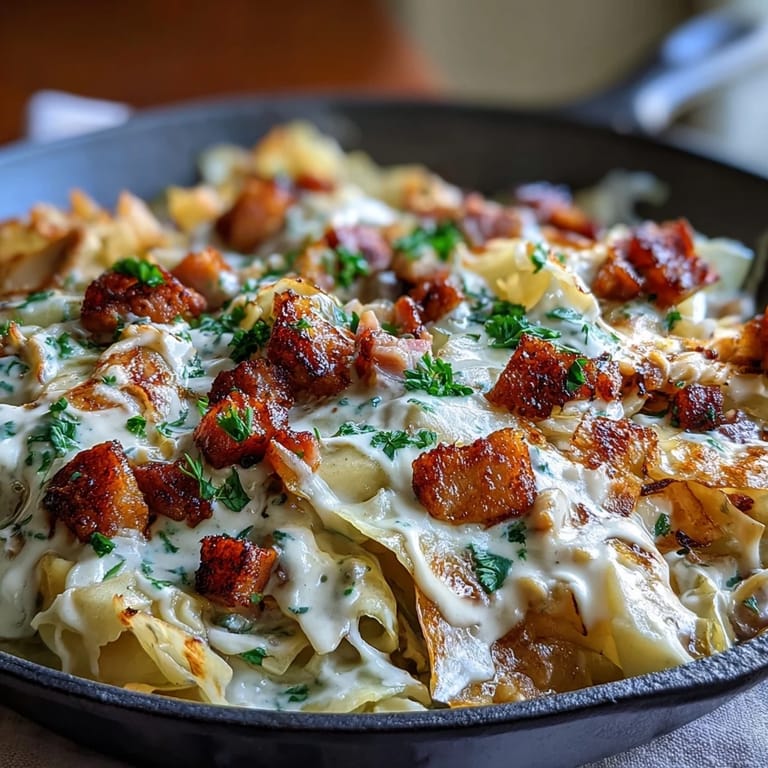
Save This creamy cabbage and ham skillet has become one of those meals I return to when I need something that feels both nourishing and indulgent, where simplicity somehow transforms into something worthy of celebration. It's proof that the best dishes are often the ones that ask very little of you.
Common Recipe Questions
- → Can I substitute the cheddar cheese?
Yes, Swiss or Gruyère work wonderfully as alternatives, offering a different but complementary flavor.
- → How do I prevent the cabbage from becoming soggy?
Sauté the cabbage over medium heat while stirring occasionally until just wilted to maintain a pleasant texture.
- → Is smoked paprika necessary for the flavor?
Smoked paprika adds a subtle smoky warmth but can be omitted or replaced with regular paprika according to preference.
- → What’s the best method to heat the ham?
Adding diced cooked ham during the sauté process and cooking for a couple of minutes ensures it’s heated without drying out.
- → Can fresh herbs be added at different stages?
Fresh parsley is best sprinkled just before serving to maintain its bright flavor and color.
- → How can I make this dish dairy-free?
Substitute heavy cream and cream cheese with coconut cream or cashew-based alternatives and use dairy-free cheese.