 Save
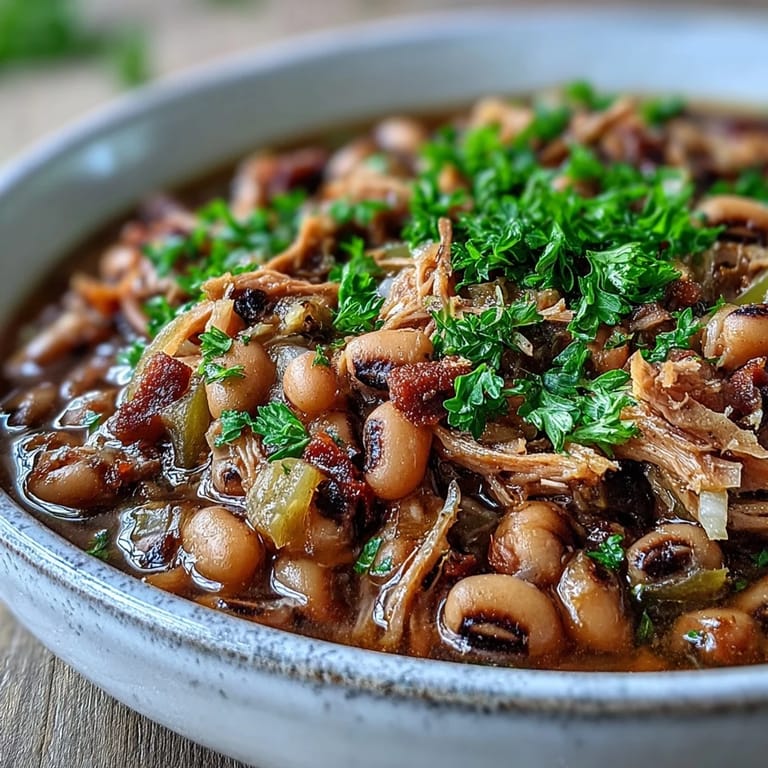
Save My grandmother used to say that black-eyed peas on New Years Day weren't just food—they were insurance against a year of bad luck. I didn't fully understand it until I started cooking them myself, watching the dried peas plump up into something tender and alive, absorbing all that smoky pork flavor until they tasted like tradition itself. There's something almost meditative about stirring a pot of these for an hour and a half, the kitchen filling with that warm, earthy smell that somehow feels both ancient and comforting.
Years ago, a friend from Charleston came to spend New Years with me, and I panicked because I'd never made black-eyed peas before. I called my mom in a quiet kitchen at 6 AM, and she walked me through it over the phone while I chopped vegetables with shaky hands. By evening, watching my friend's face light up when she tasted them—that exact moment when she closed her eyes and smiled—I realized I wasn't just following a recipe, I was becoming part of something bigger.
Ingredients
- Black-eyed peas (1 pound): These little beans are the heart of the dish and deserve respect—sorting them matters because the occasional small stone sneaks in, and I learned that lesson the hard way with a dental visit I'd rather forget.
- Smoked pork neck bones or ham hocks (1½ pounds): This is where all the deep, smoky magic comes from; don't skip it or use plain pork because the smoke is what makes people ask for seconds.
- Onion, celery, and green bell pepper (the holy trinity): These three together create a flavor foundation that's been used in Southern cooking forever, and honestly, they make your kitchen smell like home before you've even started cooking.
- Garlic (4 cloves): Minced fresh is worth the extra thirty seconds because jarred garlic gets bitter in the long simmer.
- Water or chicken broth (7 cups): Broth adds more body and flavor, but water works fine if that's what you have on hand.
- Creole seasoning, bay leaf, thyme, smoked paprika, and black pepper: This spice blend is what gives the dish its personality—don't be shy with it, but taste as you go because Creole seasoning brands vary wildly in heat.
- Fresh parsley (2 tablespoons for garnish): A small handful of fresh green right at the end brightens everything and makes it look like you put in more effort than you actually did.
Tired of Takeout? 🥡
Get 10 meals you can make faster than delivery arrives. Seriously.
One email. No spam. Unsubscribe anytime.
Instructions
- Soak the peas overnight (or use the quick method):
- If you're planning ahead, cover them with water the night before and let them sit in your fridge. If you forgot—and who hasn't—pour boiling water over them, give them an hour, and you're nearly caught up.
- Build your flavor base:
- Heat a splash of oil in your pot over medium heat, then add the chopped onion, celery, and bell pepper. Let them soften for about 5 minutes, stirring occasionally until they smell sweet and golden.
- Wake up the garlic:
- Add your minced garlic and cook for just 1 minute—you want it fragrant but not brown, or it'll taste bitter by the time everything's done.
- Combine everything:
- Add the drained peas, smoked pork, your broth or water, and all the seasonings to the pot. Give it a good stir so nothing sticks to the bottom.
- Bring it to a boil, then let it breathe:
- Once you see a rolling boil, turn the heat down low, cover the pot, and let it simmer gently for about an hour and a half. Stir it occasionally and listen for that soft, contented bubbling sound that means everything's cooking perfectly.
- Shred the pork and finish:
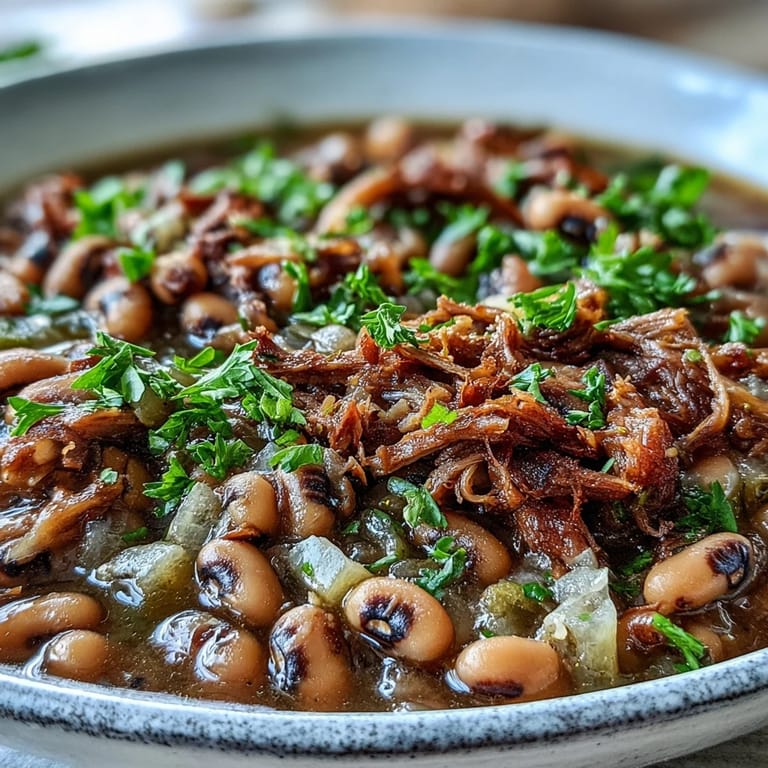
- When the peas are completely tender and the pork falls apart easily, pull out the bones and shred any meat back into the pot. Taste it, adjust the salt, and pull out that bay leaf before serving.
 Save
Save Last January, I made this for a small group of friends, and one of them—who'd grown up eating his grandmother's version—came back into the kitchen with tears in his eyes. He said it tasted exactly like a memory he'd thought he'd lost. That's when I understood why this dish matters so much in the South; it's not just about luck or tradition, it's about connection.
The Story Behind the Tradition
Black-eyed peas on New Years goes back generations in Southern homes, rooted in the belief that eating them brings prosperity for the year ahead. Whether you believe in the luck or not, there's something powerful about sitting down to a meal that millions of people across the South are eating at the exact same time, all carrying the same hopes and memories. The simplicity of the dish—just humble ingredients and time—makes it feel democratic, like everyone deserves this kind of comfort food.
How to Make It Your Own
Once you've made this version a few times, you'll start understanding the bones of the recipe and can play with it. Some families add diced tomatoes for brightness, others throw in a pinch of red pepper flakes, and I once had a version that included a splash of apple cider vinegar. The base stays the same, but the little variations are what make it feel like your own family recipe rather than something you copied.
Serving and Storage
Serve these hot with cornbread on the side and a small dish of hot sauce for anyone who wants extra heat. Leftovers are actually better the next day after all the flavors have had time to get cozy with each other, and they freeze beautifully for up to three months, which means you can have a taste of good luck any time you need it.
- Rice is the traditional pairing, and it soaks up all the rich, flavorful broth.
- A simple green salad cuts through the richness and makes the meal feel complete.
- Make extra because someone will always come back for seconds, and you'll be grateful you did.
 Save
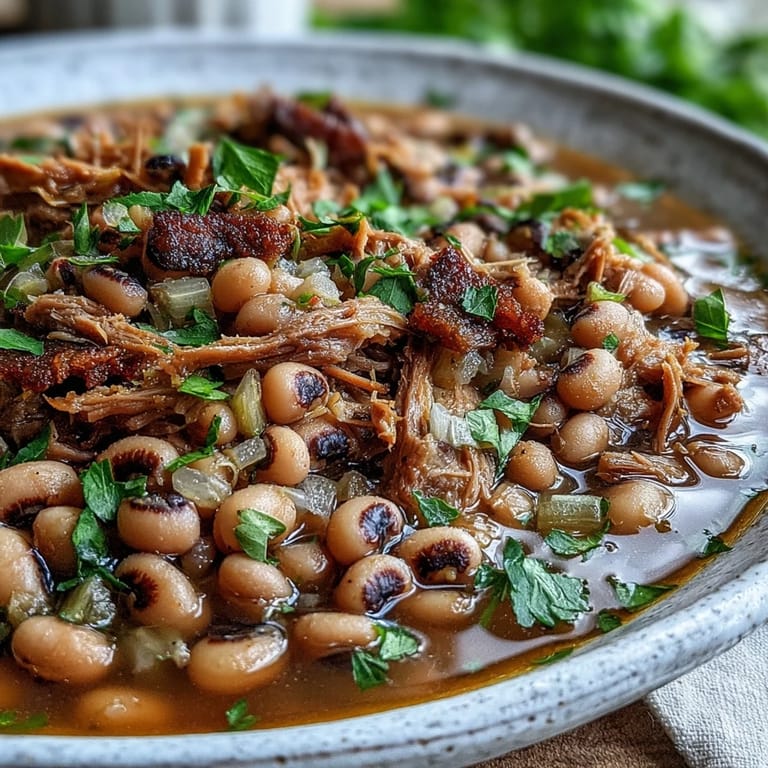
Save There's real magic in a pot of black-eyed peas simmering on the stove, whether you're cooking them for luck or just because they taste incredible. Make this for someone you love on New Years Day, or any day really, and you'll understand why this simple dish has survived generations.
Common Recipe Questions
- → Why are black-eyed peas eaten on New Years?
Black-eyed peas are traditionally eaten on New Years Day in the Southern United States to bring good luck and prosperity for the coming year. The peas symbolize coins, and when served with greens (representing paper money) and cornbread (representing gold), the dish is believed to ensure financial fortune.
- → Can I make this dish vegetarian?
Yes, simply omit the smoked pork neck bones and use vegetable broth instead of chicken broth. To maintain the smoky flavor, add extra smoked paprika and a splash of liquid smoke. You may also want to add a smoked salt or incorporate smoked vegetables like roasted bell peppers.
- → Do I need to soak the black-eyed peas?
Soaking overnight is recommended for even cooking and better texture, but you can use the quick-soak method by covering the peas with boiling water and letting them sit for one hour. Soaking also helps reduce cooking time and can make the peas easier to digest.
- → What cut of smoked meat works best?
Smoked pork neck bones provide excellent flavor and collagen that creates a rich broth. Smoked ham hocks are a traditional alternative. For more meat, you could use a smoked pork shoulder or ham shank. The key is choosing a cut with plenty of connective tissue and smoky flavor.
- → How long do leftovers keep?
Cooked black-eyed peas can be refrigerated for up to 5 days in an airtight container. The flavors often improve after a day or two. For longer storage, freeze portions for up to 3 months. Thaw overnight in the refrigerator before reheating gently on the stove.
- → What should I serve with black-eyed peas?
Traditional accompaniments include white rice, cornbread, or biscuits. For a complete New Years feast, serve alongside collard greens (or other greens) and cornbread. Hot sauce and chopped fresh parsley make simple but perfect garnishes that add brightness and color.