 Save
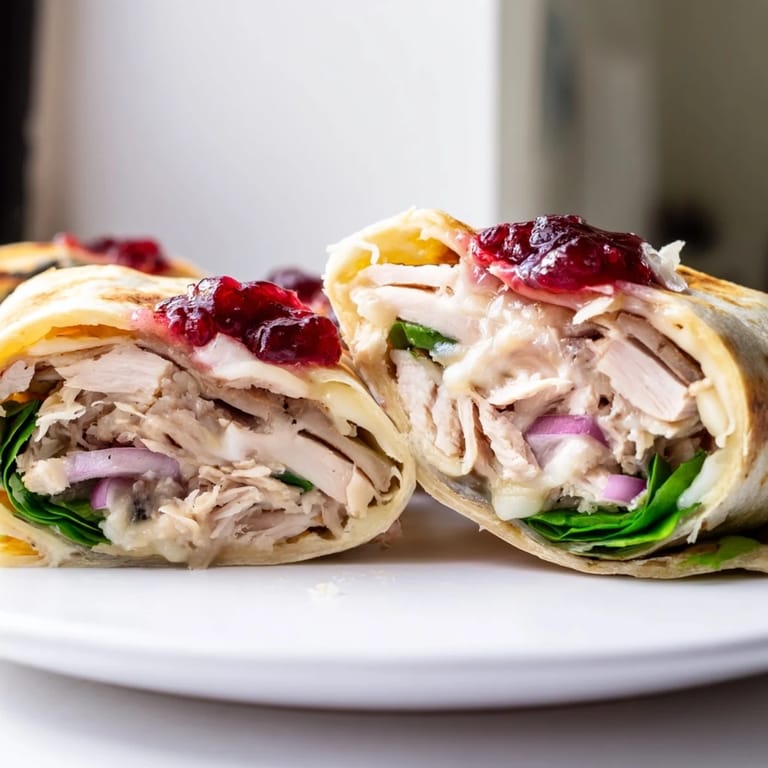
Save There's something magical about the day after a holiday feast when the kitchen still smells faintly of rosemary and butter, and you're left staring at containers of perfectly good leftovers. That's when I discovered that cold baked brie, still creamy in the center, transforms into something entirely different when nestled against warm chicken inside a tortilla. It was less a planned recipe and more a moment of kitchen desperation that turned into genuine delight.
I made these wraps for my sister on a quiet December afternoon when we both needed something warm but didn't want the heaviness of a full meal. She took one bite and immediately asked for the recipe, which felt like the highest compliment—not a enthusiastic exclamation, just a simple request that meant I'd made something she genuinely wanted to recreate.
Ingredients
- Cooked chicken breast, sliced or shredded: Use exactly 1 cup, and don't be afraid of leftover meat that's already been seasoned—it carries memory and flavor into the wrap.
- Baked brie: Go for 100 g, and if the rind feels thick or waxy, peel it away without guilt; this is about creamy indulgence, not texture battles.
- Baby spinach leaves: A half cup adds color and a whisper of earthiness that balances the richness without demanding attention.
- Red onion, thinly sliced: Just a quarter of a small one, but slice it paper-thin; raw onion's sharp bite cuts through the brie beautifully.
- Cranberry sauce: Two tablespoons per wrap, whether whole berry or smooth; this is the moment that makes people pause and say, 'Oh, that.'
- Large flour tortillas: Use 10-inch ones; they're forgiving and hold everything without tearing or creating that sad, floppy wrap experience.
- Mayonnaise or Dijon mustard: A tablespoon optional but honestly essential; it creates a barrier that keeps the tortilla from getting soggy.
- Fresh herbs: Two teaspoons of thyme or parsley, chopped fine; these remind you that good food doesn't require complicated technique, just intention.
Tired of Takeout? 🥡
Get 10 meals you can make faster than delivery arrives. Seriously.
One email. No spam. Unsubscribe anytime.
Instructions
- Lay and prepare:
- Spread your tortillas flat on a clean surface and, if you're using it, paint that thin layer of mayo or mustard down the center of each one. It sounds unnecessary until you bite through and realize the wrap held together with dignity.
- Build with care:
- Layer half of everything onto each tortilla in this order: chicken first, then brie (the residual warmth from your kitchen will begin softening it), spinach leaves laid flat, thin red onion rings scattered across. The order matters because you want the cold brie resting against warm chicken, a gentle meeting of temperatures.
- Season and sauce:
- Spoon a tablespoon of cranberry sauce onto each wrap, sprinkle your herbs and pepper if using them, and take a second to appreciate how this simple pile of ingredients looks like autumn decided to visit your lunch plate.
- Fold tight:
- Fold the left and right sides inward just enough to create a seam, then roll from bottom to top with the kind of gentle firmness you'd use tucking in a child—tight enough to hold together, loose enough to feel alive.
- Toast to golden:
- Heat your skillet over medium, place the wraps seam-side down, and listen for that soft sizzle that tells you the cheese is waking up. Two to three minutes per side, until the tortilla has turned the color of pale honey and the brie is visibly melting at the edges.
- Serve while warm:
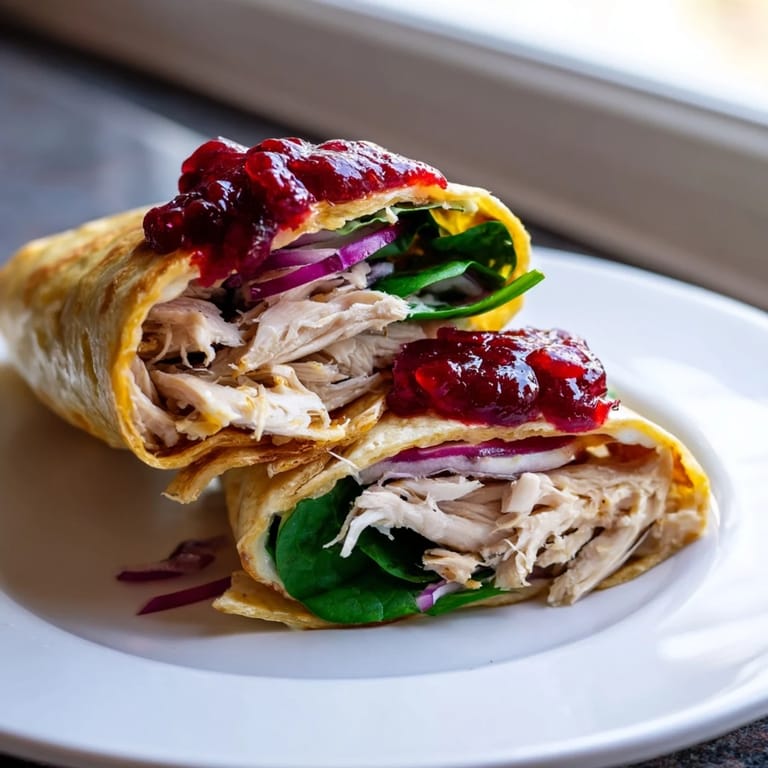
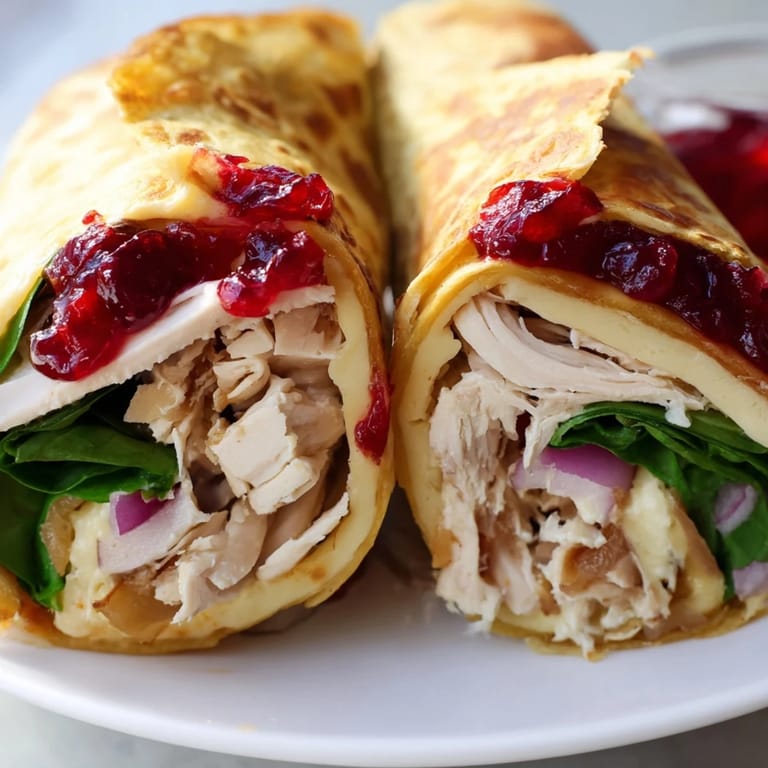
- Slice each wrap in half on the diagonal—this sounds like a small thing, but it transforms the presentation from casual to intentional. The brie should still be creamy enough to catch the light.
 Save
Save What struck me most wasn't the taste, though it was genuinely good—it was realizing that food doesn't need to be complicated to feel like you've been cared for. Brie and chicken and cranberry sauce are simple things, but arranged with attention, they become a quiet gift you give yourself.
When Leftovers Become the Main Event
The wrap exists because holiday cooking produces abundance, and abundance needs clever hands to reimagine it. Rather than reheating the same plate twice, you're inventing something that tastes like forward momentum. The crispy tortilla shell, the warm brie, the snap of fresh spinach—each element reminds you that cooking well isn't about starting from scratch; it's about understanding what you have and what it could become.
The Importance of Temperature Contrast
Hot crispy wraps against cool spinach, warm melting brie against cold chicken that's been in the refrigerator—these small temperature differences matter more than recipes usually admit. They keep your mouth interested and your bite from becoming monotonous. That's why toasting the assembled wrap works so perfectly; it wakes everything up and creates moments of surprise within a single bite.
Building Your Own Holiday Wrap
Once you understand how this wrap works, you'll start seeing it everywhere in your leftover pile. The structure is adaptable but the principle remains: something warm, something creamy, something bright, something crispy. It's a formula that whispers instead of shouts, which is exactly what you want when you're standing in your kitchen in December, wanting something good without wanting to think too hard.
- Fresh herbs matter most when you chop them right before assembling—bruised herb flavors fade quickly.
- If cranberry sauce feels too tart for your taste, warm it slightly with a teaspoon of honey to mellow it out.
- These wraps are best eaten immediately while the brie is still creamy and the tortilla still remembers its warmth.
 Save
Save This wrap became my quiet anchor through the busy season—proof that sometimes the best meals are the ones that ask the least of you while giving the most. Make it once, and it will find its way into regular rotation.