 Save
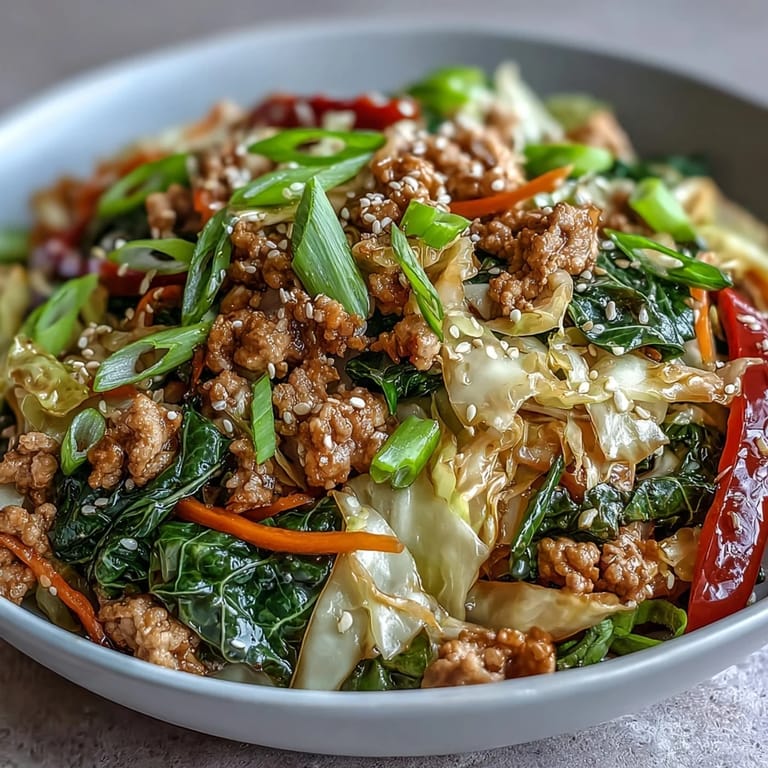
Save There's something deeply satisfying about watching a wok turn into controlled chaos. One weeknight, I was standing in my kitchen with a mountain of shredded cabbage, feeling overwhelmed by how much green I'd committed to cooking, when my trainer casually mentioned she ate stir-fries like this three times a week. That single comment shifted everything—suddenly I wasn't just making dinner, I was making a strategy. The result is this turkey and cabbage stir-fry, which somehow manages to be both ridiculously filling and surprisingly light.
I made this for my roommate on a Tuesday when she'd mentioned her jeans felt tight, and I watched her go back for seconds while genuinely shocked at how much food was on her plate. She asked for the recipe immediately, and within a week she'd sent me a photo of her own version with extra ginger. That's when I knew this wasn't just a healthy recipe—it was something people actually wanted to eat.
Ingredients
- Lean ground turkey (500 g): This is your protein anchor, and it matters that it's truly lean because the fat content affects how the whole dish tastes and feels in your mouth.
- Green cabbage, shredded (about 800 g): The star player that makes volume magic happen; shred it fresh rather than buying pre-shredded because it stays crisper and absorbs flavor better.
- Carrots, julienned (2 large): These add natural sweetness and crunch, and julienning them (rather than chopping) means they cook evenly in the quick stir-fry time.
- Red bell pepper, thinly sliced (1): The color and slight sweetness balance the salty soy sauce beautifully, plus it adds vitamin C for absorption of the iron in the turkey.
- Green onions, sliced (4): Split your batch—half goes in early for flavor, half finishes the dish for brightness and a little crunch.
- Garlic and ginger (3 cloves plus 1 tbsp): These two are non-negotiable; fresh ginger especially makes the difference between a good stir-fry and one that tastes restaurant-quality.
- Low-sodium soy sauce (3 tbsp): Low-sodium matters here because you're not using much liquid, so regular soy sauce would make it too salty; tamari works perfectly if you need gluten-free.
- Rice vinegar (1 tbsp): This adds brightness without heaviness, cutting through the richness of the sesame oil.
- Sesame oil (1 tbsp): Use toasted sesame oil, not the refined kind, because that's where the flavor actually lives.
- Chili flakes (1 tsp, optional): These don't just add heat; they add complexity, so don't skip them entirely even if you like milder food.
- Toasted sesame seeds (1 tbsp): Toast your own if you can, because the difference between store-bought and freshly toasted is genuinely noticeable.
Tired of Takeout? 🥡
Get 10 meals you can make faster than delivery arrives. Seriously.
One email. No spam. Unsubscribe anytime.
Instructions
- Get your heat and oil ready:
- Heat your wok or large non-stick skillet over medium-high heat until it's almost smoking, then add the sesame oil and let it shimmer. This matters more than you think because the temperature determines whether your turkey browns or steams.
- Brown the turkey:
- Add ground turkey and let it sit undisturbed for about two minutes before breaking it up with a spatula; this creates browning rather than just gray, cooked meat. You'll hear a satisfying sizzle when the turkey hits the hot pan, and that sound means you're on the right track.
- Bloom the aromatics:
- Once the turkey is cooked through, add minced garlic and grated ginger, stirring constantly for about one minute until the kitchen smells incredible. This is the moment where everything shifts from individual ingredients to something cohesive.
- Add the vegetables:
- Push the turkey to the side and add the cabbage, carrots, and bell pepper, stirring constantly for five to seven minutes until the cabbage is tender but still has some texture. You want to hear it sizzle and pop; that means it's cooking, not steaming.
- Finish with flavor:
- Stir in the soy sauce, rice vinegar, and chili flakes, tossing everything together so the liquid coats every strand of cabbage. Taste as you go and season with salt and pepper, keeping in mind that the soy sauce is already salty.
- Brighten at the end:
- Remove from heat, stir in the reserved green onions, and top with toasted sesame seeds and extra green onion slices. The heat from the pan will wilt the fresh green onions just slightly, adding both flavor and textural contrast.
 Save
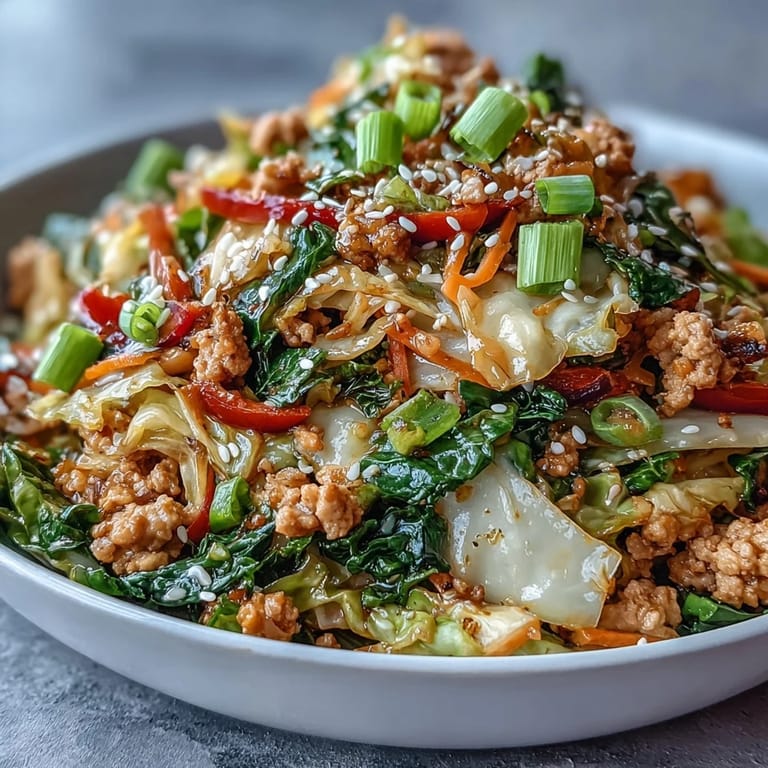
Save My favorite moment with this dish came when my partner, who usually picks through healthy food skeptically, asked if he could have extra for lunch the next day. There's something magical about creating a meal that supports your health goals without feeling like sacrifice, and that's exactly what this stir-fry does.
The Volume Trick and Why It Works
The cabbage here isn't filler—it's the whole strategy. When I first tried high-volume eating, I thought it would feel like punishment, like eating a salad with turkey on top. But this stir-fry taught me that cabbage, when cooked right, becomes tender and actually absorbs the sauce, transforming from bland to genuinely delicious. The key is cooking it long enough that it softens but not so long that it becomes mushy and loses its appeal.
Customizing Without Losing the Magic
I've made this with ground chicken when turkey wasn't on sale, with tofu for a vegetarian version, and even with a mix of ground pork and turkey when I was feeling experimental. Each protein brings its own character, but the framework stays solid. The beauty is that this isn't a finicky recipe—it's forgiving enough to handle swaps and additions without falling apart.
Serving and Storage Wisdom
This stir-fry is genuinely better the next day, which sounds counterintuitive for something that relies on crispness, but the flavors meld overnight in a way that actually improves the dish. I've learned to meal prep this in double batches because it reheats beautifully and keeps for a solid three days in the fridge. The sesame oil in the sauce prevents it from drying out even when warmed on the stovetop.
- Serve it over cauliflower rice to keep carbs minimal, or brown rice if you want more substance and don't mind the extra calories.
- Store leftovers in an airtight container and reheat gently in a skillet rather than the microwave, which keeps the vegetables from turning mushy.
- Double the recipe without hesitation because this freezes surprisingly well for up to a month, making future dinners genuinely effortless.
 Save
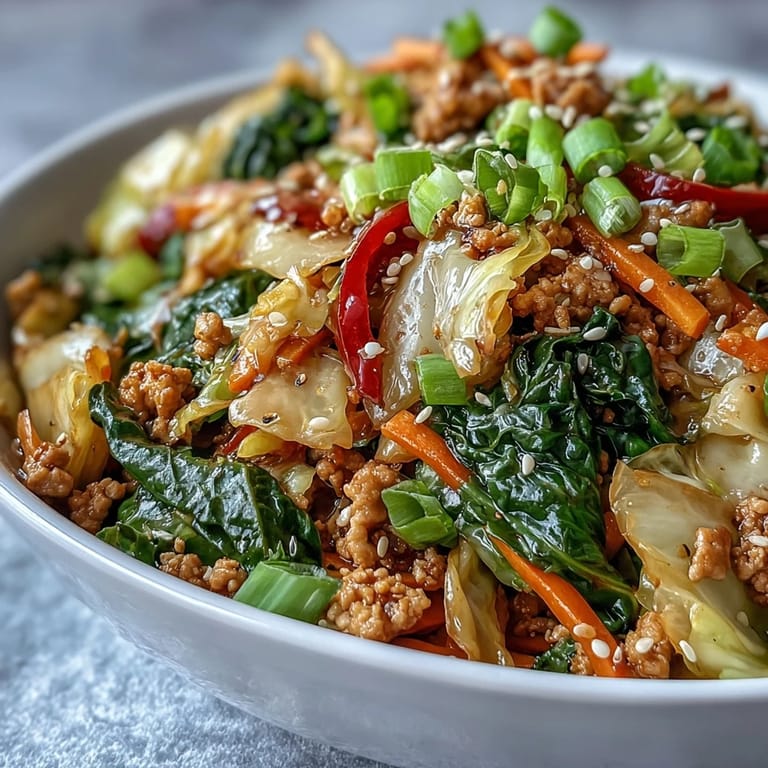
Save This recipe became my answer to every conversation about eating better without feeling deprived, and it holds up every single time. If you're tired of healthy food tasting like punishment, this is where that changes.
Common Recipe Questions
- → Can I use other proteins besides ground turkey?
Ground chicken works perfectly as a direct substitute. For plant-based options, try crumbled extra-firm tofu or tempeh. Both absorb the sauce beautifully and provide satisfying texture.
- → How do I prevent the cabbage from becoming soggy?
Stir-fry over medium-high heat and cook vegetables just until tender-crisp, about 5–7 minutes. Avoid overcrowding the pan—cook in batches if needed. The high heat quick-cooks the cabbage while maintaining its crunch.
- → What can I serve with this stir-fry?
Steamed brown rice adds hearty whole grains, while cauliflower rice keeps it low-carb. The dish is substantial enough to enjoy on its own for a lighter meal. For extra volume, add more shredded cabbage.
- → Is this meal prep friendly?
Absolutely. Leftovers keep well in the refrigerator for up to 3 days. Store in airtight containers and reheat gently in a skillet or microwave. The vegetables maintain their texture better when reheated on the stovetop.
- → How can I adjust the spice level?
Start with 1 teaspoon of chili flakes for mild heat. Increase gradually or add sriracha for more intensity. For a sweeter heat, substitute red pepper flakes with a pinch of cayenne or fresh diced chili peppers.
- → Can I make this gluten-free?
Simply replace regular soy sauce with tamari or coconut aminos. Both provide the same savory flavor without gluten. Always verify your other ingredients, especially condiments, are certified gluten-free.