 Save
Save I discovered egg crepes by accident one morning when I was tired of the same old scrambled eggs routine. A friend mentioned she'd been blending eggs for this impossibly thin, delicate wrap, and I was skeptical until I tried it myself. The first time I poured that frothy mixture into the pan, it spread like silk, and I knew I'd found something special. Now they're my go-to when I want something that feels fancy but takes less time than making toast.
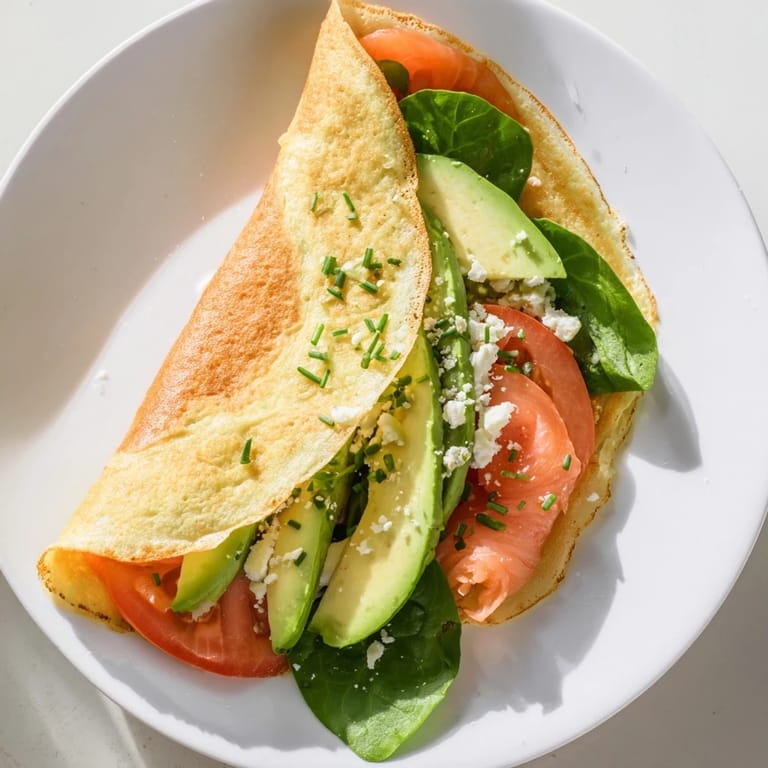
I remember making these for my sister on a lazy Sunday when she was visiting, and she was shocked at how elegant they looked when I folded them up with avocado and smoked salmon inside. She asked if I'd been secretly taking cooking classes, and I couldn't stop laughing telling her it was just a blender and a non-stick pan. That moment stuck with me—sometimes the simplest techniques create the most impressive results.
Ingredients
- 4 large eggs: The foundation of your crepe; room temperature eggs blend more smoothly and cook more evenly.
- 2 tablespoons water or milk (dairy or non-dairy): This thins the mixture and creates those delicate, tender crepes that aren't rubbery.
- Pinch of salt and black pepper: Season the egg itself, not just the fillings, so every bite has flavor.
- 1 teaspoon olive oil or butter (for cooking): Just enough to prevent sticking; too much and your crepes become heavy instead of light.
- Fillings (spinach, salmon, feta, tomato, avocado, fresh herbs): Choose what speaks to you, but avoid anything soaking wet or your crepe will tear.
Tired of Takeout? 🥡
Get 10 meals you can make faster than delivery arrives. Seriously.
One email. No spam. Unsubscribe anytime.
Instructions
- Blend until impossibly frothy:
- Combine eggs, liquid, salt, and pepper in the blender and run it on high for 30–45 seconds. You want the mixture to look almost mousse-like with visible air bubbles; this is what creates that delicate texture.
- Get your pan ready:
- Heat a non-stick skillet over medium heat and brush it lightly with oil or butter. If it's too hot, the crepe sets before it spreads; too cool and it sticks.
- Pour and tilt quickly:
- Pour half the egg mixture into the center of the pan and immediately tilt and swirl so it coats the bottom in a thin, even layer. Work fast—the edges start setting within seconds.
- Cook with patience:
- Let it cook for 1–2 minutes until the edges lift easily and the surface looks mostly set. Flip gently and cook just 30 seconds more on the other side; you want it soft enough to fold, not paper-thin and crispy.
- Transfer and repeat:
- Slide the crepe onto a plate and repeat with the remaining mixture. If the pan gets too hot between crepes, lift it off the heat for a few seconds.
- Fill and fold:
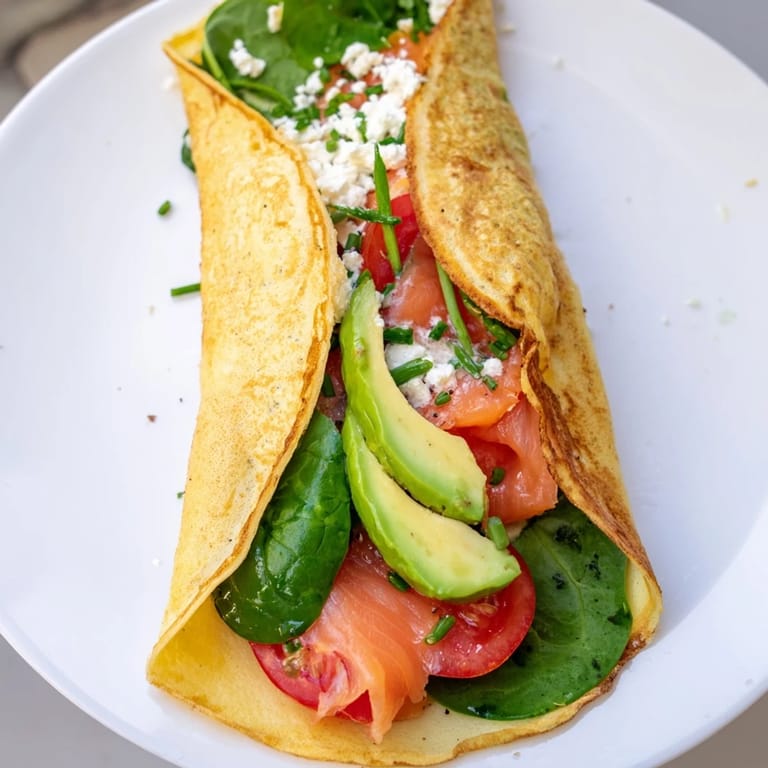
- Arrange your fillings in a line down the center of each warm crepe, then fold or roll it closed. Serve immediately while it's still pliable.
 Save
Save There's something deeply satisfying about folding a warm crepe around fresh fillings and watching someone's face light up when they take that first bite. For me, it happened with my nephew, who declared it was somehow both simple and elegant at the same time—and isn't that the best kind of food?
Savory vs. Sweet Swaps
The beauty of this crepe is that the base is completely neutral, so your mood decides everything. For savory, I lean on anything smoked (salmon, ham), bright greens, and cheese; the crepe becomes almost a handheld salad. For sweet mornings, fill it with berries, a spoonful of yogurt, and a drizzle of honey, and suddenly it feels like dessert for breakfast.
The Blender Hack
I used to make crepes by whisking everything by hand, and they were always slightly gritty and heavy. The blender changes everything by incorporating air and creating a smoother base that cooks to this cloud-like texture. It also means you don't have to worry about lumps or overmixing like you do with a traditional batter.
Make-Ahead Tips
You can blend the egg mixture the night before and store it in a jar in the fridge, which is perfect for busy mornings. The crepes themselves are best eaten warm, but they reheat gently in a dry skillet for about 20 seconds if needed.
- Store unrolled crepes in the fridge layered between parchment paper for up to two days.
- Fill and roll them only when you're ready to eat so they don't get soggy.
- If your fillings are wet (like fresh tomatoes), pat them dry with a paper towel first.
 Save
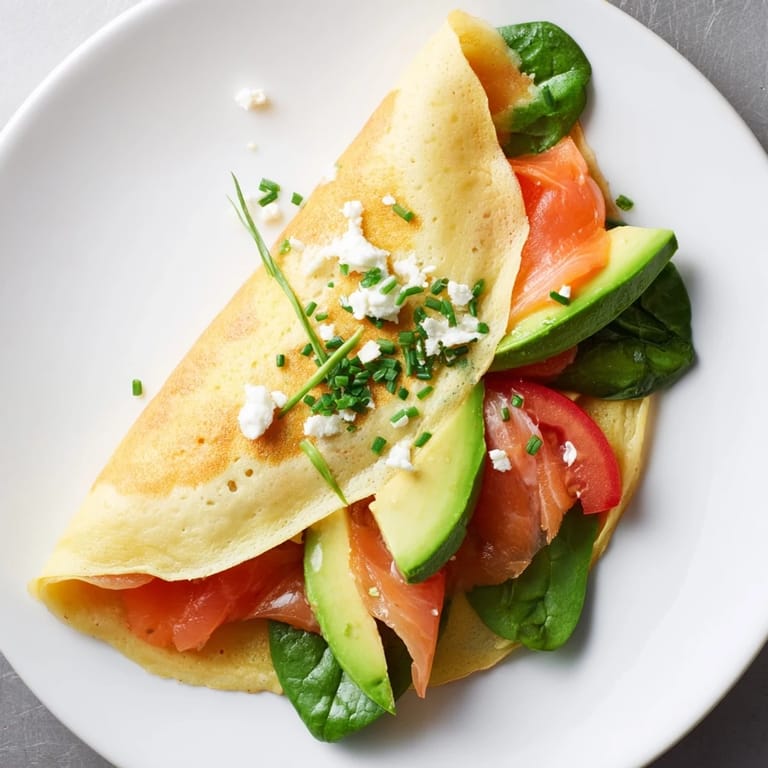
Save This is breakfast for people who want something fast but don't want to feel like they're eating fast food. Once you nail the technique, you'll find yourself making these whenever you need something that tastes like you actually tried.
Common Recipe Questions
- → How do I achieve a frothy egg mixture?
Blend eggs with water or milk for 30–45 seconds until the mixture becomes light and frothy, ensuring thin, tender crepes.
- → Which fillings work best with these crepes?
Spinach, smoked salmon, cheese, fresh herbs, sliced tomatoes, avocado, or berries and yogurt for a sweet touch all complement the crepes well.
- → What cooking tools are necessary?
A blender for frothing eggs, a non-stick skillet for cooking, a spatula for flipping, and basic cutting tools for preparing fillings.
- → How thin should the crepes be cooked?
Pour just enough egg mixture to coat the skillet bottom in a thin, even layer, cooking until edges lift easily, roughly 1–2 minutes per side.
- → Can I customize these wraps for dietary preferences?
Yes, using dairy or non-dairy milk or water in blending and choosing gluten-free, low-carb, or dairy-free fillings can tailor the wraps to your needs.