 Save
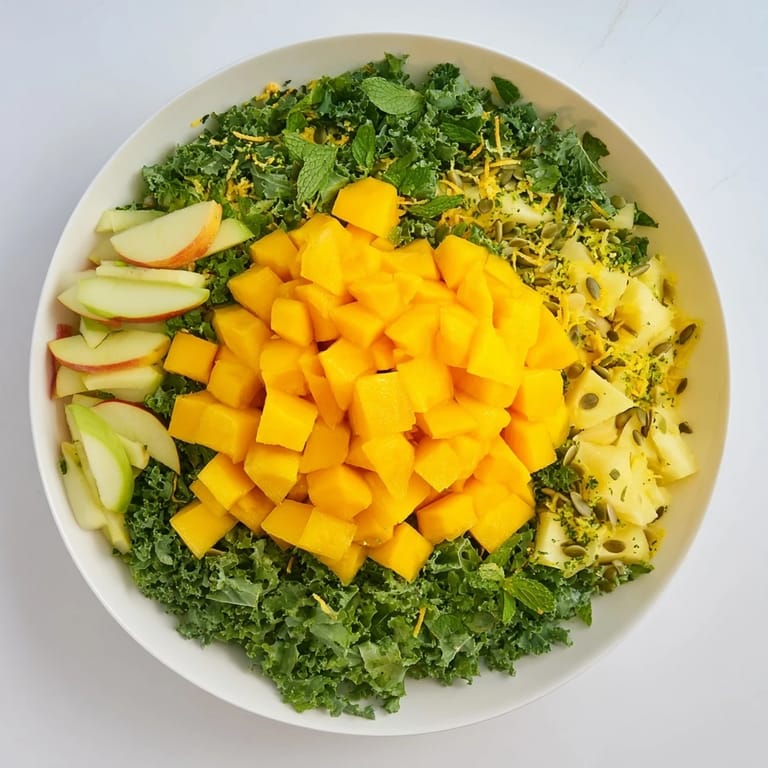
Save Last summer, I was standing in a farmers market surrounded by the most impossible bounty of golden fruit—mangoes practically glowing in the sun, pineapples with their crowns held high, apples the color of late afternoon light. Something about seeing all that yellow together made me want to build a salad around it, not as an afterthought but as the whole point. That afternoon, I came home and spent the next hour playing with color and balance, layering greens like I was painting something, and by the time I plated it, I understood why people stop mid-conversation to look at beautiful food.
I made this for my sister on a day when she needed something that felt good without being complicated. She sat at my kitchen counter while I arranged the fruit in the center, and she said it looked like I'd brought spring indoors. We ate it straight from the bowl, barely using the dressing, just happy to be eating something that tasted clean and uncomplicated and beautiful all at once.
Ingredients
- Ripe mango, diced (1 cup): Choose one that gives slightly to gentle pressure and smells fragrant at the stem end; it should be sweet enough to stand on its own, not underripe.
- Pineapple, diced (1 cup): Fresh pineapple adds a bright tartness that no other fruit quite matches, and it stays crisp longer than some alternatives.
- Golden apple, diced (1): I use golden delicious or honey varieties because they have this natural sweetness that doesn't turn mealy when dressed.
- Yellow peach, sliced (1): Peak season peaches are soft enough to tear with your fingers; out of season, you can swap in nectarines or skip entirely.
- Kale, stems removed and finely shredded (4 cups): The massage step is everything here—it makes the kale tender and willing to accept the dressing instead of staying stubbornly tough.
- Baby spinach leaves (1 cup): Spinach adds another layer of green and a gentler texture against the chewy kale.
- Fresh parsley, chopped (½ cup): Parsley is the backbone herb, bringing an earthy freshness that prevents the salad from tasting too sweet.
- Fresh mint leaves, torn (¼ cup): Mint lifts everything, especially the tropical fruits; don't chop it, just tear it with your hands so it releases its oils more gently.
- Fresh basil leaves, torn (¼ cup): Basil adds this subtle peppery note that surprises people pleasantly mid-bite.
- Extra-virgin olive oil (3 tablespoons): Good oil matters here because there's nothing to hide behind; the quality shows.
- Fresh lemon juice (2 tablespoons): Fresh squeeze only, never bottled; the difference is audible in how the dressing tastes.
- Maple syrup (1 tablespoon): A touch of sweetness balances the tartness and helps everything feel cohesive.
- Dijon mustard (1 teaspoon): This is the secret—it acts as an emulsifier and adds a subtle complexity that no one can quite name.
- Sea salt and freshly ground black pepper (½ teaspoon salt, ¼ teaspoon pepper): Season generously; green salads need more salt than you think to wake up properly.
- Toasted pumpkin seeds (2 tablespoons, optional): These add a nutty crunch and a grounding earthiness against all that brightness.
- Lemon zest (from 1 lemon): The final scatter of zest feels like a flourish, tying the lemon in the dressing back to the plate visually.
Tired of Takeout? 🥡
Get 10 meals you can make faster than delivery arrives. Seriously.
One email. No spam. Unsubscribe anytime.
Instructions
- Build your dressing:
- Whisk together the oil, lemon juice, maple syrup, mustard, salt, and pepper in a small bowl until it looks cohesive and slightly thick. The mustard is doing invisible work here, helping the oil and liquid become friends instead of just sitting next to each other.
- Tender the kale:
- Pour half the dressing over your shredded kale in a large mixing bowl and massage it gently with your fingertips for a minute or two until the leaves begin to soften and darken slightly. This step makes all the difference between a salad that feels tough in your mouth and one that feels inviting.
- Combine the greens:
- Add the spinach, parsley, mint, and basil to the kale and toss everything together just enough to distribute the herbs evenly without bruising the tender leaves too much.
- Compose on the plate:
- Spread the dressed greens in a wide, shallow serving bowl so they form a dense, forest-like ring around the perimeter, leaving a clear center space waiting for color.
- Crown with fruit:
- Pile the diced mango, pineapple, apple, and sliced peach into that center space so it looks like sunlight pooling in a glade, or like you meant for this to be almost too beautiful to eat.
- Final touches:
- Drizzle the remaining dressing over the fruits and greens, scatter with toasted pumpkin seeds if you're using them, and rain down the lemon zest like an afterthought. Serve immediately so everything is still at its crispest.
 Save
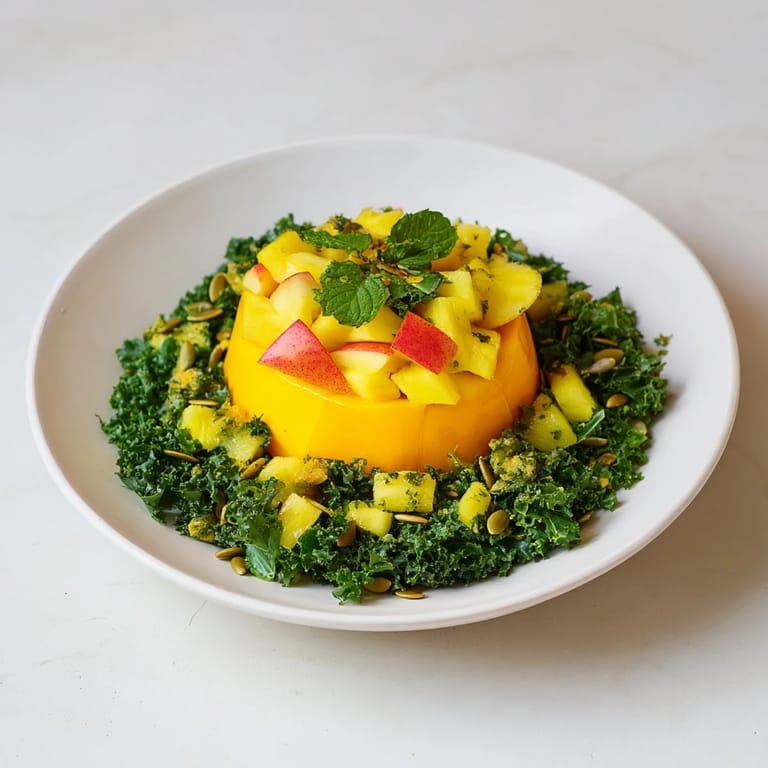
Save I'll never forget the face of someone who came to dinner skeptical about eating kale in a salad, but then couldn't stop going back for more because the balance of sweet, tart, and herbaceous was just so right. That's when I realized this wasn't just a pretty plate—it was actually delicious in a way that surprised people.
The Magic of Massage
Most people don't realize that kale wants to be softened, not beaten down; it's a very specific motion, almost meditative, like you're coaxing rather than demanding. Once you understand this about kale, suddenly raw kale salads stop feeling like punishment and start feeling generous. The dressing helps, but your hands do the real work, breaking down the cell walls just enough that the leaves become tender and absorbent and actually pleasant to eat.
Playing with Color and Texture
The reason this salad works so well visually is because it's not an accident—there's intention behind the placement. The yellows pop against the deep greens, and the arrangement tells a story about what you value in a meal, which is not just nourishment but also the pleasure of looking at something that makes you smile. When you're arranging food, you're actually arranging an experience.
Swaps and Variations
This salad is flexible if you listen to what the market is offering on the day you make it. The core idea is golden fruit in the center and tender greens around it, so substitute freely—yellow kiwi works beautifully, papaya if you want something creamier, even yellow bell pepper strips if you want less sweetness. The dressing stays the same because it's designed to complement rather than compete.
- Add avocado slices tucked among the fruit if you want richness without weight.
- Try a drizzle of aged balsamic for depth, but use sparingly so it doesn't overpower the delicate fruit.
- Pair this with a crisp Sauvignon Blanc if you're hosting, or drink water and let the flavors speak for themselves.
 Save
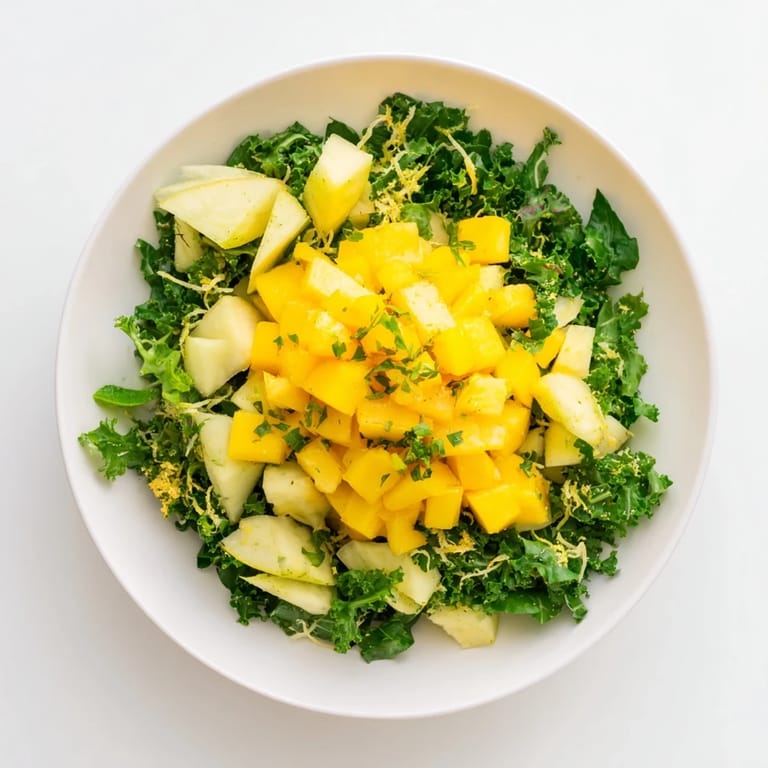
Save This salad is proof that the simplest meals, the ones that take barely any time, can feel the most intentional and special. Make it when you want to remind yourself that good food doesn't require hours of work—it requires good ingredients and a little bit of care.
Common Recipe Questions
- → What fruits are used in the sunlit glade?
A medley of mango, pineapple, golden apple, and yellow peach creates the vibrant yellow fruit base.
- → Which greens complement the yellow fruits?
Finely shredded kale, baby spinach, parsley, mint, and basil provide a fresh, herbaceous backdrop.
- → How is the dressing prepared?
Whisk together extra-virgin olive oil, fresh lemon juice, maple syrup, Dijon mustard, sea salt, and black pepper until well emulsified.
- → Can any ingredients be substituted?
Yellow kiwi or papaya can replace the fruits; avocado slices add creaminess if desired.
- → What are the recommended garnishes?
Toasted pumpkin seeds and lemon zest add texture and a citrus brightness to the dish.