 Save
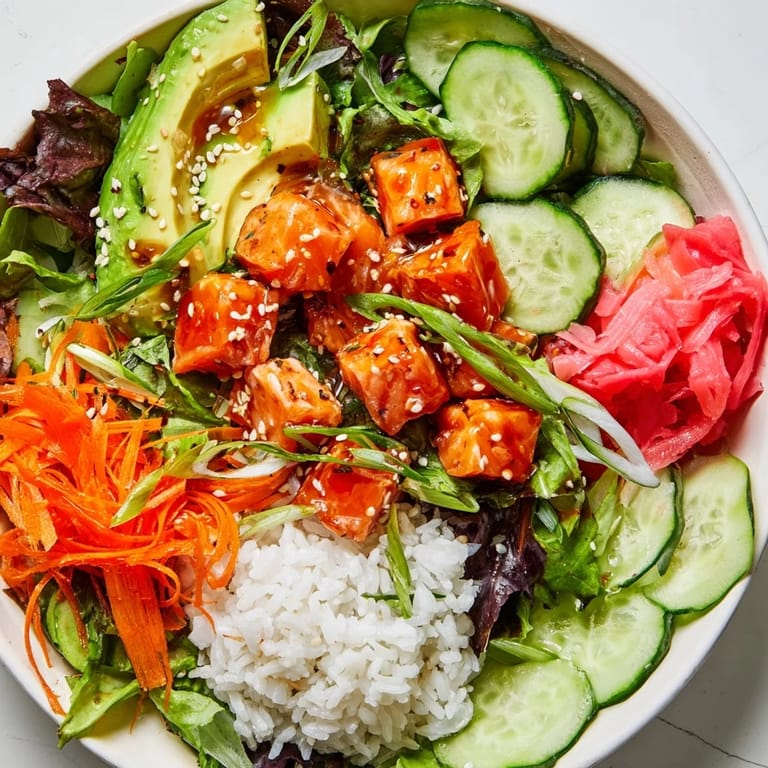
Save The first time I had a poke bowl was at a tiny lunch spot in Honolulu, where the owner warned me about the addictive quality of his grandmother's marinade. I laughed, ordered the regular size, and went back three more times that week. Something about that combination of fresh fish, salty-sweet sauce, and crunch became impossible to shake from my mind. Back home, I spent months tinkering with ratios until my kitchen started smelling like that sunny counter in Hawaii.
Last summer, my sister visited while I was testing this salad version, and she politely declined saying she did not do raw fish. I made her a small bowl anyway, just to taste. She ate the entire portion and then asked if there was enough for seconds. Now she texts me every time she finds herself near a decent fish counter, wondering if she has enough ingredients to make it tonight.
Ingredients
- 400 g sushi-grade salmon or tuna: The quality here matters completely because this fish will not be cooked, so find a store you trust with seafood
- 2 tbsp soy sauce: This provides the salty base, so use gluten-free tamari if you need to avoid wheat
- 1 tbsp sesame oil: Toasted sesame oil adds that nutty richness that makes everything taste more expensive
- 1 tbsp rice vinegar: A little acid cuts through the rich fish and oil, brightening each bite
- 1 tsp freshly grated ginger: Fresh ginger has a zing that powder cannot replicate, and grating it releases more flavor
- 1 tsp honey or maple syrup: This balances the salt and brings everything together without making it sweet
- 1 small garlic clove: One small clove is enough because raw garlic intensifies as it sits in the marinade
- 120 g mixed salad greens: Mix something crisp like romaine with tender greens like baby spinach for variety
- 1 medium cucumber: Thin slices give you refreshing bursts of water against the rich fish
- 1 large avocado: Creamy avocado bridges the gap between the fish and the crunchier vegetables
- 2 small carrots: Julienned carrots add crunch and a little sweetness that plays nicely with the ginger
- 120 g cooled sushi rice: Optional but recommended if you want something more substantial than just greens
- 2 tbsp toasted sesame seeds: These add texture and a visual pop that makes the bowl feel finished
- 2 tbsp sliced scallions: Fresh onion flavor keeps the bowl from tasting too heavy or rich
- 1 sheet nori: Thin strips of nori give you that ocean flavor without needing to wrap everything in rolls
- Pickled ginger and sliced chili: These are optional, but they add heat and acidity on the side
Tired of Takeout? 🥡
Get 10 meals you can make faster than delivery arrives. Seriously.
One email. No spam. Unsubscribe anytime.
Instructions
- Make the marinade:
- Whisk together the soy sauce, sesame oil, rice vinegar, grated ginger, honey, and minced garlic in a bowl until the honey dissolves completely.
- Marinate the fish:
- Toss the cubed fish gently in the marinade, cover the bowl, and refrigerate for at least ten minutes while you prep everything else.
- Prep the vegetables:
- Slice your cucumber thin, cut the avocado, julienne the carrots, and wash the greens so they are ready to assemble.
- Build the base:
- Arrange the salad greens, cucumber, avocado, carrots, and rice in individual bowls however looks appealing to you.
- Assemble the bowls:
- Spoon the marinated fish and any remaining sauce over the vegetables, letting some pieces fall into the greens.
- Finish and serve:
- Scallions, sesame seeds, nori strips, pickled ginger, and chili go on top, then serve immediately while everything is cold.
 Save
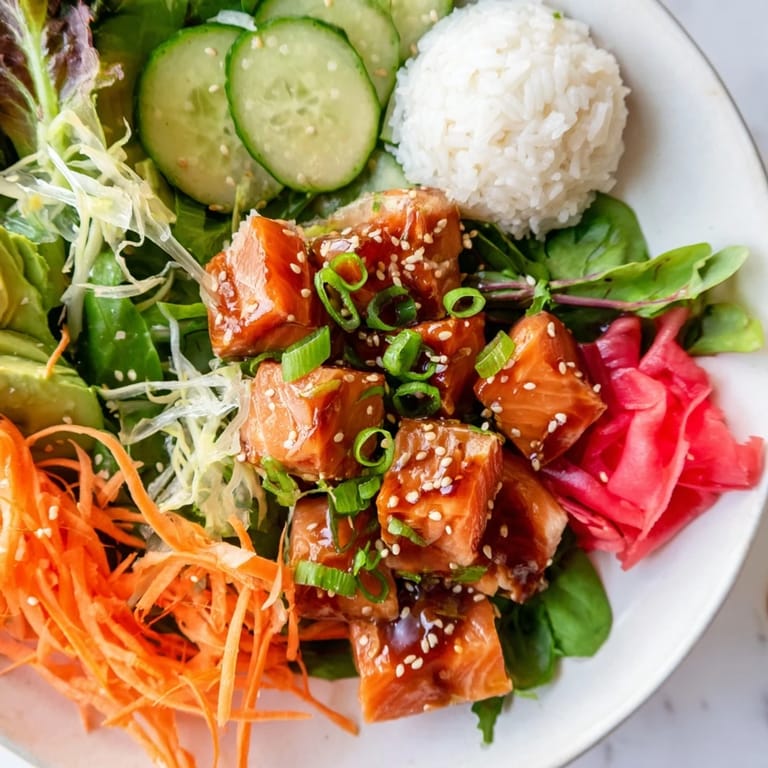
Save This salad became my go-to for dinner parties because it looks impressive but comes together so fast. Guests always assume I spent way more time and effort than I actually did, which is a secret I keep to myself.
Choosing the Right Fish
Not every piece of salmon or tuna at the counter is meant to be eaten raw. Look for fish specifically labeled as sushi-grade or sashimi-grade, which means it has been handled with freezing temperatures that make parasites less of a concern. If your fishmonger seems unsure, skip it and save this recipe for another day.
Making It Your Own
Once you have the basic structure down, this bowl adapts to whatever you have in the refrigerator. Edamame adds protein and crunch, thinly sliced radishes bring pepperiness, and even warm tofu works if you want something heartier or need to avoid fish entirely.
Serving Suggestions
A crisp white wine like Sauvignon Blanc cuts through the richness of the fish and avocado perfectly. If you prefer beer, something light and cold works just as well, especially on a hot evening when turning on the oven feels like a mistake.
- Miso soup makes this feel more like a complete meal
- Fresh fruit finishes everything on a lighter note
- Extra marinade on the side lets people adjust their own seasoning
 Save
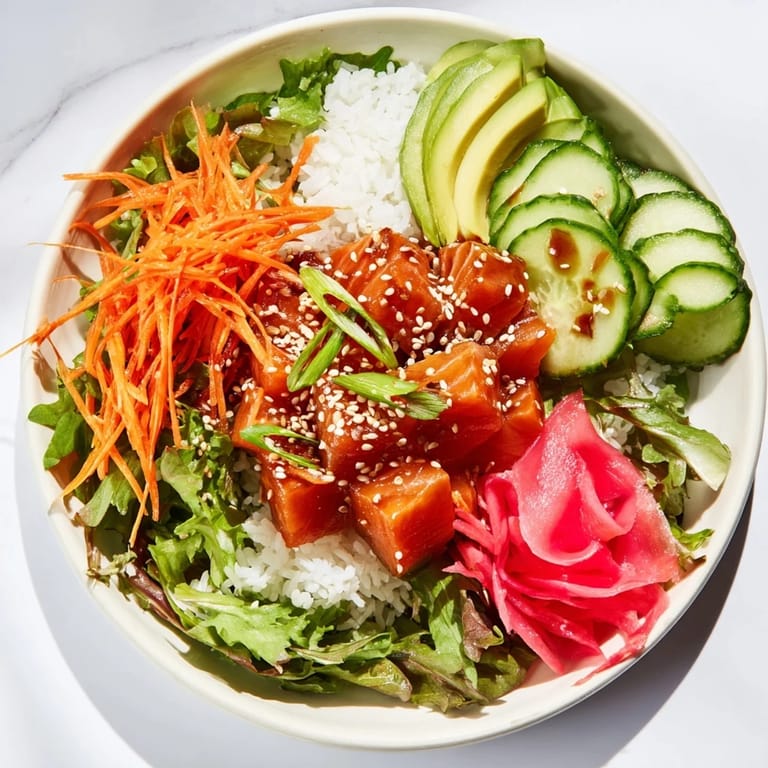
Save That lunch spot in Hawaii eventually closed, but this salad keeps the memory alive every time I make it. Good food does that, I think, carrying places and people into your kitchen without you even trying.
Common Recipe Questions
- → What types of fish are best for this dish?
Sushi-grade salmon or tuna work best, cut into small cubes to absorb the marinade fully.
- → Can I substitute the fish with a vegetarian alternative?
Yes, diced marinated tofu or tempeh can replace the fish for a plant-based option.
- → How long should I marinate the fish?
Marinating for at least 10 minutes allows the soy-ginger flavors to infuse the fish without overpowering it.
- → Is it possible to make the dish gluten-free?
Use certified gluten-free soy sauce (tamari) to keep the dish gluten-free while maintaining flavor.
- → What are some suitable garnishes for added texture?
Toasted sesame seeds, sliced scallions, nori strips, pickled ginger, and sliced chili add crunch and layers of flavor.
- → Can rice be omitted or substituted?
Rice can be omitted for a lighter version or substituted with brown rice for a nuttier taste.