 Save
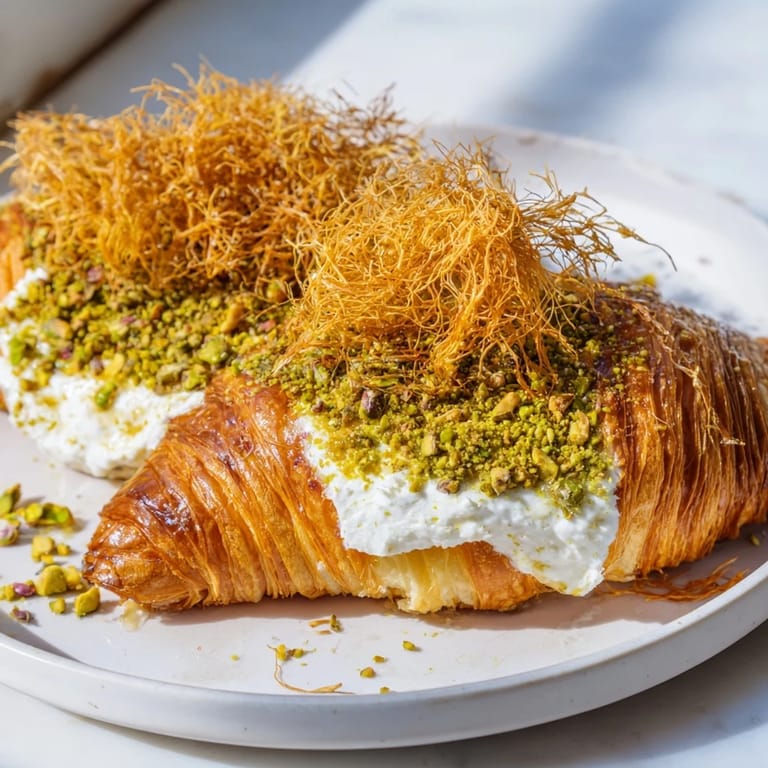
Save I discovered pistachio cream croissants quite by accident, really—standing in a small Parisian pâtisserie on a gray afternoon, overwhelmed by the display case. The baker caught me staring at these jeweled pastries, their golden phyllo crowns catching the light, and quietly said, "These are my daughter's favorite." That simple endorsement made me determined to recreate them at home, and somehow, they've become a quiet ritual whenever I want to feel a little less ordinary about breakfast.
I made these for my sister's birthday brunch last spring, and watching her face light up when she bit through that shattering phyllo top into the soft, nutty cream inside—that's when I knew this recipe had become something special to me. It wasn't just pastry; it was a small moment of magic at the table.
Ingredients
- All-butter croissants (8 pieces, day-old): Day-old croissants are sturdier and won't fall apart when you slice them; they also hold the filling better than fresh ones.
- Unsalted pistachios (120 g, shelled): The heart of the filling—look for ones with vibrant color and avoid any that smell dusty or flat.
- Granulated sugar (80 g for cream, 2 tbsp for phyllo, 50 g for syrup): Sugar balances the rich pistachio, and splitting it across components keeps the filling from becoming cloying.
- Unsalted butter (100 g softened, plus 40 g melted): Temperature matters here; softened butter blends into the cream seamlessly, while melted butter crisps the phyllo layers.
- Large egg (1): This acts as a binder, giving the cream its silky, custard-like texture and richness.
- Heavy cream (2 tbsp): Just enough to lighten the mixture and make it spreadable without making it loose or greasy.
- Vanilla extract (1 tsp): A subtle brightener that rounds out the pistachio flavor without announcing itself.
- Salt (pinch): The invisible magic ingredient that amplifies the nuttiness and prevents the cream from tasting flat.
- Phyllo dough sheets (4, thawed): These create the signature shattering texture; always thaw them slowly overnight in the fridge, and keep them under a damp towel while working.
- Chopped pistachios (30 g for garnish): Toasted if you can manage it—it deepens the flavor and adds a final touch of elegance.
- Water (80 ml) and orange blossom water (1 tsp, optional): The syrup brushed into the croissants keeps them moist and adds a whisper of floral complexity.
Tired of Takeout? 🥡
Get 10 meals you can make faster than delivery arrives. Seriously.
One email. No spam. Unsubscribe anytime.
Instructions
- Preheat and prep your workspace:
- Set your oven to 180°C and line a baking sheet with parchment paper. Having everything ready before you start prevents the phyllo from drying out while you're hunting for supplies.
- Make the syrup first:
- Combine water and sugar in a small saucepan over medium heat, stirring until the sugar dissolves completely. Remove from heat, add orange blossom water if using, and let it cool—this has to be cool before it touches the croissants or you'll have soggy pastry.
- Blend the pistachio cream:
- Pulse the pistachios and sugar in a food processor until they resemble fine sand, about one minute. Add the softened butter, egg, heavy cream, vanilla, and salt, then process until completely smooth—this should take another minute or so and look like pale, silky frosting.
- Fill the croissants carefully:
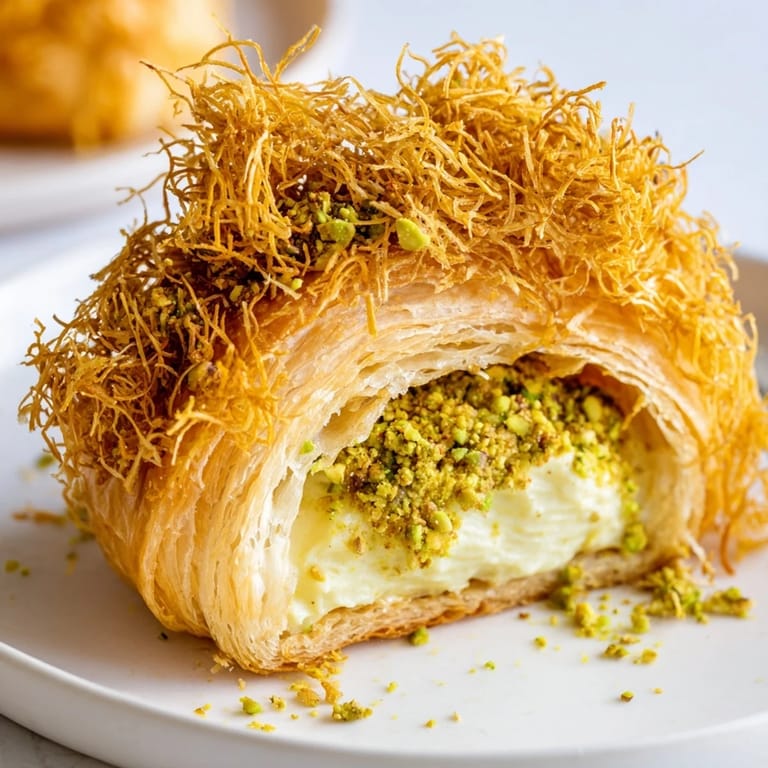
- Using a sharp knife, slice each croissant horizontally, being gentle so the top and bottom stay connected by a thin hinge. Lightly brush the inside surfaces with cooled syrup using a pastry brush, then spread a generous spoonful of pistachio cream inside each one. Close them gently and arrange on your baking sheet.
- Create the phyllo crunch:
- Lay one phyllo sheet on a clean surface and brush it lightly with melted butter, then dust with a pinch of sugar. Layer the remaining three sheets on top, repeating the butter and sugar treatment each time—this builds up those crispy, flaky layers you're after. Roll the stack loosely into a log, then slice thinly to create wispy shreds.
- Top and bake:
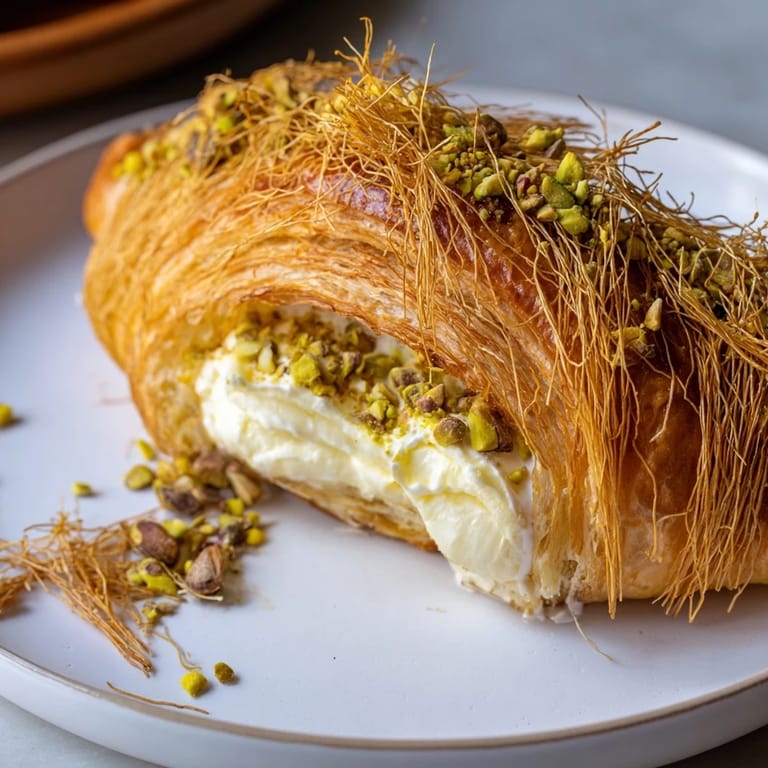
- Loosely pile the phyllo shreds on top of each filled croissant, creating a casual nest, then scatter the chopped pistachios over everything. Slide into the oven for 15–18 minutes until the phyllo turns deep golden and the croissants feel warm and crisp to the touch.
- Rest briefly before serving:
- Let them cool for just a few minutes—this lets the phyllo set and makes them easier to pick up without shattering everywhere.
 Save
Save There's something deeply satisfying about serving these on a quiet Sunday morning, watching steam rise from a fresh cup of coffee next to a warm, crispy pastry. In those moments, the kitchen feels less like a room in my house and more like a small corner of something bigger and kinder.
Choosing Your Croissants Wisely
The croissants you choose will make or break this recipe, so don't treat this as the place to cut corners. A good all-butter croissant from a local bakery will give you flaky, tender layers that can stand up to filling and heat; the cheap, doughy supermarket versions will turn to mush. If you can, buy them the day before and let them sit out on the counter overnight—they'll firm up slightly and actually become easier to work with. I once grabbed fresh, warm croissants right off the shelf and regretted it for every single one I tried to slice.
The Pistachio Cream as Your Canvas
This cream is forgiving in wonderful ways, and once you master the ratio, you can play with it endlessly. Some mornings I toast the pistachios first in a dry pan for an extra five minutes, shaking them often, and it deepens the flavor in a way that feels almost luxurious. Other times, if I'm short on time, I'll swap in a good quality store-bought pistachio butter—it's not cheating, it's adapting. The key is understanding that the cream should be smooth enough to spread easily but thick enough not to ooze out when you bite into the pastry, so if yours feels too loose after processing, you can chill it for a few minutes before spreading.
The Phyllo Crunch: Texture as Storytelling
The phyllo layer is what transforms these from nice pastries into something memorable, so treat it with gentle respect. The butter between each layer is doing real work—it's creating the steam that makes them shatter, the caramelization that makes them golden, and the flavor that ties everything together. When you slice the phyllo log, don't worry about perfect shreds; the rusticity is part of the charm. These croissants are best served within a few hours of baking when that phyllo is still crisp, though they can hide in an airtight container for up to two days and be refreshed in a warm oven for just a few minutes before serving.
- A damp towel over your phyllo while working keeps it from drying out and becoming brittle.
- If you're nervous about working with phyllo, practice with one sheet and melted butter before committing to the full stack.
- Store-bought phyllo is just as good as homemade—don't let anyone convince you otherwise.
 Save
Save These croissants have become my answer to so many kitchen moments—when I want to feel capable and a little bit fancy, when someone deserves something special, when the morning needs small magic. They remind me that luxury doesn't always require hours at the stove, just a little intention and the willingness to bring something beautiful to the table.
Common Recipe Questions
- → What gives the filling its creamy texture?
The pistachio cream is made by blending ground pistachios with butter, egg, heavy cream, and vanilla extract until smooth, resulting in a rich and creamy filling.
- → How is the phyllo topping prepared?
Sheets of phyllo dough are brushed with melted butter and sprinkled with sugar, then rolled and sliced into shreds, which are baked atop the croissants to create a crunchy golden layer.
- → Can I use store-bought pistachio paste instead of making the cream?
Yes, store-bought pistachio paste can be used as a shortcut for the cream, providing convenience while retaining the nutty flavor.
- → Why are the croissants brushed with syrup before filling?
The syrup adds moisture and a subtle sweetness, helping to keep the croissants soft and enhancing overall flavor balance.
- → What is the best way to store these pastries?
Store in an airtight container for up to 2 days to preserve freshness, though they are best enjoyed soon after baking.