 Save
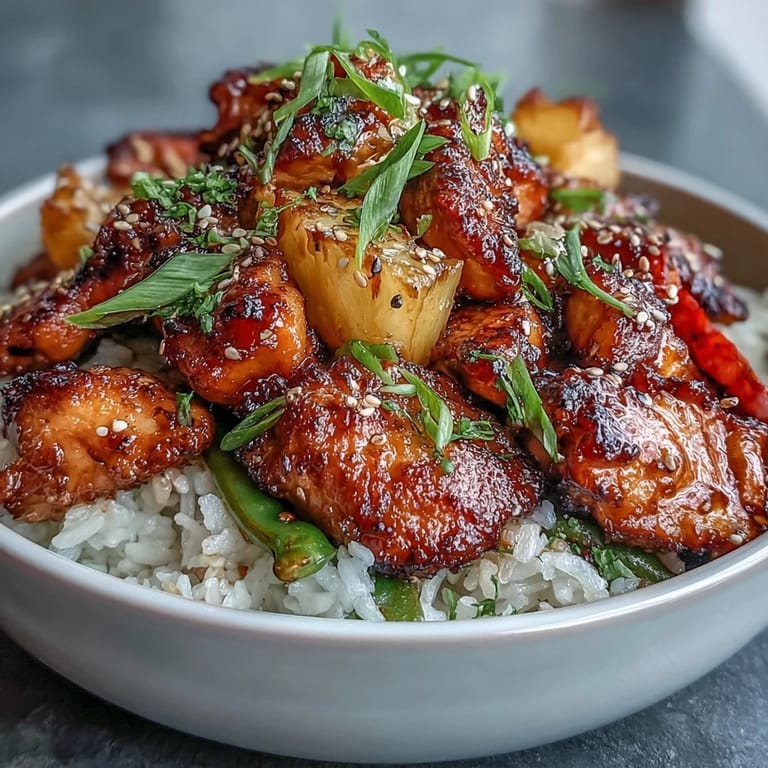
Save A friend brought these bowls to a summer potluck, and I watched people go back for thirds without hesitation. The combination of sweet pineapple juice melting into savory soy sauce caught me completely off guard, and I realized I'd been thinking about teriyaki all wrong. Now whenever I need something that feels both comforting and a little bit exciting, this is what lands on our table.
I made this for my roommate during a particularly stressful week, and the smell of ginger and garlic hitting the hot oil seemed to pause everything chaotic happening around us. She sat at the counter while I cooked, and by the time those bowls were ready, she was actually smiling. Small moments like that remind me why cooking for someone matters so much more than just feeding them.
Ingredients
- Boneless, skinless chicken thighs or breasts (500 g): Thighs stay juicier when glazed, but breasts work if you prefer leaner meat and don't overcook them past golden.
- Vegetable oil (1 tbsp): Use something neutral with a high smoke point so the chicken sears properly without burning the aromatics.
- Salt and pepper: Season generously before cooking, not after, so the flavors penetrate the meat.
- Soy sauce (80 ml): This is the backbone of your sauce, so use a quality brand and taste as you go if you like things saltier or mellower.
- Pineapple juice (80 ml): Fresh or bottled both work, but fresh adds a brightness that bottled sometimes misses.
- Brown sugar and honey (2 tbsp and 1 tbsp): The sweetness balances the salty soy, and honey adds a subtle roundness that granulated sugar alone won't give you.
- Rice vinegar (1 tbsp): A splash of acid keeps the sauce from tasting one-dimensional and cloying.
- Garlic and ginger (2 cloves minced, 1 tsp grated): Ginger especially lifts the whole dish into brighter territory, so don't skip it or use powdered as a shortcut.
- Cornstarch slurry (1 tbsp cornstarch plus 2 tbsp cold water): This thickens the sauce just enough to coat the chicken without making it heavy or gluey.
- Jasmine or short-grain white rice (240 g): Jasmine rice absorbs the sauce beautifully and has a subtle floral note that pairs perfectly with pineapple.
- Red bell pepper, pineapple, snap peas, and spring onions: Each vegetable adds texture and color, with the snap peas giving you that satisfying crunch that keeps your mouth interested.
- Sesame seeds and cilantro: Sesame adds a toasty depth, while cilantro is optional but transforms the whole bowl if you love its fresh, herbaceous kick.
Tired of Takeout? 🥡
Get 10 meals you can make faster than delivery arrives. Seriously.
One email. No spam. Unsubscribe anytime.
Instructions
- Prepare the rice with intention:
- Rinsing removes excess starch so each grain stays separate instead of turning to mush. Bring water and rice to a boil, then immediately drop the heat low, cover, and let it sit untouched for the full cooking time.
- Sear the chicken until golden:
- Heat your oil until it shimmers, then add seasoned chicken to a medium-high skillet and listen for that satisfying sizzle. Let it develop a light brown crust before moving it around, which takes about 6 to 8 minutes depending on piece size.
- Quick-stir the vegetables:
- Remove the chicken and add peppers and snap peas to the same hot skillet for just 2 to 3 minutes. You want them barely softened with a slight firmness still present, not floppy.
- Build your sauce from the bottom up:
- Combine soy sauce, pineapple juice, sugar, honey, and vinegar in a small saucepan with minced garlic and ginger. Let it simmer so the flavors meld and the sugar dissolves completely into the liquid.
- Thicken with the cornstarch mixture:
- Mix cornstarch and cold water into a smooth paste, then stir it into the simmering sauce and watch it transform into something glossy and coat-able in about a minute.
- Bring everything together:
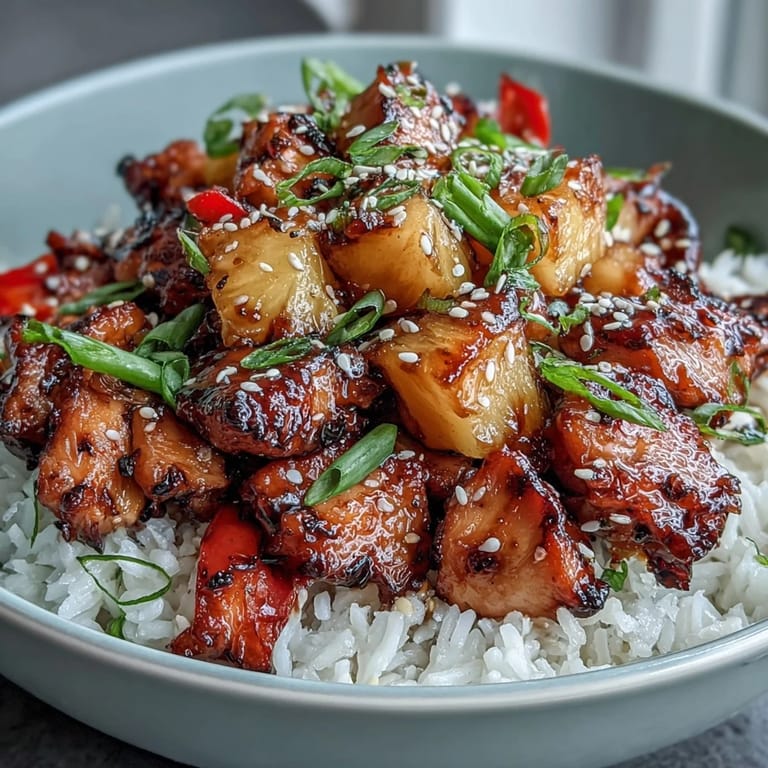
- Return the chicken and vegetables to the original skillet, pour the sauce over everything, and toss until coated. Add fresh pineapple chunks last and warm through for 2 minutes so they stay vibrant instead of cooking into mush.
- Assemble your bowls with care:
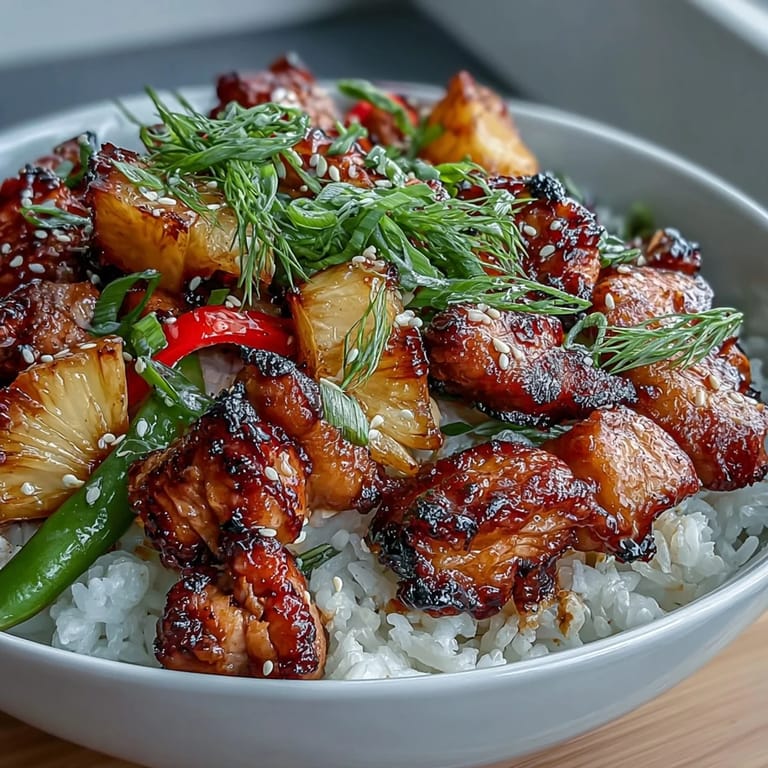
- Divide fluffy rice among four bowls, then top each one generously with the glazed chicken, vegetables, and pineapple. Scatter sesame seeds and green onion slices over the top for color and that final textural pop.
 Save
Save My partner was skeptical about pineapple and chicken together until she tasted how the juice in the sauce melds with the salty soy into something neither sweet nor savory but somehow both at once. Now she requests these bowls by name, and that shift from skepticism to genuine craving is honestly the best kind of cooking victory.
Why Pineapple Juice Transforms Teriyaki
Traditional teriyaki relies on balance between salty, sweet, and a hint of tang. Pineapple juice brings natural sweetness that tastes brighter than brown sugar alone, plus a subtle acidity that traditional recipes sometimes need a splash of mirin or extra vinegar to achieve. The result feels more complex and less one-note, like you've been cooking this way all along instead of inventing it just now.
Vegetable Swaps That Work
Snap peas and bell peppers are crisp and absorb sauce well, but broccoli florets, sliced carrots, or even baby bok choy cook beautifully here too. The key is cutting everything to roughly the same size so nothing gets left raw while other pieces turn soft. Edamame adds protein if you want to stretch the bowl further, and shredded carrots bring sweetness that echoes the pineapple without competing with it.
Make It Your Own
This recipe is flexible enough to absorb your preferences without falling apart. Swap chicken for tofu, add cashews for richness, use brown rice if you prefer nuttiness over jasmine's delicate floral notes, or double the ginger if you like heat. A drizzle of sriracha or chili oil at the end brings fire if your household leans that direction, and fresh mint can stand in for cilantro if that's what you have on hand.
- Taste the sauce before adding cornstarch so you can adjust saltiness or sweetness to match your preference.
- Cook the chicken in batches if your skillet feels crowded, since overcrowding drops the temperature and steams instead of sears.
- Make extra sauce if you like saucier bowls, since cornstarch thickens as it cools and thickens even more in the fridge.
 Save
Save These bowls came into my life at exactly the right moment, bringing color and ease and that feeling of cooking something special on an ordinary weeknight. That's the whole point, really.
Common Recipe Questions
- → What type of chicken works best for this dish?
Boneless, skinless chicken thighs or breasts cut into bite-sized pieces are ideal for even cooking and absorbing the teriyaki glaze.
- → Can I prepare the teriyaki sauce in advance?
Yes, the sauce can be made a day ahead and refrigerated. Reheat gently before tossing with chicken and vegetables.
- → What alternatives can I use if I don't have pineapple juice?
Fresh pineapple blended until smooth or a mix of orange juice with a splash of vinegar can be used for similar sweetness and acidity.
- → How do I ensure the rice is fluffy and not sticky?
Rinse the rice under cold water until clear before cooking and let it rest covered for 5 minutes after simmering, then fluff with a fork.
- → Can I add other vegetables to enhance the dish?
Edamame, shredded carrots, or snap peas work well, adding color and crunch without overpowering the main flavors.