 Save
Save My neighbor knocked on my door with a wine bottle the afternoon we finished moving into our new place, and I panicked realizing I had nothing ready to share. Twenty minutes later, I'd assembled whatever I could find from half-unpacked boxes and the corner market down the street, and that messy, thrown-together board became the highlight of the evening. Now, whenever someone moves nearby, I make this intentionally, recreating that same feeling of welcome and abundance without the scramble.
I made this for my friend's housewarming last spring, and what struck me wasn't just how quickly it came together, but how people kept returning to the board throughout the afternoon. They weren't just eating; they were discovering combinations, laughing about which cheese paired best with which cracker, and that's when I realized a good charcuterie board is really an invitation to play.
Ingredients
- Prosciutto: Its delicate saltiness anchors the whole board and drapes beautifully when fanned slightly, so don't skip the presentation moment.
- Salami: Choose a quality version because thinner slices curl naturally and look more inviting than thick chunks.
- Chorizo slices: The subtle spice keeps people coming back, and it's distinctly different enough from the other meats to matter.
- Brie cheese, sliced: Let it sit at room temperature for ten minutes before serving so it's creamy rather than firm, which changes everything about how people experience it.
- Aged cheddar, cubed: The sharpness balances the creamy elements and pairs unexpectedly well with dried fruit.
- Goat cheese, crumbled: Its tanginess keeps the board from feeling one-note and works beautifully with both sweet and savory pairings.
- Baguette, sliced: Toast it lightly if you have time because warm bread makes people feel cared for in ways cold bread simply doesn't.
- Assorted crackers: Mix textures and thicknesses so people have options depending on what they're pairing with each bite.
- Breadsticks: These serve double duty as edible vessels and visual height variation on the board.
- Seedless grapes: Their sweetness is the quiet hero that makes savory elements taste even better.
- Cherry tomatoes: Halve a few to show the juicy interior, which makes them look fresher and more appetizing.
- Cucumber slices: They're refreshing and provide textural contrast to the richness of cheeses and cured meats.
- Baby carrots: Their natural sweetness appeals to people hesitant about trying unfamiliar cheeses or meats.
- Mixed olives: Use both green and dark for visual interest and varied flavor profiles that keep things interesting.
- Marcona almonds: They're buttery and slightly sweet, which is why they belong here instead of regular almonds.
- Dried apricots: Their slight tang against creamy cheese is a revelation most people haven't experienced until they try it on this board.
- Fig jam: This is the secret ingredient that makes people ask what they're tasting and where to buy it.
- Honey: A drizzle over soft cheese with a crackers transforms something simple into something memorable.
- Plain Greek yogurt: It's tangier and thicker than regular yogurt, so your dip won't become watery as it sits.
- Fresh dill and chives: Fresh herbs are non-negotiable because they brighten the dip with grassy, clean flavors that dried herbs can't replicate.
- Lemon juice: It's your seasoning secret here, lifting everything and preventing the dip from tasting flat.
- Garlic: One small clove is enough; too much becomes aggressive and overshadows the herbs.
- Chickpeas: Drain and rinse them thoroughly because the liquid makes hummus bitter rather than smooth.
- Roasted red pepper: A jarred version works perfectly and saves you the effort of roasting, which I learned after burning my first batch.
- Tahini: It's the ingredient that makes hummus taste like hummus, bringing richness and a subtle sesame depth.
- Olive oil: Good olive oil matters here because it's tasted directly, not buried in other flavors.
Tired of Takeout? 🥡
Get 10 meals you can make faster than delivery arrives. Seriously.
One email. No spam. Unsubscribe anytime.
Instructions
- Mix the herbed yogurt dip:
- Combine Greek yogurt with dill, chives, lemon juice, and minced garlic in a bowl, tasting as you go and adjusting salt and pepper to your preference. The lemon juice will thin it slightly, which is exactly what you want for a dippable consistency.
- Blend the hummus:
- Pulse chickpeas and roasted red pepper in a food processor until they break down, then add tahini, garlic, olive oil, and lemon juice, blending until the texture is smooth and creamy. If it feels too thick, add water one tablespoon at a time while the processor runs, tasting between additions until you reach that perfect spreadable consistency.
- Arrange the foundation:
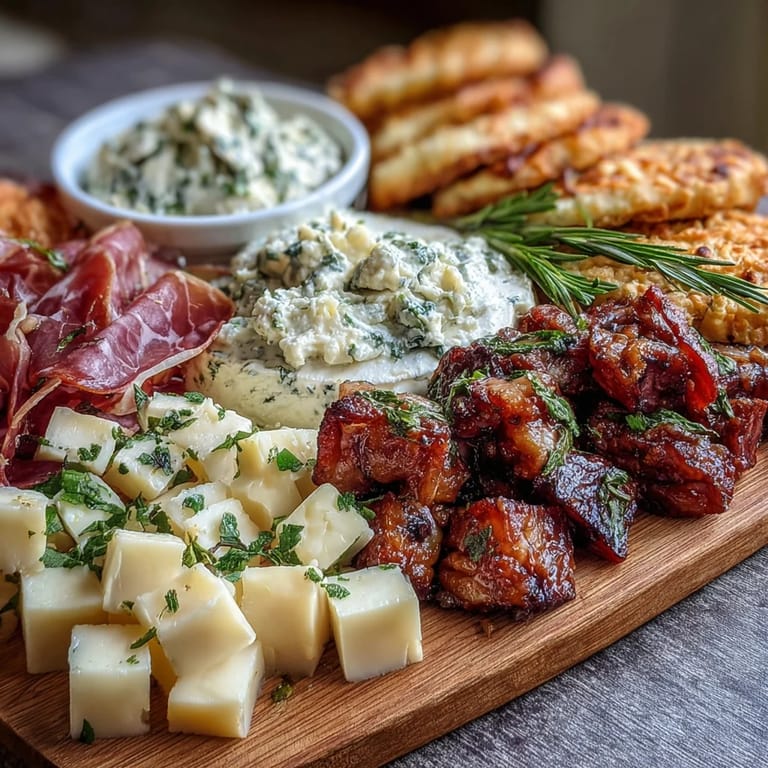
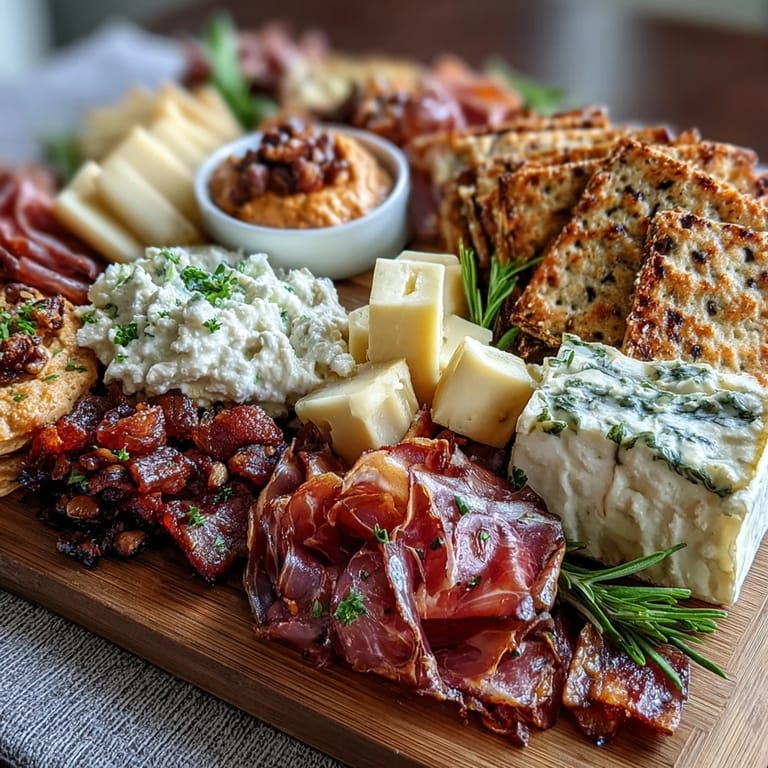
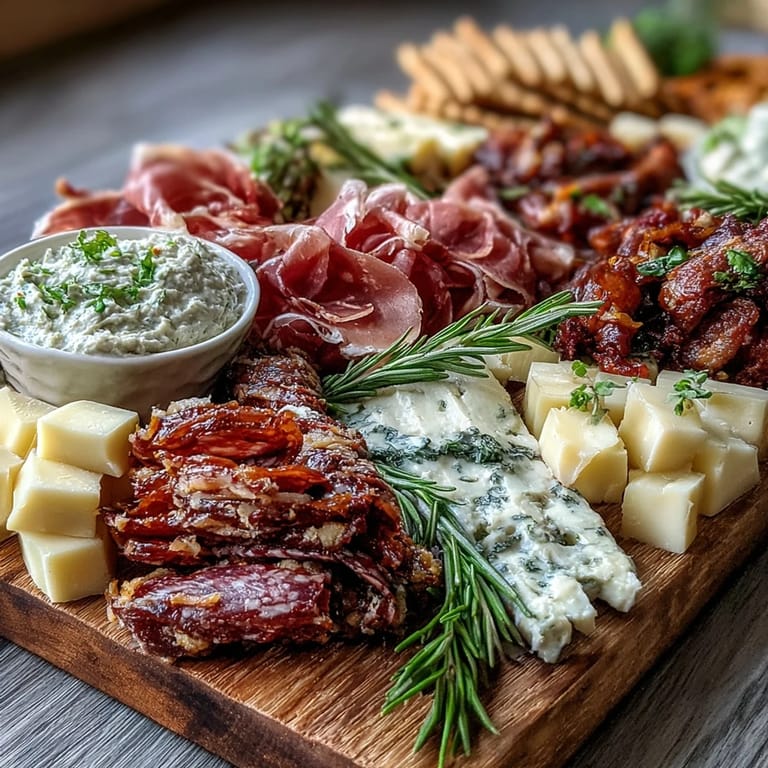
- Start by placing your meats and cheeses on the board in groupings rather than scattered randomly, leaving space between each type so colors and textures pop visually. This is your moment to think about balance, alternating colors and textures as you go.
- Add structure with breads:
- Place baguette slices, crackers, and breadsticks in clusters around the board, leaning some against each other for height and dimension. This creates visual interest and makes the board feel more intentional than a flat arrangement.
- Fill the gaps:
- Nestle grapes, cherry tomatoes, cucumber slices, carrots, olives, almonds, and dried apricots into the remaining spaces, using them to create color variation and lead people's eyes around the whole board. Think of these as the supporting cast that makes the main ingredients shine.
- Finish with condiments:
- Pour fig jam and honey into small bowls and position them strategically on the board where they won't get lost visually. Set your dips nearby in their own bowls, and if you have fresh herbs like parsley or mint, scatter a few sprigs across the top.
- Serve immediately:
- The board is best enjoyed when everything is at its optimal temperature and texture, so bring it directly to your guests and watch them discover their favorite combinations.
 Save
Save That first housewarming when I made this board, I watched my neighbor's daughter, who's usually suspicious of trying new things, carefully build a cracker with aged cheddar, fig jam, and a thin slice of prosciutto. The joy on her face when she tasted it reminded me that food is just a vehicle for connection, and a well-made board speaks that language fluently.
The Secret to Board Balance
A charcuterie board succeeds when it offers contrast in every direction: salty against sweet, creamy against crisp, bright against rich. I learned this by accident when I made a board with only soft cheeses and realized it felt monotonous despite being objectively delicious. The addition of the aged cheddar's sharpness and the vegetables' freshness transformed it from good to memorable. Think about every element as part of a conversation rather than individual players.
Why Homemade Dips Make the Difference
Store-bought dips are convenient, but homemade ones make people feel seen and cared for in a way that pre-packaged versions never quite achieve. The herbed yogurt dip takes ten minutes and costs a fraction of what you'd pay for equivalent store versions, while tasting infinitely fresher. The roasted red pepper hummus, made in a food processor, has a vibrancy that jarred hummus has lost somewhere in its journey through distribution chains.
Making This Board Your Own
The beauty of a charcuterie board is that it's infinitely adaptable to what you love and what your guests prefer. I've made versions with entirely different meats and cheeses depending on what looked good at the market that week, and the structure remains just as satisfying. The real magic isn't in specific ingredients; it's in the thoughtfulness of bringing together elements that play well together.
- Swap any meat or cheese for your favorites or include vegetarian proteins like marinated artichokes and roasted chickpeas if your guests prefer plant-based options.
- Use gluten-free crackers and breads to accommodate dietary needs without sacrificing the visual appeal or satisfaction of the board.
- Serve with a crisp white wine or sparkling water to keep things light and let the board's flavors remain the star.
 Save
Save Every time I make this board now, I think of that frantic afternoon before knowing anyone on our new street, and how food turned anxiety into connection. There's something deeply human about gathering around shared flavors, and this board is your invitation to create that moment for others.
Common Recipe Questions
- → What meats are best on this board?
Prosciutto, salami, and chorizo slices offer a balanced mix of flavors, from delicate to spicy, enhancing the board's appeal.
- → How do I make the herbed Greek yogurt dip?
Mix plain Greek yogurt with fresh dill, chives, lemon juice, minced garlic, salt, and pepper. Chill until serving.
- → Can I prepare the roasted red pepper hummus in advance?
Yes, blend chickpeas, roasted red pepper, tahini, garlic, olive oil, lemon juice, salt, and pepper until smooth. Refrigerate before serving.
- → What breads and crackers pair well with this selection?
Sliced baguette, assorted crackers, and breadsticks provide crunchy and soft textures to complement the meats and cheeses.
- → Are there vegetarian alternatives for the meats?
Consider marinated artichokes, roasted vegetables, or additional nuts and olives to replace meats for vegetarian preferences.