 Save
Save As soon as the sun hits that perfect early summer angle, you can catch a trace of smoky sweetness drifting through the neighborhood—a sign someone is firing up the grill. Last Father’s Day, with classic rock humming along in the background, I decided it was finally time to put together the kind of rib spread you’d talk about for months. There was an excited clatter in the kitchen: three different pans burbling away on the stove as the ribs gently cooked low and slow out back. For this board, it wasn’t only about the ribs—it was those three sauces, each one a little celebration all its own. Somehow, the mood just called for a little extra effort, and boy, did it pay off.
The first time I assembled this rib board, I was surrounded by laughter, shuffling feet, and a pile of kitchen towels steadily soaking up sauce spills—my brother and I bickered over who got first taste of the spicy chipotle, and Dad was already eyeing the honey BBQ before the ribs came off the grill. Even the dog seemed to know something special was in the works, lurking just underfoot waiting for a miracle rib drop.
Ingredients
- St. Louis–style pork ribs (2 full racks): These ribs have just the right amount of meat and fat for slow cooking; pull off the thin silver skin for tenderness.
- Olive oil (2 tbsp): Helps the rub to stick and adds a little richness; don't skimp, but you don't need to drown the racks.
- Brown sugar (3 tbsp): Melts into a caramelized crust—pack it a bit when you measure, and watch for lumps in the bowl.
- Smoked paprika (1 tbsp): Gives instant campfire flavor; I've switched to sweet paprika before, but smoky gets closest to real wood smoke.
- Garlic powder (2 tsp): Adds warmth you notice in every bite; just don’t overdo, or it can turn sharp.
- Onion powder (2 tsp): Balances the brown sugar and spices; sift it if it clumps.
- Ground black pepper (1½ tsp): Freshly ground is best, though the pre-ground works in a pinch.
- Kosher salt (1½ tsp): Coarse salt sticks well and brings out all the flavors.
- Chili powder (1 tsp): Kicks up the background heat; if you like it bold, add a touch more.
- Cayenne pepper (½ tsp, optional): A little goes a long way; I usually sprinkle it on only half the rack for the spicy eaters.
- Ketchup (1 cup – Sauce 1): The base for a classic BBQ sauce, it melds everything together.
- Apple cider vinegar (¼ cup for Sauce 1, 1 tbsp for Sauce 2, 2 tbsp for Sauce 3): Lifts and sharpens the sauces—use the good stuff if you can.
- Honey (¼ cup – Sauce 1): Silky sweetness, but regular maple syrup can sub in a pinch.
- Brown sugar (¼ cup for Sauce 1, 2 tbsp for Sauce 2, 1 tbsp for Sauce 3): Adds depth and stickiness to the sauce, so don’t skip it.
- Worcestershire sauce (2 tbsp – Sauce 1): Umami magic, but check the label if you’re gluten-free.
- Garlic powder (1 tsp – Sauce 1): For a consistent boost of flavor in the sauce.
- Smoked paprika (½ tsp – Sauce 1): An echo of what’s on the ribs themselves.
- Salt & black pepper (to taste – all sauces): Season in small pinches, and always taste as you go.
- Tomato sauce (1 cup – Sauce 2): Thicker and richer than ketchup; it's a solid spicy base.
- Adobo sauce (2 tbsp) and chipotle peppers (2, minced – Sauce 2): Adds a deep, smoky heat; scrape seeds for extra fire.
- Cumin (1 tsp – Sauce 2): Earthy undertone that anchors the spice.
- Dijon mustard (½ cup) & yellow mustard (2 tbsp – Sauce 3): The bold, tangy backbone of the maple sauce.
- Pure maple syrup (¼ cup – Sauce 3): About quality here: real maple syrup brings a floral sweetness that sugar can’t fake.
- Paprika (½ tsp – Sauce 3): Adds a subtle warmth as the sauce simmers.
- Sliced pickles: Crunchy and cool, they cut through the richness of the ribs; always pile more than you think you’ll need.
- Cornbread: A golden comfort; warm it just before serving for maximum effect.
- Fresh herbs (parsley, chives): Adds color and freshness, plus a little grassy bite.
- Sliced red onions: For tang and crunch; toss briefly in ice water for extra crispness.
Tired of Takeout? 🥡
Get 10 meals you can make faster than delivery arrives. Seriously.
One email. No spam. Unsubscribe anytime.
Instructions
- Start with the rub:
- Slide a knife under the rib membrane and peel it away—it’s slippery, so grab a paper towel for grip. Mix all the rub ingredients in a bowl, then massage it into every nook of the ribs until your hands smell wonderful and spice lingers on your fingertips.
- Get the grill (or oven) going:
- Turn on your grill or smoker to a steady medium-low, aiming for indirect heat at 120℃ 250℉, or turn the oven to 140℃ 285℉ if indoor is easier. Let the racks come a bit to room temp while things preheat.
- Slow-cook the ribs:
- Lay the ribs bone-side down, close the lid, and let them roast away for about 2 hours—flip only once, halfway through, to keep the juices in.
- Simmer the sauces:
- As the ribs do their thing, grab three small saucepans and make each sauce separately. Combine ingredients, then cook gently over medium-low, stirring so nothing sticks—taste and tweak until you smile.
- Glaze and finish:
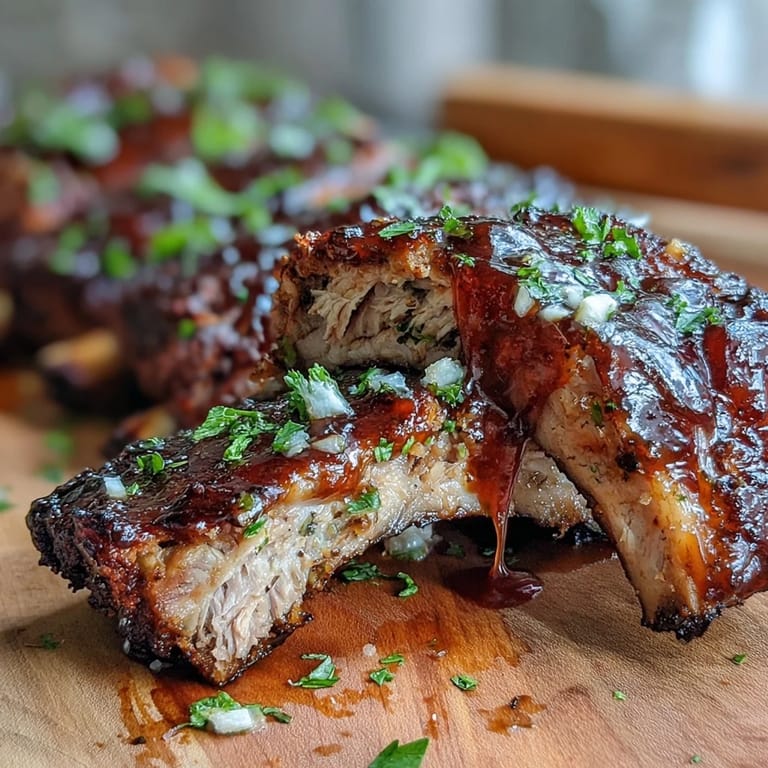
- After two hours, brush your favorite sauce over the ribs and turn up the heat to 190℃ 375℉. Let them sizzle another 20–30 minutes, basting once, until they’re lacquered and tender.
- Rest and slice:
- Tent the ribs loosely with foil for 10 minutes to let the juices settle. Slice each rack carefully between the bones.
- Make the board look epic:
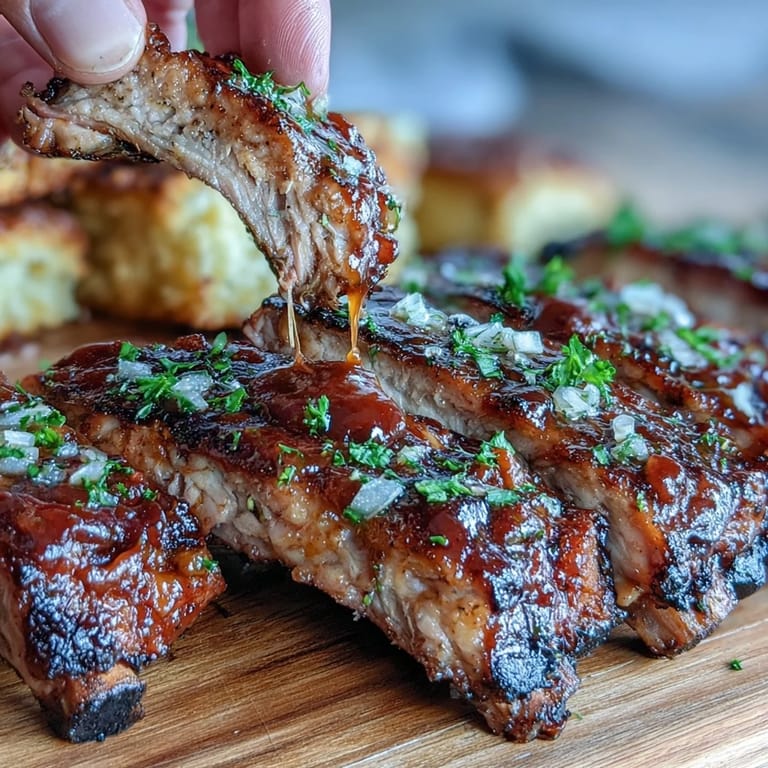
- Arrange the ribs on a big board with sauces in little bowls, and throw on pickles, warm cornbread, herbs, and onions wherever they fit. Take a moment to admire before anyone dives in.
- Serve and enjoy:
- Gather everyone around and encourage experiments—every rib, every sauce, every garnish is fair game.
 Save
Save There’s a photo of this feast on our kitchen table, everyone leaning in at odd angles, arms stretching for that one last rib and faces smudged with sticky sauce. That wasn’t just dinner—it sparked new family debates over the best sauce, and became a highlight we all still laugh about every summer.
How to Prep Everything Ahead
The real secret to hassle-free BBQ is getting most of the work done before the grill gets hot. Mix the spices and rub the ribs in advance (up to 24 hours before) and let time do its magic in the fridge. The sauces taste even better if made ahead, giving the flavors extra time to deepen. On party day, all you need to do is fire up the grill and set out the garnishes.
Getting That Smoky Flavor Right
I used to chase smoky BBQ dreams with every bottled sauce at the store, but a little smoked paprika in both the rub and the sauce does wonders. If you have a grill or smoker, toss on some soaked wood chips for more depth, but even in the oven, that homemade rub passes the sniff test. The smell sneaking from the kitchen makes even the neighbors curious. Sometimes I finish the ribs right over the flames for that hint of char.
Building the Rib Board Experience
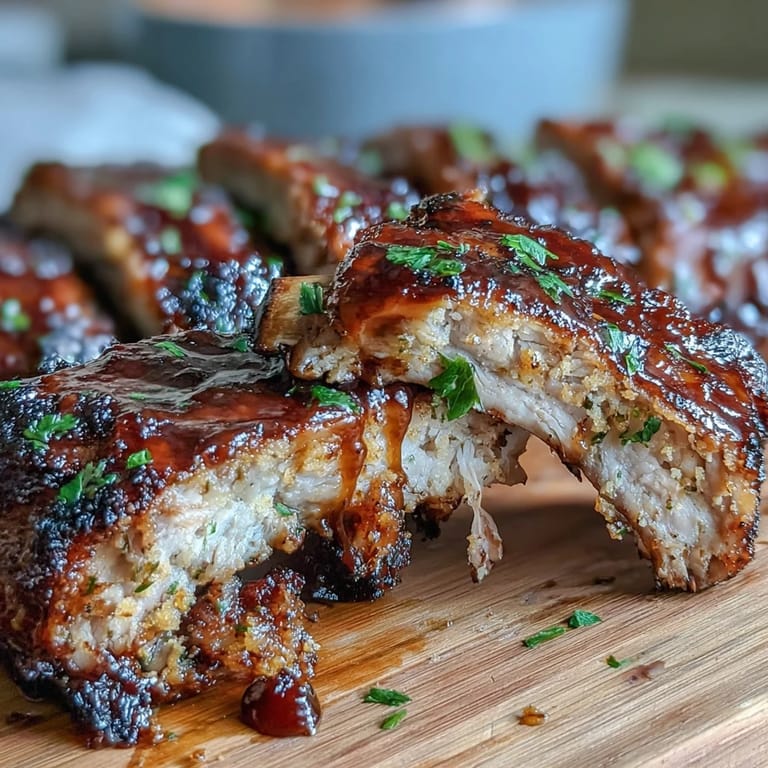
This is the fun part—layer the ribs like a pile of treasure, dot the board with sauce bowls, scatter the herbs for color, and tuck in slices of cornbread for soaking up the saucy bits. Let the pickles and red onions fill the edges for crunch and zing. Place a stack of napkins nearby and watch the board empty faster than you’d expect.
- If you want the ribs to stay extra juicy, rest them under foil but not too tight.
- Warm the cornbread slices right before serving for bonus applause.
- Don’t forget to put out extra spoons in each sauce bowl—everyone will want to sample.
 Save
Save This board guarantees happy faces and saucy fingers, no matter who ends up with the last piece. It’s the kind of meal that turns ordinary days into instant celebrations—and that’s what makes it worth every minute.
Common Recipe Questions
- → How long should I cook St. Louis–style ribs?
Cook low and slow: about 2 hours at 120°C/250°F for indirect grilling or 140°C/285°F in the oven, then increase heat to 190°C/375°F and glaze for 20–30 minutes to caramelize the sauce.
- → What's the best way to remove the membrane from ribs?
Slide a knife under the thin membrane at one end to loosen it, then grip with a paper towel and pull steadily to remove for more tender, better-seasoned ribs.
- → Which sauce pairs best with smoky ribs?
All three offer distinct contrasts: honey BBQ adds sweet balance, chipotle brings heat and smokiness, and mustard-maple cuts through richness with tangy-sweet notes—serve all three for variety.
- → Can I swap pork for beef ribs?
Yes—beef ribs work well but usually require longer cooking at low temperature until connective tissue breaks down; monitor tenderness and adjust cook time accordingly.
- → How can I add more smoke flavor?
Add soaked wood chips to your grill or smoker and maintain a low steady temperature during the first two hours; a short blast of smoke intensifies the aroma without overpowering the glaze.
- → How do I keep ribs juicy while glazing?
Baste sparingly during the final 20–30 minutes at higher heat to build a glossy crust without drying; rest loosely tented for 10 minutes before slicing to lock in juices.