 Save
Save There's something about the first truly warm day of the year that makes you crave noodles you can eat straight from the fridge. I discovered these cold sesame noodles on a sweltering afternoon when my air conditioning had given up, and I was too tired to turn on the stove. What emerged from that moment of necessity became one of my most-requested dishes—a bowl of pure comfort that doesn't need heat to satisfy.
I made this for a potluck during my neighbor's birthday, and it was gone within twenty minutes—people were actually asking for the recipe between bites. That's when I realized this wasn't just a weeknight solution; it was something special enough to serve to people you want to impress, yet casual enough that you can throw it together without stress.
Ingredients
- Wheat noodles or spaghetti (350g): The starchy vehicle that holds everything together; thinner noodles grab the sauce better, but thicker ones have a nicer chew.
- Sesame oil for tossing (1 tbsp): This prevents clumping and adds a whisper of fragrance that hints at what's coming.
- Tahini or Chinese sesame paste (4 tbsp): The foundation of the sauce—tahini is milder, while Chinese sesame paste has deeper, more intense flavor.
- Smooth peanut butter (2 tbsp): Adds richness and helps the sauce cling; use the creamy kind, not chunky.
- Low-sodium soy sauce (3 tbsp): The savory backbone that keeps everything from becoming too sweet or one-dimensional.
- Rice vinegar (2 tbsp): Brings brightness and cuts through the richness with elegant acidity.
- Honey or maple syrup (1 tbsp): A subtle sweetness that balances salt and acid, making the sauce taste complete.
- Toasted sesame oil (1 tbsp): Different from regular sesame oil—this one's been roasted and tastes like deep, roasted nuttiness.
- Garlic and ginger (2 cloves and 1 tbsp, grated): Fresh and finely grated so they dissolve into the sauce rather than sitting as chunky bits.
- Chili oil (1–2 tsp, optional): For heat; start small because it's easy to add more but impossible to take back.
- Cold water (3–5 tbsp): To adjust the sauce's consistency until it's pourable but thick enough to cling.
- Cucumber (1 medium, julienned): Stays refreshingly crisp and adds clean, watery crunch that contrasts beautifully with the creamy sauce.
- Carrots (2 medium, julienned): A touch of natural sweetness and an almost satisfying snap when you bite through them.
- Spring onions (2, thinly sliced): Scattered on top at the last moment so they stay bright and sharp.
- Toasted sesame seeds (2 tbsp): The final garnish that adds visual warmth and a subtle nutty flavor.
- Fresh cilantro (1 handful, chopped): Herbaceous and fresh, it lifts the whole dish with its green brightness.
- Crushed roasted peanuts and lime wedges (optional): The peanuts add crunch and deeper flavor; the lime offers a final squeeze of brightness.
Tired of Takeout? 🥡
Get 10 meals you can make faster than delivery arrives. Seriously.
One email. No spam. Unsubscribe anytime.
Instructions
- Cook and cool the noodles:
- Boil the noodles according to package directions until they're tender but still have a slight bite to them. The moment they're done, drain them into a colander and run them under cold water, moving them around with your fingers so they cool evenly and don't stick together. Once they're completely cool, toss them gently with the sesame oil so every strand gets a light coating.
- Build the sauce:
- In a separate bowl, whisk the tahini and peanut butter together first—they can be stubborn and thick, so give them a moment to loosen. Then add the soy sauce, rice vinegar, honey, toasted sesame oil, grated garlic, and ginger, whisking until everything is smooth. Start with 3 tablespoons of cold water and whisk it in gradually; the sauce should look creamy and pour easily without being thin.
- Coat the noodles:
- Pour the sauce into the bowl with the cooled noodles and toss everything together using two forks or wooden spoons, lifting and turning so every strand gets coated. You'll watch the noodles change color as the sauce clings to them—keep going until there are no dry or white spots left.
- Assemble and garnish:
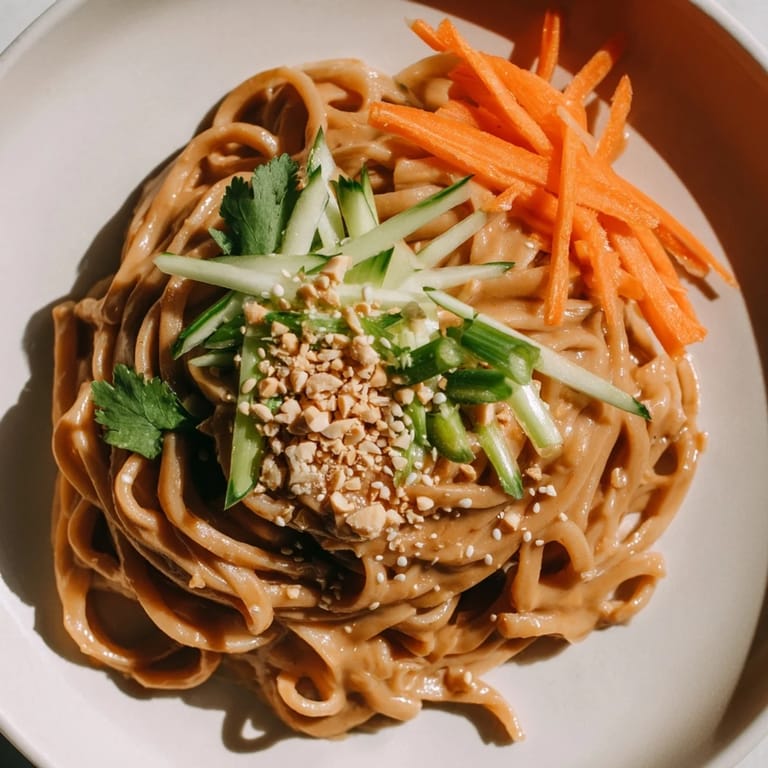
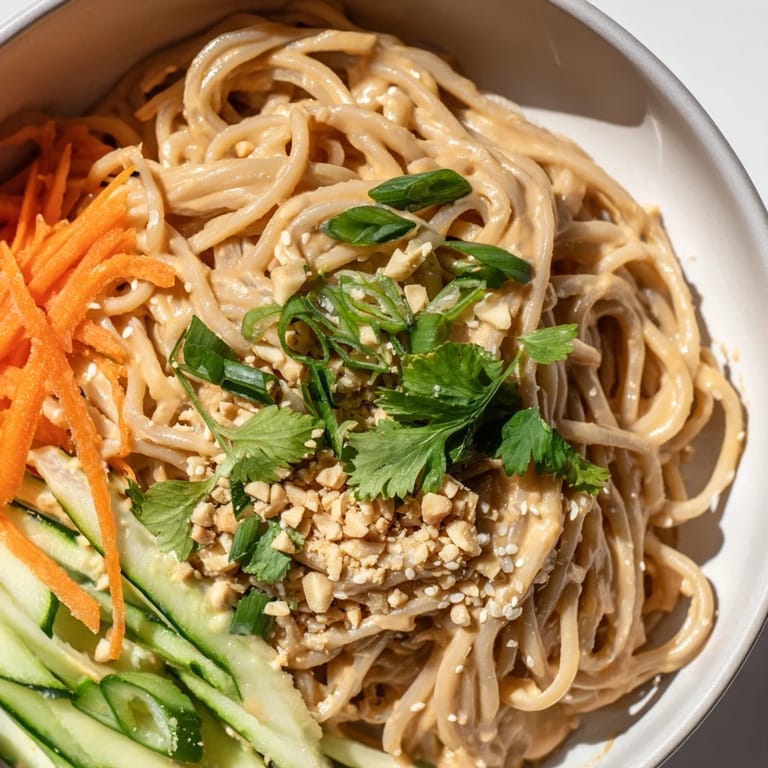
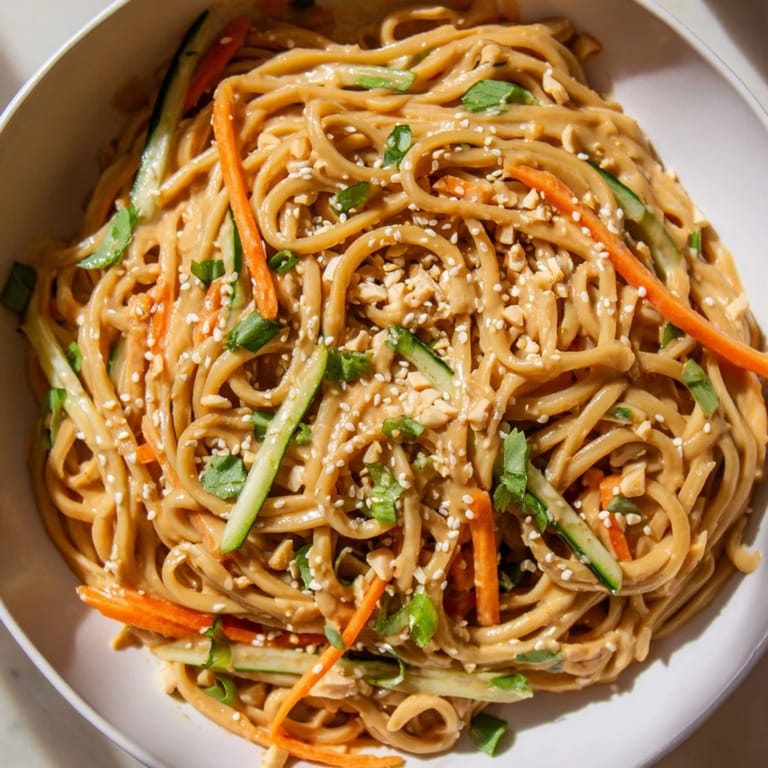
- Divide the noodles into bowls and arrange the vegetables on top in casual piles—julienned cucumber, carrots, a scatter of spring onions, the sesame seeds, fresh cilantro, and peanuts if you're using them. Place lime wedges on the side and serve.
- Chill or serve immediately:
- If you have the time, let the bowl sit in the fridge for 10–15 minutes before eating; the flavors deepen and blend together. But if you're hungry now, eating it immediately is just as satisfying.
 Save
Save The magic of this dish hit me when my partner came home tired from work, spotted the bowl of noodles in the fridge, and ate the whole thing without saying much—just the sound of contented eating. That quiet moment taught me that food doesn't need to be complicated to matter.
Sauce Secrets and Substitutions
The sesame sauce is flexible enough to adapt to what you have on hand. If you don't have tahini, you can use all peanut butter and it'll still be delicious, just slightly less sesame-forward. Chinese sesame paste is thinner and darker than tahini, so if you find it at an Asian market, grab it—it makes the sauce taste more authentic and complex. Maple syrup works instead of honey, and rice vinegar is really worth finding because it's milder than distilled vinegar and won't make the sauce taste sharp or sour.
Making It Your Own
This is one of those recipes that thrives on customization without losing its character. Some days I add shredded rotisserie chicken for protein, other times I'll toss in cubed tofu that I've pan-fried until it's golden. A handful of edamame, some thinly sliced bell peppers, or even shredded red cabbage (which stays crunchy longer) all work beautifully. The vegetables list is a suggestion, not a rule—use what's in your crisper drawer and tastes good to you.
Storage and Next-Day Magic
This is the kind of dish that improves in the fridge, making it perfect for meal prep or feeding yourself through the week. Store the noodles and sauce together in an airtight container for up to three days; the noodles will keep absorbing flavor and becoming even more delicious. The vegetables are best added just before eating so they stay crisp, though you can prep them ahead and store them separately. If the sauce seems thick when you pull it from the fridge, whisk in a tablespoon of water and it'll loosen right up.
- Keep lime wedges in a separate container and squeeze them fresh over the noodles right before eating.
- Toast the sesame seeds fresh and add them as a last-minute garnish so they stay crunchy and bright.
- If you're taking this to work or a picnic, pack the components separately and toss everything together just before eating.
 Save
Save This bowl has become my answer to hot days, meal prep Sundays, and moments when I want something that tastes bright and alive without turning my kitchen into a furnace. It's the kind of dish that asks for nothing but repays you with plenty.
Common Recipe Questions
- → What type of noodles work best?
Wheat noodles or spaghetti work well; cook and chill them to maintain a firm texture that holds the sauce nicely.
- → Can I adjust the sauce's spiciness?
Yes, add chili oil gradually to achieve your preferred heat level without overpowering the sesame flavors.
- → How do I store leftovers?
Keep chilled in an airtight container for up to two days; toss gently before serving to redistribute the sauce.
- → Are there alternatives to peanut butter?
Tahini or Chinese sesame paste can replace peanut butter for a more pronounced sesame taste and to accommodate allergies.
- → What garnishes enhance this dish?
Julienned cucumber, carrots, spring onions, toasted sesame seeds, fresh cilantro, and optional crushed peanuts or lime wedges brighten flavors and add texture.