 Save
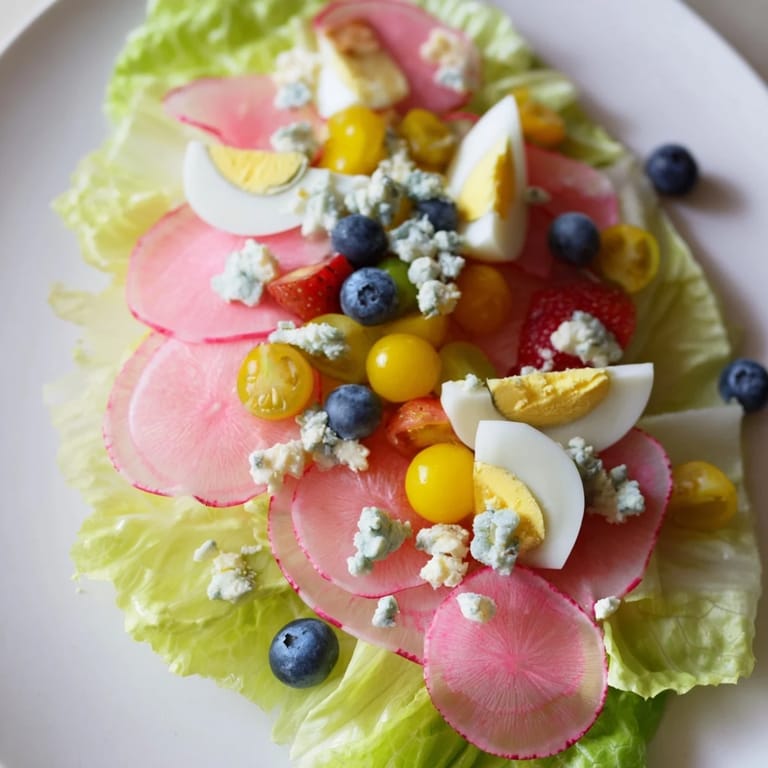
Save I'll never forget the afternoon I first created this salad for my best friend's baby shower. We were setting up in her garden, and she'd mentioned wanting everything to feel soft and dreamy—nothing bold or loud. As I arranged those delicate pastel ingredients on a white platter, watching the pale pinks, blues, and yellows come together, something magical happened. It wasn't just a salad anymore; it became edible art that made everyone smile before they even tasted it. That's when I realized the most memorable dishes aren't always about complex flavors—sometimes they're about creating a moment.
I made this salad for three baby showers that spring, and each time I watched guests pause before eating, just wanting to photograph it first. One grandmother told me it was almost too pretty to disturb—then she tasted it and changed her mind completely. That's the sweet spot you're aiming for: something that delights both the eyes and the palate.
Ingredients
- Baby butter lettuce or mixed baby greens (4 cups): These delicate leaves are your canvas. Butter lettuce is especially tender and won't wilt quickly, which matters when you're building something this beautiful. Choose the palest green varieties you can find—they harmonize with the pastel theme rather than competing with it.
- Watermelon radish, thinly sliced (1 cup): This is your pink star. The pale pink flesh with those delicate white rings create a naturally sophisticated look. Slice it paper-thin on a mandoline if you have one—it makes all the difference visually and texturally.
- Pink grapefruit segments (1 cup): These bring both color and a gentle tartness that wakes up your palate. Use a sharp knife to segment them fresh rather than canned; the juice will be fresher and the color more vibrant.
- Strawberries, thinly sliced (½ cup): Slice them just before assembling to keep them from weeping. Their subtle sweetness bridges the savory and fruity elements beautifully.
- Fresh blueberries (½ cup): These little gems provide your blue note—choose the palest, most delicate blues you can find. They're almost powdery in color when they're at peak ripeness.
- Crumbled blue cheese (½ cup): This is where the magic happens: the blue cheese brings umami depth that makes people realize this isn't just pretty—it's genuinely delicious. Use a quality cheese; it matters.
- Yellow cherry tomatoes, halved (1 cup): These sunny rounds are your easiest element. They stay firm and don't release much juice, so you can prepare them ahead without worry.
- Yellow bell pepper, diced (½ cup): The pale yellow of sweet bell pepper is softer than lemon yellow—it fits the pastel palette perfectly. Dice it into small, manageable pieces.
- Hard-boiled eggs, sliced (2, optional): These pale yellow rounds complete the yellow section and add protein. Boil them the day before and refrigerate so you can slice them cleanly without that gray-green ring.
- Extra virgin olive oil (3 tbsp): This is your dressing foundation. Use something with personality—a good olive oil makes a real difference here.
- White balsamic vinegar (1 tbsp): The pale color matters aesthetically, and the flavor is milder and sweeter than dark balsamic. It won't stain your pastels.
- Honey (1 tsp): Just enough to round out the dressing and give it a whisper of sweetness. Agave syrup works beautifully for vegans.
- Fine sea salt and freshly ground black pepper: These simple seasonings let everything else shine. Grind the pepper fresh just before whisking the dressing.
Tired of Takeout? 🥡
Get 10 meals you can make faster than delivery arrives. Seriously.
One email. No spam. Unsubscribe anytime.
Instructions
- Prepare your canvas:
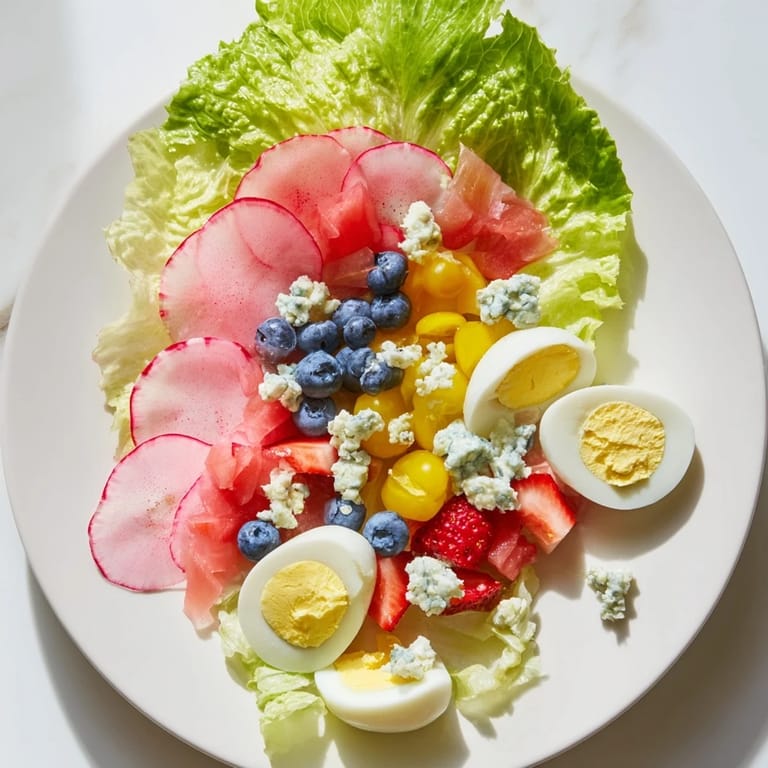
- Take your large platter—ideally white or pale, as it's part of the design—and arrange your baby greens evenly across it. Don't pack them tightly; you want people to see the platter underneath in places. This space is part of your composition.
- Place the pinks thoughtfully:
- Now come the watermelon radish slices. Arrange them in clusters, perhaps in three or four spots around the platter, letting them overlap slightly. Tuck the pink grapefruit segments between them, and scatter the strawberry slices around. Stand back and look—does the eye flow naturally around the platter? That's your guide.
- Add your blue accents:
- Sprinkle the blueberries in small clusters where you see gaps or where you want to draw attention. Then crumble the blue cheese gently over the salad, focusing it in areas that need that soft blue color. The blue cheese should look almost like it was gently shaken onto the greens—not scattered aggressively.
- Fill with yellow sunshine:
- Distribute your yellow cherry tomato halves and diced bell pepper throughout, filling in the remaining negative space. If you're using egg slices, arrange them in one or two small clusters—they're lovely as an accent. Step back again. You should see a balanced landscape of soft colors, with no single ingredient overwhelming the others.
- Make your dressing:
- In a small bowl, combine the olive oil, white balsamic vinegar, honey, and salt. Whisk until the dressing becomes pale and slightly creamy—you want an emulsion, not just oil and vinegar sitting separately. The whisking should take about thirty seconds of actual elbow grease. Season with fresh black pepper to taste.
- The final touch:
- This is crucial: don't dress the salad too early. Right before serving, drizzle the dressing lightly over the salad, using restraint. You can always add more, but you can't take it back. Let the dressing pool slightly in one or two spots for visual interest.
- Serve with intention:
- Bring the platter to the table while everything is still at peak freshness and crispness. The first moments are the most beautiful—that's when people will truly appreciate what you've created.
 Save
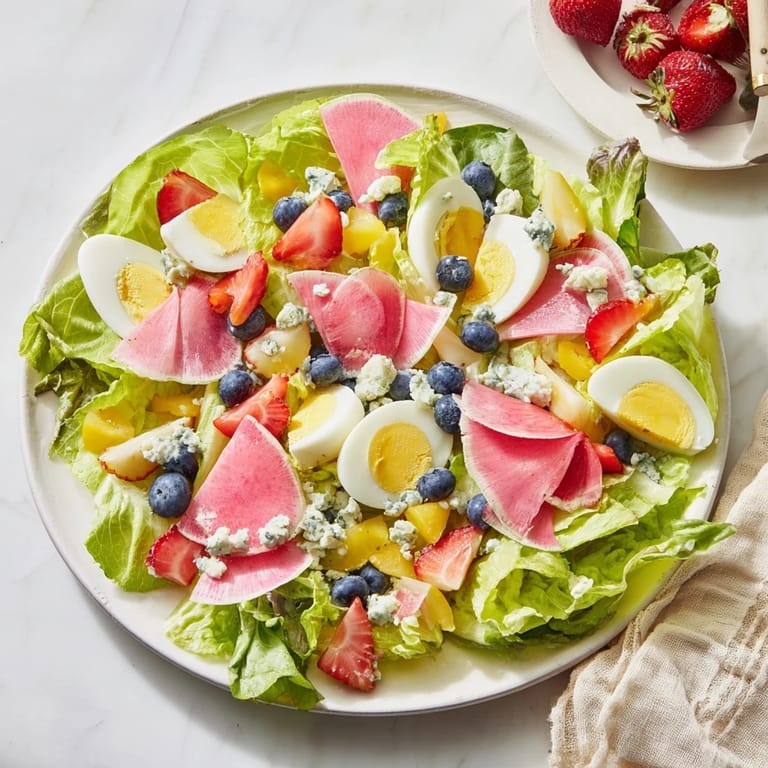
Save At one shower, a three-year-old pointed at the salad and said, 'It's too pretty to eat.' Her mother laughed and said, 'But try it anyway.'—and that little girl ended up eating three plates. That moment reminded me that beauty and deliciousness aren't competing goals; they're partners. This salad delivers both, which is why it's become my signature dish for celebrations.
The Art of Arrangement
This salad teaches you something valuable about food design: restraint is elegant. You don't need to cover every inch of the platter. Negative space—those little windows where you can see the white plate underneath—actually makes the colors pop more intensely. Think of it like watercolor painting: sometimes the white paper left unpainted is just as important as the pigment. When you're arranging, step back after each element and ask yourself if the platter feels balanced. Does your eye know where to look, or is it overwhelmed? The goal is gentle guidance, not sensory overload.
Making It Your Own
The beauty of this recipe is its flexibility. Strawberries not in season? Substitute thin slices of pale peach. Hate blue cheese? Try a delicate goat cheese crumbled even finer, or skip cheese entirely and let the blueberries be your blue note. Making it vegan is seamless—just omit the eggs and cheese, and maybe add some pale avocado slices (though avocado browns quickly, so add those last). The core principle remains: let the ingredients speak through their natural colors and fresh flavors.
Pairing and Presentation
This salad pairs beautifully with sparkling rosé, as the bubbles and gentle fruit notes complement without competing. If you're serving it at a brunch, offer warm brioche or delicate crostini on the side—the textural contrast of crispy against tender greens is lovely. The salad itself is light enough to be a first course for a more substantial meal, but it's also satisfying enough to be the main event at a casual gathering. Consider your platter choice carefully; white, cream, or soft gray will make the pastels sing, while busy patterns will fight with your design.
- Chill your platter in the freezer for ten minutes before assembling—this keeps everything fresher longer
- If you know people have dairy sensitivities, simply leave the blue cheese off the main platter and offer it on the side
- Photograph your salad in natural light from the side, not straight down—that's when its three-dimensionality really shows
 Save
Save This salad reminds us that sometimes the most memorable meals aren't the most complicated ones—they're the ones made with intention and care. You're not just feeding people; you're creating a moment they'll remember.